WorldSkills General Assembly 2025: Bold candidacy and flawless project realisation in Dubrovnik

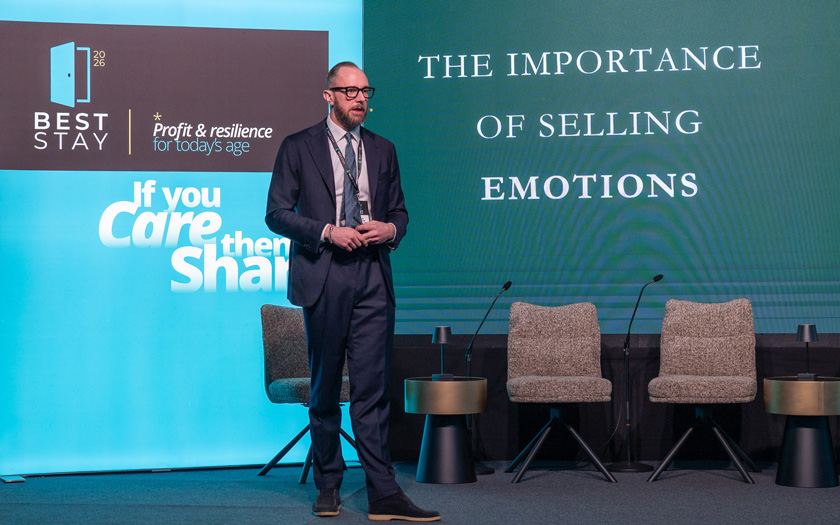
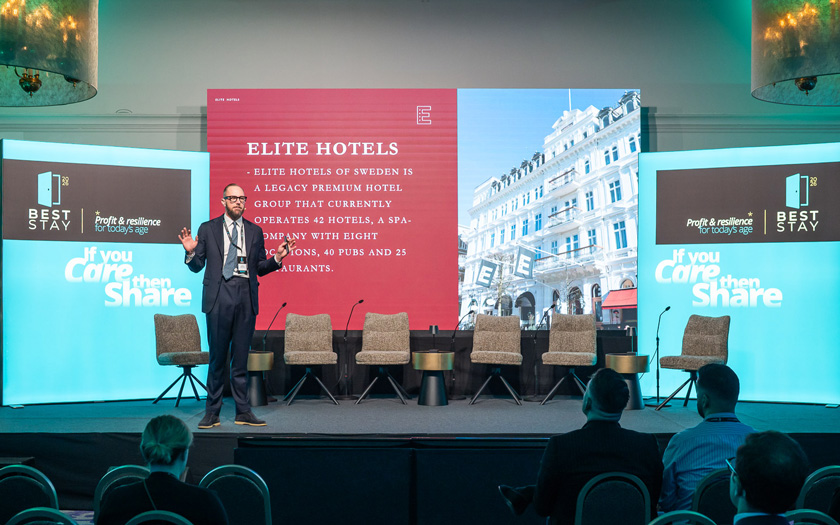
At the recent Best Stay Event conference, Tomas Bäcklund, CMO of Elite Hotels of Sweden AB, gave a keynote speech titled “How we rose revenue, RevPAR, prices and member loyalty over a tough 5 years.” Instead of theory, he shared concrete experiences from practice – how a hotel group with 43 hotels managed to grow during a period marked by the pandemic, inflation and falling profitability.
Inflation has eaten into margins. Now what?
Over the past five years, the hotel industry has experienced a pandemic, a sharp recovery in demand, disruptions in supply chains and a sharp increase in labor and energy costs. In many markets, prices have not increased in proportion to costs, which has led to a decline in profitability.
In such a situation, management often resort to cutting costs and reducing the number of employees. However, Bäcklund argues that there is another way: strengthening the brand so that the market accepts higher prices without resistance.
The key question is not: How do you sell more rooms? The key question is: Why would someone pay more for your room than for the one at the hotel next door?
The answer is not in the size of the room or the type of breakfast. The answer is – in the brand.
A brand is not a logo. A brand is an idea in the guest’s head
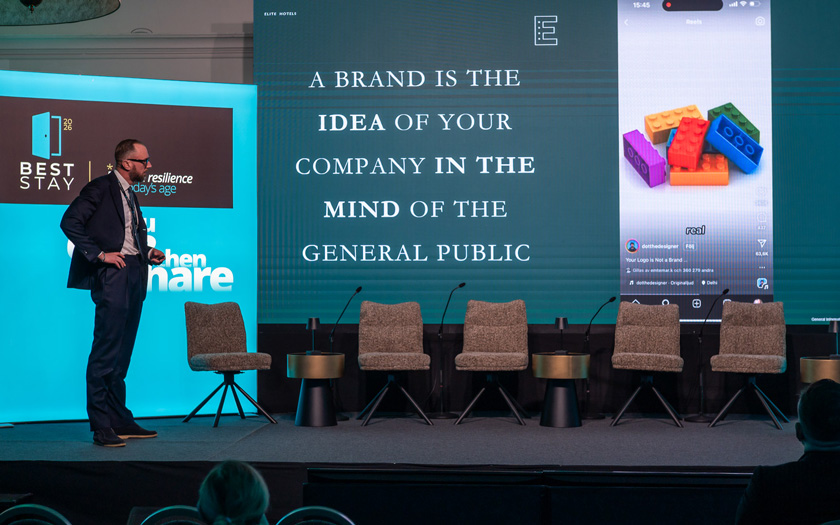
A brand is not a building, a logo, typography or a website. A brand is a mental image and feeling that guests have about your hotel. It is a “shortcut” in their head – what they can expect, what kind of experience they get and who the hotel belongs to.
If a guest chooses solely by price or filters the offer according to the “sort by price” principle, then the hotel does not have a strong brand – it only has a distribution channel. Bäcklund illustrated this with a simple thesis:
The value of a brand is the amount that a guest is willing to pay above the price of the nearest competitor.
If you cannot charge that difference – it is time to work strategically on the brand.
The problem in the hotel industry is that marketing is often reduced to displaying the product: a beautiful room, a modern reception, a delicious breakfast, wellness... Communication is functional, informative, but rarely emotional. And it is precisely emotion that reduces sensitivity to price.
Lessons from outside the hotel industry: Courage and emotion
Before joining the hotel industry, Bäcklund worked on branding campaigns for global companies like Nike and Klarna. These companies don’t communicate technical product features as their primary message, but values, attitude, and identity.
In the campaigns for Klarna Bank, none of the key messages are tied to interest rates or prices. The focus is on creating recognition and an emotional connection with the target audience. One of the most prominent examples was a marketing campaign in the US based on transvestite culture. It built identity, emotion, and cultural relevance. The result? Hundreds of thousands of new users and an explosion of organic search for the brand.
The message to hoteliers is clear:
You’re not selling a room. You’re selling a feeling.
The insurance industry has a hard time selling emotion. The hotel industry sells it every day – through travel, meetings, celebrations, business successes, and romantic weekends. But paradoxically, hotel marketing often still boils down to a photo of a bed and a 30% discount.
Short-term results vs. long-term growth
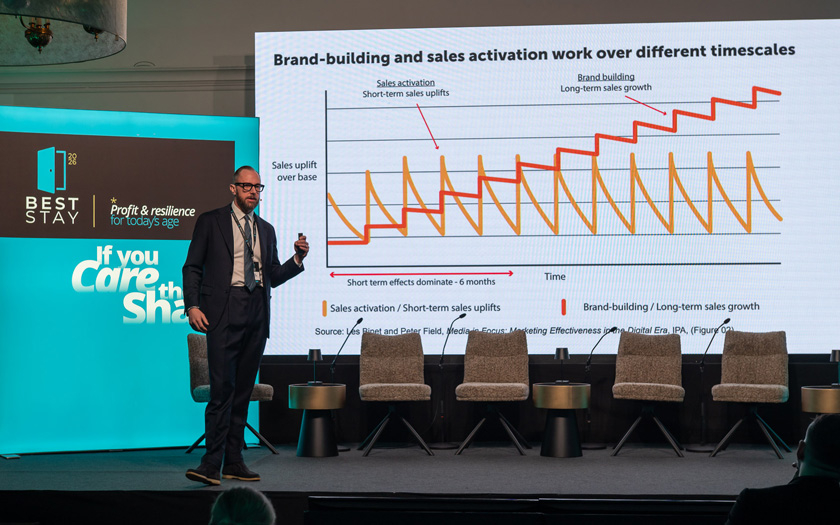
Bäcklund also warned about the dangers of over-reliance on performance marketing and measurable, short-term campaigns. The example of Nike, which at one point reduced investment in a long-term brand and focused on short-term results, shows how quickly built value can be eroded.
Strong brands are not immune to crises, but they recover from them faster. During the financial crisis and pandemic, it was the world's strongest brands that regained market share and profitability the fastest. The reason is simple: trust and emotional connection do not disappear overnight.
Another interesting example is the second season of The White Lotus, filmed in Sicily. The luxury hotels that appeared in the series significantly raised their prices – in some cases by up to 100%. They did not communicate discounts, but rather the experience, ambiance and exclusivity. The perception of value increased, and the market accepted the new prices.
What did Elite Hotels do specifically?
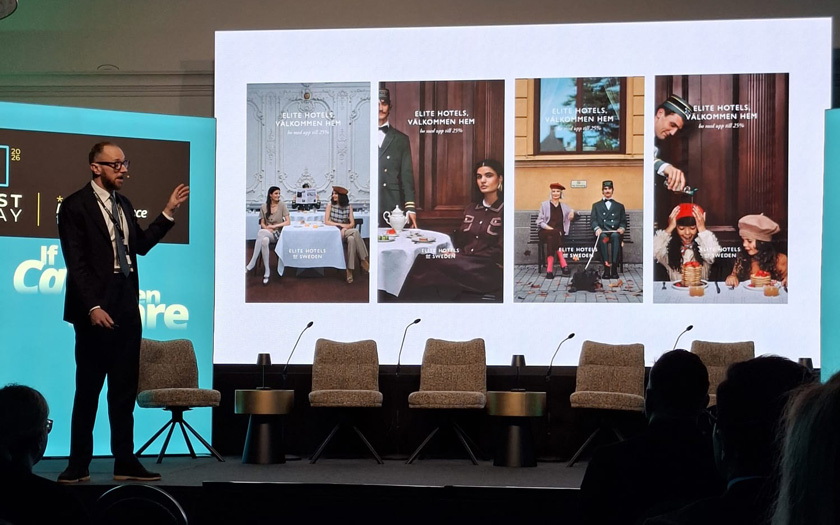
In the Swedish context, dominated by large groups such as Scandic Hotels, Elite Hotels had to find its own identity. They developed a recognizable creative concept and a stronger emotional narrative. The focus was on:
As their “trademark”, they used and built their recognition on the characteristic figure of the bell boy, bright colors, specific and unusual guests and situations in the hotel.
Results?
Apart from proper budget allocation, what else can you do?
At a time when most of the hotel industry is focused on cost optimization, the experience from Sweden shows that growth is possible, but not through another discount. Growth comes when a hotel stops being just a place to sleep and becomes a brand for which guests - and event organizers - are willing to pay more.