Diaco Boutique Hotel opens a new chapter of business tourism in Slavonia: Đakovo gets a conference hotel


Istria has been recognised for decades as a leader in quality, sustainability, and innovation in Croatian tourism. Now, its strong advancement into the business events segment, particularly incentives, is also evident. The organisation of the first international CIS (Certified Incentive Specialist) workshop in Croatia, in collaboration with SITE Global, is a clear signal that Istria no longer views the MICE segment as secondary but is systematically developing it—from educating professionals to positioning itself on global markets.
This is how such a strategy is built, why international partnerships are key, and what role knowledge plays in it all. We spoke with Denis Ivošević, Director of the Istria County Tourist Board, who has been at its helm for 15 years. Additionally, he is a certified sommelier for wine, prosciutto, and truffles—authentic symbols of Istria. It is precisely this combination of expertise, international experience, and deep understanding of the destination that has characterised his approach to Istria's development, including the growing focus on MICE and incentives.
Istria Chooses a Different Path in Communication and Promotion: Strategic Partnerships
Istria has always been somewhat different and more advanced than other Croatian destinations. What particularly sets it apart in the way it builds its identity and communicates it to international markets?
Istria, as a tourist region, has always strived for an innovative approach in developing the destination itself, as well as in its promotion. For this reason—to be different, more creative, and innovative, to choose a different path, communication channels, and promotion—we have devised a model of strategic partnerships. The core idea of strategic partnerships as a model for effective promotion is to direct all activities towards positioning and promoting the destination; in this case, Istria and Croatia on our most important source markets, with all campaigns targeting premium guests.
We envisioned strategic partnerships as a protocol where two premium brands network and merge. The basic idea was to leverage the reputation of the brand we want to partner with—using its recognisability and marketing power to initiate a process of identification, valorisation, and integration of elements of their brand into the Istria brand and vice versa. This co-marketing process in the tourism industry represents a novelty in creating new values and identifying and mutually networking the values and reputation of individual brands.
The Istria Tourist Board has found in strategic partnerships a model for promotion in both directions. One direction is the classic one, where advertising space is rented in a media outlet. Thus, we have rented advertising space in the media of our strategic partner, but we have also received the so-called second direction of promotion, i.e., the ability to use visuals of our strategic partner in all their own channels or forms of presentation/promotion. This model maximises the power of an important institution's brand for those partnering with them, integrating the reliability and credibility of the partner.
Istria is the only tourist region—not only in Croatia but also in the broader Mediterranean region—that was the first to launch major strategic partnership projects. Today, after nearly 15 years of experience in strategic partnerships, we have a clearly established architecture of partnerships. In this communication, the following are clearly recognisable:
From the perspective of destination management—what does it specifically mean to be a member of SITE, Virtuoso, and Maritz? What are the greatest benefits of such membership for a destination like Istria, and how do these international networks function in practice, i.e., how can they be leveraged to attract international MICE projects?
Whenever a new developmental tourism project is planned in Istria, it already has a 10-year development perspective outlined from the start, with a very precise execution plan dynamics. The same applies to the incentive offer. Regardless of Istria being a well-organised and structured tourist destination with a long, exceptionally successful tradition in tourism management, we are definitely new in the incentives segment. However, we are not new in the classic sense of starting from zero; on the contrary, Istria has meticulously and systematically prepared the ground in recent years so that, once we enter the MICE market, we have "all cards in hand" and can immediately compete with the strongest rivals.
The fact that we are not entirely new is best confirmed by the chain of services and values that constitute the incentive, i.e., MICE offer. First, we have connected the central part of Istria with the coast in a way that the same level of top-tier service can be obtained in the most remote part of central Istria as in the most elite coastal areas. In just 10 years, we have created a large number of accommodations in the 4+ and 5-star categories equipped with the necessary infrastructure. Through clustering, we have networked accommodation with a whole range of diverse and attractive experiences, i.e., more than 300 so-called "high-end points of interest" that are already available for the most demanding incentive guests.
The incentives segment is a world of its own. It has a different architecture, logic, and business morphology compared to leisure. Therefore, if you want to be a player in that industry, you must be present at the source, where the rules and business practices are created, where new trends emerge, and where the most significant global players are located. Being a member of an association or group already signals in the first step that we are recognised and speak the same language, which is certainly very important. To be accepted, a great deal of invisible work had to be done, which is the best confirmation that the development path was well set and organised. However, this is only the first step on a long journey to proving relevance in that industry. It requires a lot of learning on the go, being engaged, proactive, insightful, and assertively present for a reason to bring more business to the destination.
With SITE to Global Markets: From CIS Certification to Istria SITE Affiliate Platform
The Istria County Tourist Board recently organised the first international CIS education in Croatia in collaboration with SITE Global. What was the key motivation for launching this initiative, and how does it fit into the long-term strategy of stronger positioning of Istria on the global MICE scene?
Before joining the aforementioned prestigious associations, it was necessary to prepare the ground, i.e., the people who will operationally work in that industry. As in every new development, education is key and the first step in the incentives segment as well. Therefore, before the CIS education itself, we conducted 4 key workshops for a broad spectrum of service providers in Istria who already function well in the leisure segment. The primary intent was to qualitatively enhance knowledge to approach this CIS education more prepared.
In 2025, we conducted 4 individual yet interconnected educations, each attended by more than 100 participants. Key topics included: introducing Virtuoso, Maritz, and SITE; how the premium/luxury segment market functions and its size; trends in the premium tourism segment; and what premium guests seek. All four preparatory workshops shared a common denominator: special interest tourism in all its components—from product/package creation, marketing and promotion channels, to sales methods and channels. The fifth and final education was Certified Incentive Specialist (CIS). This certification is a top international standard in the incentive travel domain. Through an intensive two-day workshop, we presented theoretical knowledge and practical tools for creating unforgettable experiences that directly influence the selection of a destination to host key clients from around the world.
How much interest did the CIS workshop generate among Istrian MICE providers? Which companies participated, what expectations did they have, and what did they specifically gain—in terms of knowledge and tools, as well as international recognition and market competitiveness?
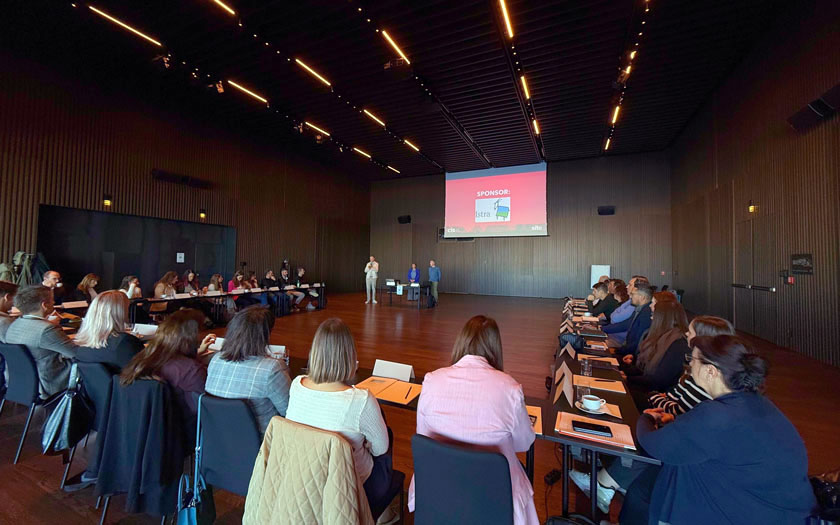
In total, we had 34 participants, which is also the maximum number for such education. Within this group, all segments or components of the incentive programme were covered: staff from large hotel systems, small family hotels, travel agencies, DMCs, on-site agents, event managers, storytellers, content creators, concierges, winery owners, olive oil producers, and truffle growers.
We had licensed SITE instructors with long-term operational experience in incentives, who have personally experienced competing in this competitive industry—for themselves or the agencies they worked for, and later within the association. All participants had to take a test at the end, which also enabled them to become SITE members for 2026.
You announced the establishment of the SITE Istria Affiliate branch. What will this platform specifically mean for local stakeholders and for international incentive agencies considering Istria as a destination?
Through the Istria SITE Affiliate branch, Istrian representatives who are CIS certified will be presented as an organised group best equipped to respond to the requirements and inquiries of potential new clients. In addition to being featured on SITE's official pages, they will serve as the first point of contact for new business and directing business towards Istria.
On the other hand, for incentive agencies, this is important information that a SITE Affiliate exists in Istria, is operational, and can act as an on-site agent for incentive agencies, who always seek new, appealing, and well-organised destinations because their clients also present new, more complex, and sophisticated demands.
Every new destination with a well-structured protocol for all incentive travel components has a significant advantage, and associations like SITE are essential to leverage it. SITE best describes itself as: "SITE is more than a global association. It is a network of vibrant local chapters fostering excellence in incentive travel. With chapters and partners (SITE Affiliate), it connects you with peers, learning opportunities, and business growth right where you are or do business."
You also mentioned forming the Istria Preferred Incentive Club. Can you explain this concept in more detail—who is it intended for, and how will it contribute to promoting Istria as a premium incentive destination?
The Istria Preferred Incentive Club is envisioned as a club or association bringing together all Istrian participants capable of delivering premium service. The idea is to unite wineries, olive oil producers, prosciutto makers, truffle growers, restaurateurs, small family hotels, on-site agents, concierges, content creators, storytellers, influencers, and numerous other service providers (more than 30 different categories) with the primary aim of creating:
It is well known that key criteria for selecting a destination for MICE programmes include accessibility, quality accommodation with necessary logistics and infrastructure, unique venues, and above all, the programmes or experiences the destination can offer. Clearly, this Istria Preferred Incentive Club segment will be crucial for attracting business gatherings to Istria. Therefore, it is important for the club to have a "deep bench" with a rich, attractive, and diversified offer, as it makes the difference and is the deciding factor in destination selection.
In your opinion, what makes Istria particularly attractive for incentive travel, and what are its key advantages when it comes to business meetings and congresses?
If we successfully address air connectivity and relatively easy accessibility of Istria from more distant so-called "long-haul destinations," Istria will become a significant incentive, meetings, and events destination in a relatively short time. I base this assertion on the fact that, apart from accessibility, all other components of Istria's incentive offer are very well structured, and several key factors further strengthen its potential in this industry.
Istria, though small geographically, is so diverse and rich that we call it a microcontinent.
In every business, including tourism, new destinations, products, and experiences are constantly sought. I am convinced that Istria will quickly leverage this enormous potential.
Stronger MICE Advancement Requires Improved Air Accessibility for Istria
Until now, the MICE segment has not been the primary focus of Istria's destination promotion. What new steps does the Istria County Tourist Board plan to further encourage event organisers? What specific support do you offer event organisers—from bidding and promotion to on-site operational assistance?
Our plan for all MICE activities is detailed for the period 2024–2029. The greatest emphasis is on supporting specialised and already established business DMC agencies selling Istria, as well as those just starting. In this part, annual project activities include regular zoom call presentations 3 times a year, sales call appearances 6 times a year, organisation of fam trips 6 times a year, Buy Istria presentations 2 times a year, and appearances at the most important global trade fairs, exhibitions, and workshops. Additionally, by 2029, we plan one major event in Istria each year with SITE, Maritz, and Virtuoso.
In Poreč, the Valamar Pical Resort with a congress centre capacity of up to 1,200 participants is being built. How important is this project for Istria's MICE future, and are there other infrastructure projects that will further strengthen the offer?
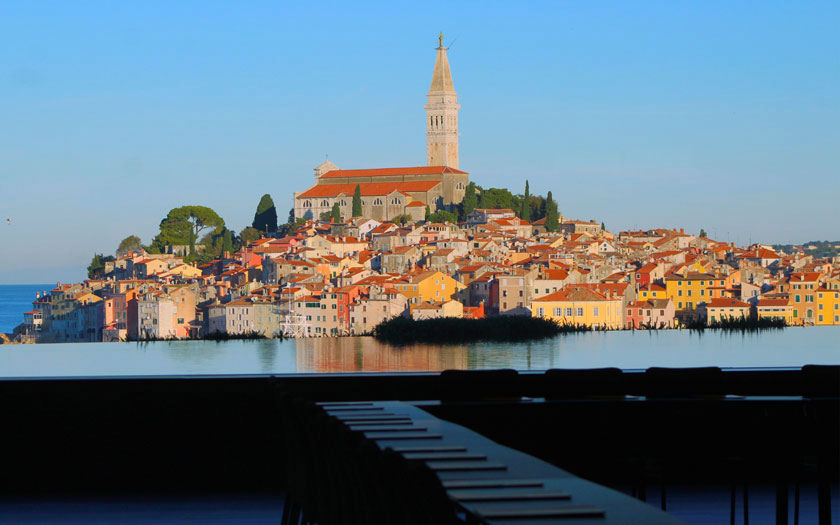
Not only is it the single largest investment in Croatian tourism, but it is also one of the more complex tourism development models in the entire Mediterranean. It involves a model where the synergy of leisure and MICE concepts must find the right balance. As far as I know, there are not many similar models in the Mediterranean, especially considering the capacity level. After Rovinj, we will have Poreč with even more significant capacity in 5-star hotels (540 new rooms + 200 existing), but also with a respectable hall capacity of 1,200 participants. This is a very important moment for Istria's MICE segment for at least two reasons: across the Mediterranean, there are very few 5-star hotels with over 540 rooms that also have a congress hall. The second important reason is that, given such large capacity in hotel and congress offerings, it will be extremely attractive for attracting large American gatherings and congresses. With better air connectivity and destination accessibility, the competitiveness of our destinations will gain a whole new dimension. Of course, we have additional projects in this regard (smaller and larger 5-star hotels, some with congress halls), so I hope all will recognise the potential offered in Istria's MICE segment.
Istria has strong MICE infrastructure and attractive venues for international gatherings, but limited air accessibility outside the summer months is often cited as a key challenge, leading organisers to rely on airports in Ljubljana, Zagreb, or Trieste. How is this issue addressed at the destination level, and does the Istria County Tourist Board have specific mechanisms or initiatives to influence the development of year-round air routes and better accessibility for business guests?
It is true that the weakest link in Istria's MICE offer is air connectivity and destination accessibility. The Istria County Tourist Board has prepared a concept to appropriately address this segment. Key improvements in this regard will be visible as early as 2026, with additional positive announcements for 2027, and by 2028, this challenge should largely be resolved. In practice, we are working on a concept of good connectivity with so-called European hubs, which will provide direct connections to those destinations on one hand, and connecting flights to Pula on the other. This will significantly simplify the entire process, increase visibility for Istria and its destinations, put Istria on the radar of key MICE players, provide a significant competitive edge, facilitate bidding processes, and result in a substantially higher number of inquiries—key to business realisation. Although it is a complex process, I am convinced that through private-public sector collaboration, the much-desired improved air accessibility for Istria will be achieved, positioning Istria in a completely new place and reputation on the MICE map.
Experience, Vision, and Istria's Future
You have been at the helm of the Istria County Tourist Board for 15 years. In your opinion, what is the secret to long-term success in leading such a complex and highly successful tourist destination?
From today's perspective and past experience, I know that every destination, especially smaller ones, can structure itself well in a relatively short time to have a head and tail in the right place. Any destination can get on the tourism demand radar because every place has some history, event, story, peculiarity, or moment that marked it. Even more importantly, big money is not decisive for that, especially not large sums. With a little knowledge, good taste, and insight, a lot can truly be achieved. This is an indisputable fact, as storytelling is extremely important today, experience creation even more so, and at the top of the pyramid is special interest tourism and added value—everyone starts from an equal position. This simple formula shows that anyone can "play" and join the game, but the key question is whether as an amateur or professional, and accordingly on a regional, national, or international stage, and at what level: third, second, or first league, or with ambitions raised to the Champions League level.
Istria has made the biggest strides in this segment. First, we started from zero—we agreed there are many better and more successful destinations than Istria, that we have a lot to learn, a big job ahead that must be structured into a strategy with numerous smaller operational and execution documents, and that we must establish a public-private partnership system. We discarded all frivolous and misleading theories that had long circulated here, such as being the best and most beautiful, the smartest, and especially: "Who can afford that."
With such premises, we started humbly and with great energy. We worked, learned, and perfected on the go; we were not satisfied with good results but aimed for the best. This is a demanding and constant process where you promise future guests change and present a picture of what your destination will look like. It is certainly easier written on paper than implemented. Therefore, passion and persistence are essential in this process.
Passion is the greatest driving energy leading to higher goals and results, and persistence is the guarantee that you will achieve them.
What have been the biggest changes in Istria over these 15 years, and what would you highlight as the greatest challenges—especially in the context of transforming towards a year-round and MICE-oriented destination?
The biggest changes are undoubtedly that we have very well structured the Istria destination. Using sports terminology, Istria today is mentally strong, physically in excellent shape, and very well trained. This enables us to remain highly competitive. Generally, Istria has had very stable business for eight months a year for a longer period. Significant progress has also been made in winter months. This is an ongoing process that is continuously refined.
However, we must be aware that we are not alone in the world, there is competition, and they are not standing still either. So, it's not just about how we proceed. The shifts we made 15-20 years ago were, conditionally, easy, and changes were visible quickly (as the base was modest). Now that Istria has built its reputation and status, it is much harder to make a change. To stand out from the large number of very good destinations, an additional major—and certainly not easy—shift is needed. Istria at this competitive level needs preparation for new challenges and to prove to ourselves if we can make that extra step. That is why we are preparing a new document: Vision of Istria until 2050. Within it, we will develop an operational document: Master Plan for Development 2026-2035. I am convinced it will place great emphasis on incentive offers, business events, and occasions.