September brought additional growth in tourism traffic in Croatia

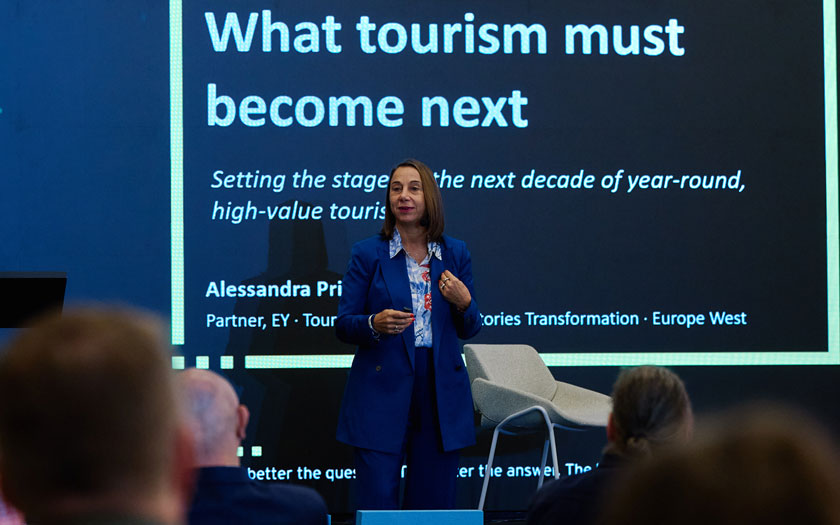
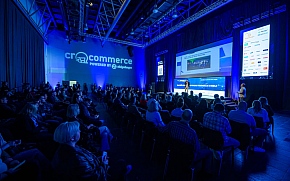
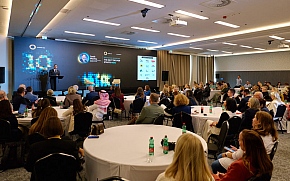
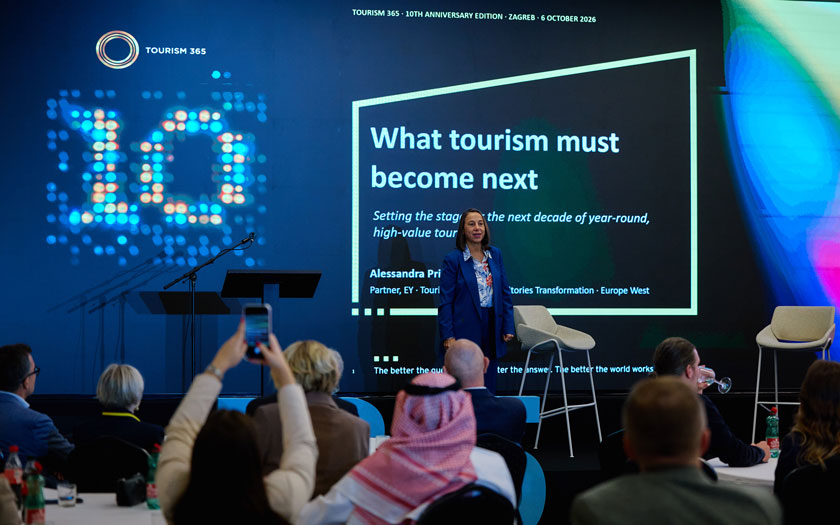
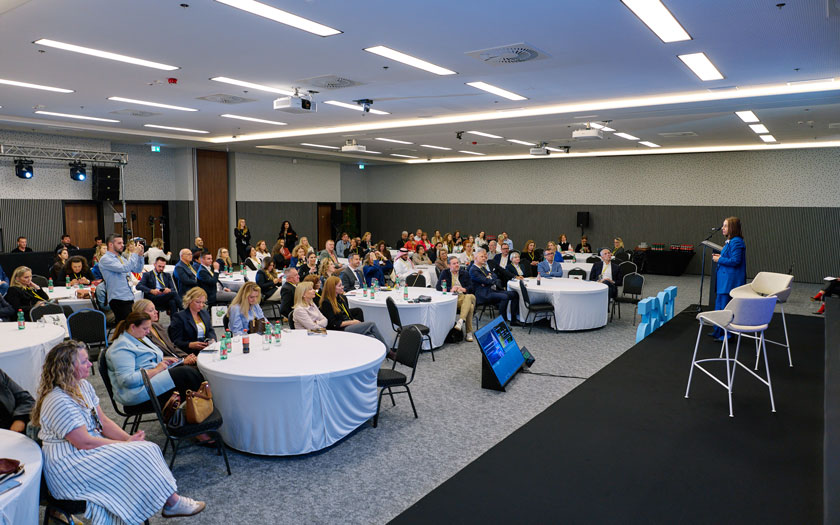
The tenth edition of the international conference TOURISM 365, held on 6 and 7 October 2026 in Zagreb, brought a look at the future of tourism from a European perspective. Among the prominent speakers was Alessandra Priante, Partner and Leader of Tourism, Events and Destinations Transformation for Western Europe at EY consulting firm. With more than two decades of experience in tourism policies, destination management and international cooperation, Priante previously served as President of the Italian national tourist organization ENIT, as well as holding senior positions at UN Tourism.
Priante opened her presentation with a reminder that tourism is, above all, a people business. According to her, it is an economic sector that has the greatest impact on GDP and employment, while costing the state less than many other major sectors. She warned that tourism is easily taken for granted, whereas in reality, behind every trip lies a demanding chain from strategy to execution. She praised the conference organizer for recognizing a trend ten years ago that is now talked about everywhere—namely, tourism that does not happen only during the peak seasonal months.
Record 2025, followed by a fragile 2026
Her presentation followed the opening address by the Minister of Tourism and Sport, Tonči Glavina, who discussed, among other things, climate change and growth, alongside the presentation of a Croatian National Tourist Board promotional video featuring John Malkovich. Priante said she could hardly wait to comment on that very video. She commended the Minister for his "forward-looking" promotional message and saw a hidden message in the fact that Malkovich has roots in Croatia. She added that this served as a good introduction to her presentation, the goal of which, as she put it, was to "shake up" the audience a bit and introduce an element of disruption into conventional thinking.
If we do not change what we measure, we will not change what we do.
The figures in the presentation show why such a shift is needed. In 2025, 1.52 billion international arrivals were recorded, 4% more than the previous year, alongside USD 1.9 trillion in revenue, which is growing faster than the number of arrivals. However, in the first half of 2026, growth fell to just 0.4%, and the forecast for the entire year was reduced to 1 to 2%. "Spending continues to grow more than the number of arrivals, while quantitative growth is reaching its limits. The next decade will be crucial."
Priante believes that part of the problem lies in the fact that tourism is still measured using metrics from the last century. "The number of arrivals and overnight stays are metrics from the 1900s, when factory owners had to send workers on vacation." She built on Minister Glavina's point that value rather than numbers should be tracked, but emphasized: "The shift from volume to value makes sense only when value can be measured, especially when public money is involved. If we do not change what we measure, we will not change what we do."
Five forces changing the rules of the game
Priante highlighted five forces operating in tourism today: new travelers, artificial intelligence, climate pressure, changing values and the transition from volume to value.
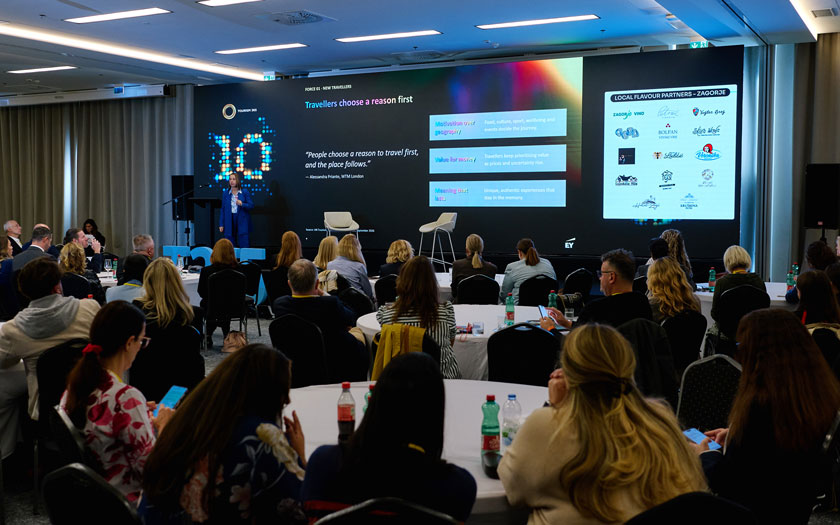
The first major shift relates to how people choose their trips. "People first choose the reason for travel, and only then the destination," she said. Gastronomy, culture, sports, wellness and events are increasingly becoming the primary reason for visiting. A traveler might not choose a country because they want to visit it, but because a concert is taking place there, a specific wellness treatment is offered, or an experience exists that cannot be found elsewhere. As examples, she cited traveling to Albania for an Ariana Grande concert or to Saudi Arabia for a unique wellness technique. For event organizers, this is direct confirmation that content is increasingly creating the destination, rather than the other way around. Priante also warned that destinations must not target only existing segments: as president of ENIT, she did not want to increase the number of older German guests, but rather talk to their grandchildren, because today's sixteen-year-olds are the buyers five to ten years from now.
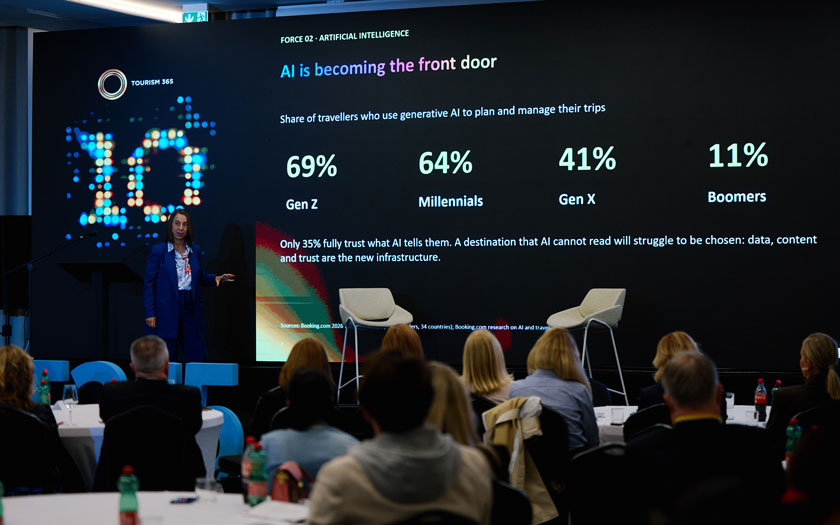
The second major change is artificial intelligence, which is becoming one of the main entry points into travel planning. Data presented at the conference shows that generative artificial intelligence is used for travel planning and organization by 69 percent of Gen Z, 64 percent of Millennials, 41 percent of Gen X and 11 percent of Baby Boomers. For tourist destinations and business entities, this creates a new task: content must be high quality, accurate and structured so that artificial intelligence can find and properly interpret it.
At the same time, only 35 percent of travelers fully trust information received from AI tools. "We perceive these platforms as friends, but let us think after all - who is actually shaping the response?", Priante stressed, mentioning that ChatGPT already offers sponsored results in its answers today.
Priante particularly warned that the generation entering the travel market for the first time must not be ignored either. Destinations wishing to attract future guests must understand young people's interests, digital habits and criteria for choosing experiences today. Here, Priante returned to the film with Malkovich: "The video is a good move; you certainly won me over with Malkovich, but Generation Alpha, the one coming after Gen Z, most likely does not even know who he is." They will perhaps make decisions exclusively with the help of AI. The conclusion is that a destination that AI cannot read will hardly be selected, making data, content and trust the new infrastructure.
Climate pressure is changing the travel calendar. For 81% of Europeans, climate change affects how they travel, and one in three travelers plans to change travel dates within two years. Priante added that what was until recently a strategy is now a consequence—more and more people spend the summer at home and go on vacation in September or October, but this is not a deliberate choice. Mountain destinations, she notes, are losing the winter season and gaining a summer season, raising questions about infrastructure, sports and the role of wellness.
Destination management becomes more important than growth itself
Particularly interesting is the insight from the World Economic Forum's Travel & Tourism Development Index (TTDI 2026). Out of 110 economies, 92% improved their score since 2024, but three out of four lost price competitiveness due to rising travel costs. The socio-economic impact of tourism fell by 3.5%. Priante summarized: "Conditions are stronger, but value is weaker."
She also warned against the trap of equating value with higher prices. If prices rise in restaurants, hotels and bars, inflation is also felt by the local population whose income does not grow at the same rate. As a warning, she cited Rome, where the figure of 40,000 new Airbnb properties indicates that almost no one lives in the city center anymore, thereby endangering the very authenticity that tourism promises. This brings out the fourth force - a change in values, meaning that local residents, authenticity and purpose become part of the equation. All these changes are connected by one question Priante posed to the attendees:
Who is actually setting the direction of tourism development today?
Destinations cannot simply project arrival growth and then look for ways to accommodate an increasing number of guests. It is necessary to consider where visitors will come, at what time of year, for what reasons, and with what consequences for the local community. Tourism development must include residents, infrastructure, small businesses and all stakeholders involved in creating the destination experience. That is the fifth force Priante cites - the shift from volume to value, where success is measured by what remains in the destination after the visit.
Her final conclusion was summarized in a single sentence: "Growth should stop being a question. Management should be the answer."
Successful destinations will need to connect data, technology and the human element. Because, as Priante emphasized at the beginning of her presentation, tourism is above all a people industry. They are the ones creating the experiences that make travelers return, recommend the destination to others and carry home memories that last much longer than the stay itself. The future of tourism will therefore not be decided merely by how many visitors arrived, but by how much value their arrival created.