Croatia presented at the Events Club Forum in Prague to more than 150 international event organisers

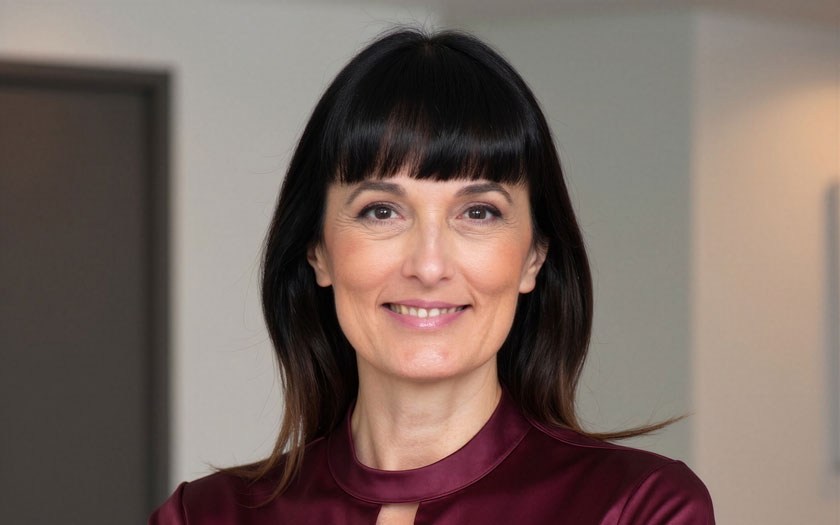
Leila Krešić-Jurić, Director of the Representative Office of the Croatian National Tourist Board for North America based in New York, has a career behind her that encompasses almost all levels of the tourism business. She started her professional path abroad and continued through managing a tourism portfolio in banking in Croatia, hotel companies Istraturist and Valamar, the Croatian Chamber of Economy, as well as the international promotion of health tourism and the organization of business events.
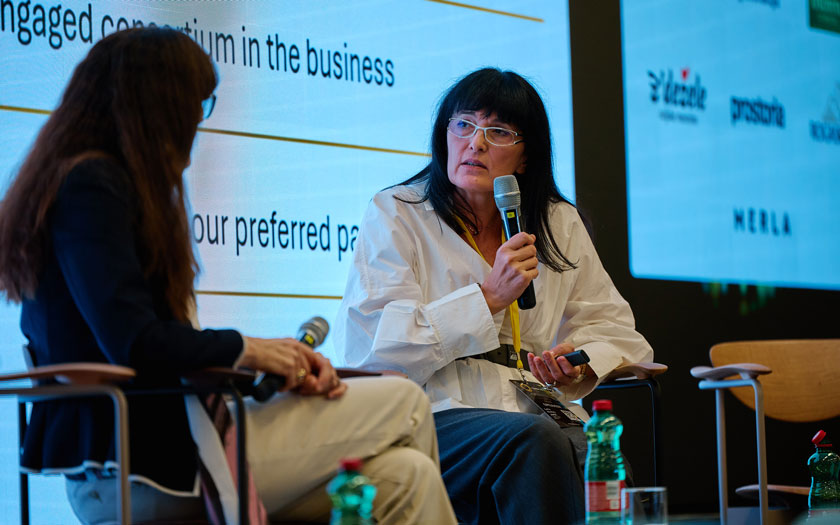
Today, her focus is on connecting Croatia with the American tourism market, developing partnerships and stimulating long-term demand. In an interview for PoslovniTurizam, she speaks about how American partners perceive Croatia, what their clients are looking for, how important air connectivity is, and which opportunities our destinations, hotels, agencies and event organizers can make better use of.
From hotel business to the development of the tourism sector as a whole
You made your entrance into Croatian tourism from a slightly different perspective – through managing the tourism portfolio of Zagrebačka banka, then as a Board member at Istraturist, and as a member of the founding team of the Valamar group. What did you learn about the hotel business back then, and what did that experience mean for your later work in tourism?
I have always wanted to work in tourism. My first "real" employer was Four Seasons. Before returning to Croatia, I lived and worked in Spain, in the field of timeshare within the Four Seasons hotel system. I started in luxury tourism and worked in various locations, from the south of Spain and the Canary Islands to the French Caribbean.
I decided to return to Croatia in order to build my own path. After returning in the mid-90s, finding a job in tourism was not easy. So, through Zagrebačka banka, which had a significant tourism portfolio, I approached that industry again. Among the companies in the portfolio were Istraturist, Jadranturist, Generalturist and other tourism companies. That was an excellent school that taught me to think with the "head of an owner", and not just as an employee or manager.
After working at Istraturist Umag, Valamar followed, where we, as a very heterogeneous team, formed a smaller management company designed to unify and professionally manage a portfolio of hotels belonging to various owners. It was a valuable experience because we had the opportunity to build the organization and processes, align different interests, and develop a professional model of hotel asset management.
Tourism is not an isolated industry
For six years, you served as the Director of the Tourism Sector at the Croatian Chamber of Economy. How much did working in that position change and influence your view of Croatian tourism – especially when you transitioned from the perspective of an individual company to the perspective of the entire sector?
At CCE, that experience was very useful to me. I joined the Tourism Sector in 2012. At that time, every company in Croatia was a member of the chamber by law, which meant over 20,000 members from the tourism sector. Alongside them, private accommodation renters were also organized as an association through CCE, which placed the entire sector under a shared framework. Interestingly, those most interested in CCE dealing with private accommodation renters were other sectors – banks, furniture manufacturers and tourism equipment providers in general, who wanted to get closer to that group and sponsored these gatherings. Private accommodation renters were extremely eager for education, so up to a thousand of them would attend events we organized through CCE.
Through cooperation with 16 associations and communities, we detected what was key to each of them and how to simplify and facilitate business operations through amendments to laws and regulations. That list became the basis for lobbying through CCE and other institutions, including relevant ministries and the Parliamentary Tourism Committee. Cooperation with the profession was key.
You have passed through almost the entire tourism chain during your career. When you look at Croatian tourism today from that broad perspective – how much has it changed, where have we progressed the most, and where do you still see room for improvement?
As a nation, we are very critical of ourselves, which is good because it pushes us forward. Sometimes we are a bit too critical towards those around us as well, but I believe that ultimately pushes everything forward too. I think we have changed a lot in the way we perceive our own tourism product. The biggest shift is that we have become aware that we have a product, and that product is us and our lifestyle. Us as Croats, through our personality, mindset and charisma.
When I ask American guests why they love Croatia – and keep in mind that this is the most "spoiled" market in the world – they naturally first mention the natural beauty, the sea, etc., but right after that they state: and because of the people. We are not even aware of how different we are, and that is the hardest thing to copy. It is clear that the value of a destination lies not only in the landscape, hotels or landmarks, but also in the way people relate and how much heart they put into interacting with guests.
American market – authenticity, partnerships and accessibility
Today from New York, you lead CNTB activities for the entire North American market. What does this position actually encompass, and what are your main current goals?
The position encompasses very diverse activities – from cooperation with partners to administrative management of the office, but about 80 percent of the time, energy and funds that we invest in the American market through the representative office goes into cooperation with the business sector – agent networks (consortia). America is a country of about 340 million people, and it is impossible to actively promote ourselves to guests across the entire nation, but it is possible to communicate with three or four consortia, which then cascade down to their agencies and agents.
Through such partners, we are in contact with agencies with which we run various online campaigns, hold B2B workshops, send newsletters, organize webinars, etc. We currently have around 11,000 agents in our database, and our newsletter open rate is 60 percent. Agents seek education, so we have also introduced certificates through which they acquire knowledge about the destination.
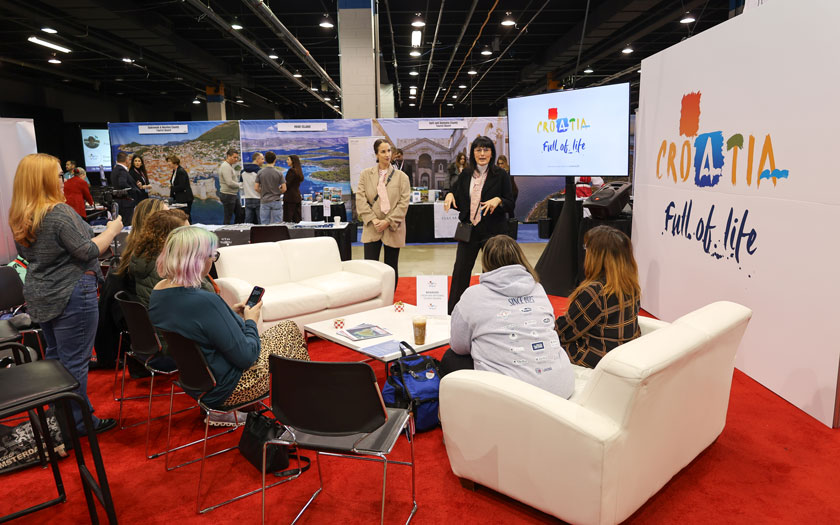
Each consortium covers a certain segment. With the largest one, Internova, we cover the broadest part of the luxury and premium segment, while with Signature Travel Network, a boutique consortium whose agents are known for having the highest average sales revenue because they all work full-time, we cover other parts. The tourist boards of Dubrovnik, Istria and Zagreb are members of the Virtuoso consortium, and we also cooperate with the CCRA network, which counts about 40,000 advisors and covers a broader segment of independent agents. We are very satisfied with the cooperation; growth this year is around seven percent in overnight stays, and in terms of revenue, we expect even more because prices have risen and because it involves a more luxurious segment. Participating in consortia B2B events is one of the most cost-effective ways to promote ourselves in a market where agents are de facto "influencers" who impact final destination choices.
In America, we also organize various events, such as the recent B2B meetings between American agents and Croatian partners on the occasion of the Prime Minister's visit to New York, and we often cooperate with tourist boards in such a way that they invite their regional partners, while we invite agents.
What are American guests looking for most today when choosing a European destination? Are their expectations changing, and where does Croatia fit into these trends?
The American guests we want to attract – which are luxury guests – are looking for experiences. Such guests want something special and different, something they cannot get just anywhere. Naturally, service quality and comfort are important, but experience is what often makes the difference.
For example, an American agent who has been selling Croatia for decades organized an Easter celebration for her clients with a Croatian family because the guests wanted to experience how Easter is marked in a Croatian home. Such an experience cannot be booked through an online portal.
All of this is our advantage. We have tradition, gastronomy, customs, family stories, local producers and people who can bring everyday life closer to visitors. At the same time, this is not about luxury in the traditional sense. Luxury can also be access to something authentic, personal and not accessible to everyone.
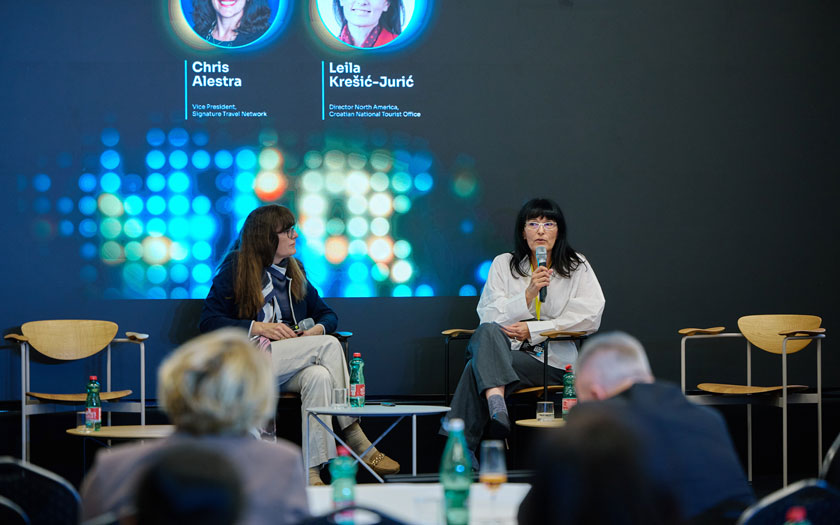
When speaking from the perspective of an American travel buyer, how do they perceive Croatia today? To what extent do they know us and for what most, what is Croatia doing well today, and where is there still room to make our offering clearer and easier to sell?
My experience is that the perception of Croatia is very positive. In my four and a half years of working in this market, I have very rarely encountered people who had no knowledge of Croatia at all, and I have heard virtually no negative comments. That is why it is important to give agents concrete information and stories that they can pass on to their clients. In a short conversation, we cannot teach agents absolutely everything about Croatia, but we can leave them with something memorable.
The most effective sales happen when an agent becomes an advocate for the destination themselves. At one trade show, I was talking to an agent when another one approached who had been to Croatia many times, and she enthusiastically began explaining what our country offers and sharing her experience. In such moments, you realize how valuable it is when someone can recommend Croatia from personal experience.
Do we have good enough air connectivity with the US?
Air connectivity is not sufficient, but it is improving. However, for a meaningful discussion on this topic, it is important to understand that different groups of guests have different habits and expectations. Croatia is already attractive to American guests with high purchasing power and those who travel extensively, and such guests are willing to put in extra effort to reach a destination even if there is no ideal direct route. Therefore, even if we do not increase the number of direct flights, we will not automatically lose such guests.
However, if we want to attract a broader circle of guests, those with medium purchasing power, better air connectivity certainly helps, which is also more suitable for the broader offer of our tourism, as Croatia is not only a 5-star destination.
Who should take the first step here – the destination, the airline, hotel companies?
Airlines look for profit; they monitor demand, revenues and route profitability, especially the ability to sell business class seats, i.e., higher-priced seats. That is why it is not enough to simply want more flights; it is essential to demonstrate that there is market potential justifying their introduction. Naturally, a bit of "kokolavanje" [pampering/nurturing], as my Dalmatians say, helps with everything, so it is important to remain continuously in contact with airline representatives.
Cooperation with major consortia is currently bringing significant growth
In October 2024, Dubrovnik hosted the International Luxury Forum, which brought together more than 80 leading luxury travel agents and resulted in over 1,200 B2B meetings. You participated in organizing that event. Can you tell us today, two years later, how much that event specifically contributed to Croatia – did new deals or programs emerge from those contacts?
We are pleased that the world's largest group uniting several agent consortia, Internova, selected Croatia for as many as two of its international events, and after Dubrovnik, the same event was held in Opatija in October 2025. It is difficult to track the impact of a single event, because someone books today, while someone else books in a year or two, and an agent can also contact a hotel directly. Therefore, I will provide broader feedback. The Prime Minister recently pointed out that Croatia exports nearly a billion euros in services to the US annually. According to earlier Croatian National Bank data, American tourists generate around 700 million euros in revenue for Croatia. On the other hand, Internova generated 185 million dollars in business in Croatia last year, or 23% more than the previous year. We are awaiting this year's results, but when such a partner grows by 20 percent, we believe we are doing something right.
How to win over the American MICE market
To what extent is Croatia recognized in the American market as a congress, incentive and event destination?
In our database at this moment, we have 370 agents who handle the MICE segment, and we communicate with them in the same way as with other agents. However, business events have certain specificities, and one of the key ones is certainly air connectivity. When talking about large conferences with several thousand attendees coming from different parts of the world, accessibility can be a major challenge. Organizing an event for five thousand people is not the same as an incentive program for a smaller group.
With incentive travel, there are more possibilities. Participants can connect Croatia with other European cities, extend their stay, or include several destinations in the program. That opens up space for Croatia, especially when we can offer something unique and different. For example, guests can arrive via another European city and spend several days in Dubrovnik, Zagreb or Istria as part of their trip. Such programs require thorough planning and quality cooperation from local partners, but they can be very attractive.
Croatia might not be the simplest choice for every large international conference, but that does not mean it is not competitive for other types of business events. It is important to recognize which products and programs we can best offer to specific groups of American clients.
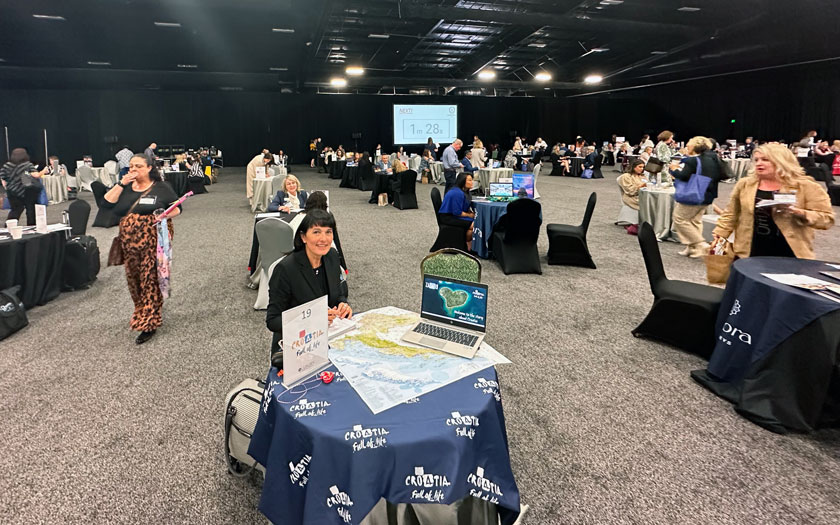
If you could give Croatian hotel companies, DMCs, event organizers and other tourism service providers one piece of advice on how to be more successful in the American market, what would you tell them?
Success in the American market requires more than just deciding: "I want to do a bit of business with America"; it is a long-term process. First and foremost, it is important to be present in the market systematically. It is not enough to go to a trade show or B2B workshop once, meet a few agents and expect business to flow automatically afterwards. The first trip to America serves to test the market, to see whether there is demand for what you offer at all. At trade shows, you often encounter guests who want to book a trip, but the greatest value lies in our companies listening to how the market breathes, what Americans fundamentally seek, how to approach them, and how to package the product. You need to have a plan, choose a market segment that suits you, and continuously build relationships. The American market is large, and you cannot cover it by everyone going to the same places and trying to reach the same partners. Someone will focus on a specific region, someone on a specific agent network, and someone on a specific travel segment. It is important to find your niche, which is not difficult in America, because there are plenty of spaces and market niches.
We have examples of Croatian companies working very successfully in the American market, and what they all have in common is that they are present there multiple times a year, while some even have their own representatives. If you want to sell a more sophisticated product and attract guests who are willing to spend significant amounts on travel, you must invest time in relationships and getting to know the market.
CNTB can help in this process by connecting Croatian partners with agents, providing information on events, and supporting smaller B2B meetings. However, in the end, it is key for every company to know clearly what it offers, whom it wants to sell to, and how it differs from the competition.