Croatia presented at the Events Club Forum in Prague to more than 150 international event organisers

A hotel that loses a MICE client due to poor F&B execution rarely finds out that it has lost them. There are no one-star reviews, no public complaints and no calls to the general manager. There is only silence - and the following year, a congress that had been returning to the same hall for years simply does not make it onto the enquiry list. This silence is more expensive than any bad Google review because it is invisible until the damage is already done.
A MICE guest does not leave reviews, they simply do not return
A leisure tourist who is dissatisfied writes a review. It is loud, public and – paradoxically – useful, because at least the hotel sees the problem. A MICE guest functions completely differently. The venue decision is not made by an individual choosing for themselves; it is made by an event planner, a corporate procurement department or an agency organising a congress for hundreds of participants. This person does not leave a Google review about a coffee break. Their dissatisfaction goes through a private channel: an internal report to a superior, an email to the agency that suggested the venue or a passing remark to a colleague organising a similar event next year.
This is precisely why the hotel does not "see" the problem in time. There is no public signal for a review-monitoring tool or automated tracking to catch. The silence of a MICE client is not a sign that everything is fine – it is often a sign that the decision has already been made, it just has not been communicated yet.
How this can look (badly) in practice
A conference hall for 120 people, the second day of a three-day congress. The organiser confirmed the final number of participants the day before – 118, plus a dozen announced guests who "might come". The kitchen received the figure of 118 and prepared according to the standard norm.
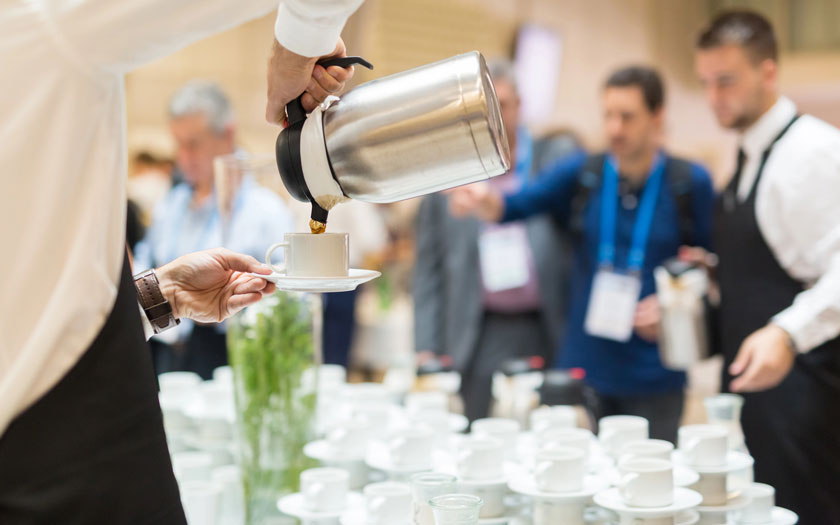
The coffee break begins at 10:30. For the first thirty minutes, everything runs smoothly - the coffee jugs are full, and the croissants and fruit platters are neatly arranged. But the organiser had agreed on a 45-minute break because the morning session started later. No one in the F&B team updated the schedule. By the 35th minute, the coffee is cold, the staff have already started dismantling the table for the next session, and about twenty participants who left the hall later found an empty station and a waiter carrying empty flasks back to the kitchen.
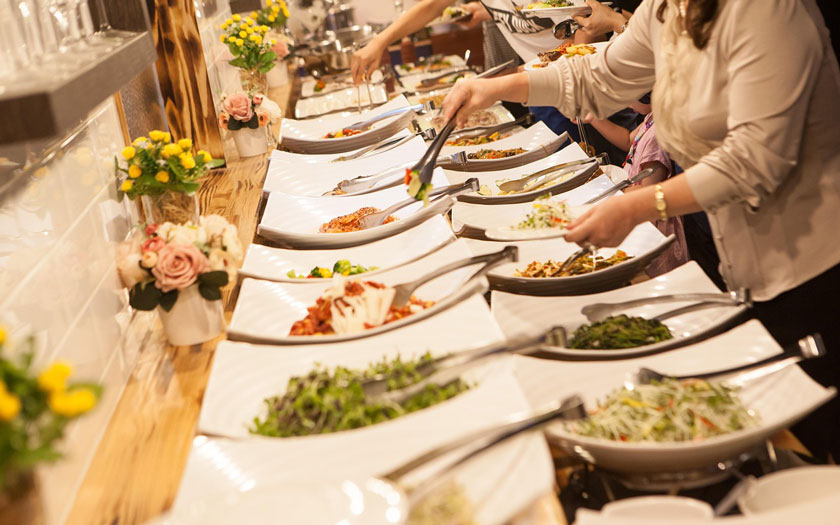
The organiser does not see this as a "minor incident". She stands before her participants, people who paid a registration fee, took a day off work and travelled – and she, not the hotel, is the one feeling embarrassed. By the gala dinner on the same day, the number of confirmed guests rose to 124, as the announced "maybe" guests had arrived. The banquet was prepared for 118. Six tables are left without a main course while the kitchen improvises extra portions, and the service is running twenty minutes late on an already tight schedule.
Neither of these two moments will appear in a Google review. But in an internal report to a superior, in an email to the agency that chose the venue or in a conversation with a colleague organising a similar event next year, those two details will be mentioned. And that is enough for the same congress not to return to the same hall next year.
Why a MICE F&B mistake is more expensive than a restaurant mistake
The difference is not in the size of the mistake – cold coffee is cold coffee, whether it concerns two guests at a table or eighty people on a break. The difference is that a MICE client does not seek compensation through hospitality. Service quality research in the MICE industry shows that reliability, performance assurance and tangible details such as food quality, banquet appearance and schedule accuracy significantly influence satisfaction, whereas staff empathy has no statistically significant impact.
A MICE guest does not want someone to apologise with a smile. They want things to work as agreed.
This coincides with what is seen in the figures. Hotel banquet revenue in 2025 fell by 7.3% in conference hotels, while simultaneously growing by 8.7% in resort hotels — a difference that often correlates with consistency of execution, not just the level of demand. The MICE segment is tangibly more sensitive to operational failures than standard F&B traffic because the margin for error is smaller: one banquet, one day, one opportunity for everything to be exactly as agreed.
The B2B network is small – and it remembers
Event planners, corporate procurement departments and agencies organising congresses share experiences with each other within a closed circle that is smaller than it seems. One bad gala dinner does not just lose one client – a recommendation is lost within a network of people who choose venues for dozens of events every year. The global MICE market is estimated at around 650 billion dollars, and food and catering within it are not decorative additions but carry a strategic role in how participants remember the entire event. Yet, the number of serious studies dealing specifically with this topic is surprisingly small, considering the scale of the market.
A hotel that relies on a good atmosphere to compensate for an operational failure is building its strategy on a false assumption. A MICE client does not remember the smile of the waiter who brought the cold coffee. They remember that the coffee was cold.
Instead of waiting for the next large group to uncover a problem that already existed, the solution is simple: a brief post-event questionnaire addressed to the organiser (not the guest), which captures F&B sentiment weekly while it is still fresh. Five questions about the schedule, food temperature and service precision are enough for a hotel to see a problem before it becomes the reason why next year's congress moves to another venue.
Author biography:
Leo Ljubičić is a master chef, master pastry chef, culinary and pastry arts instructor at RCK Dubrovnik since 2013 and a WorldSkills Croatia evaluator, with more than 25 years of experience in professional kitchens and hospitality management. He is the founder of LPI LABS — an AI hospitality intelligence startup based in Dubrovnik, which helps hotels and restaurants convert public signals from guests and competitors into concrete operational signals.