Hotel Summit 2026 in Dubrovnik: How AI, technology and new trends are changing the hotel industry

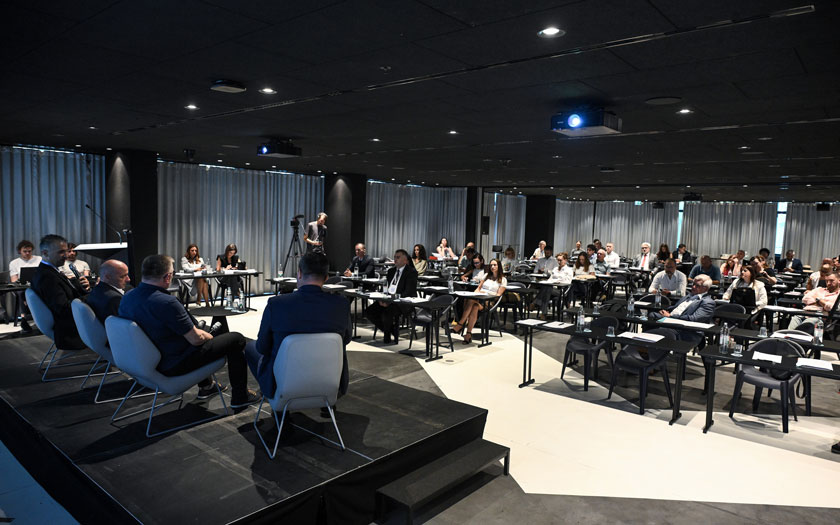
Representatives of state-owned enterprises, public administration, international institutions, the academic community and the business sector gathered at the Zonar Hotel in Zagreb for the conference ‘Digital & AI Transformation Conference 2026 – 7th Smart Industry Brainstorm: Developing Management Practices in the Digital & AI Era for State-Owned Enterprises’ to exchange knowledge and experience on new management challenges brought by digital transformation and artificial intelligence.
The conference comes at a time when Croatia, through its OECD accession process and the implementation of European regulatory frameworks, is further improving corporate governance standards in state-owned enterprises. Special emphasis is placed on developing managerial skills, the responsible use of artificial intelligence, risk management, strengthening organisational resilience and competitiveness, as well as on transformation at all levels – from the international to the personal.
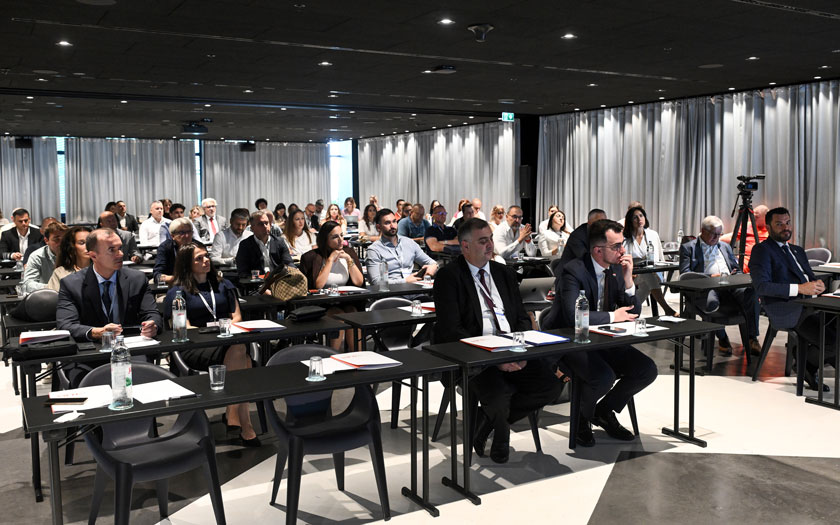
"We must all transform. A global-level transformation is needed so that we can work alongside OECD countries; a national-level one is necessary because state-owned enterprises are cornerstone companies and, together with ministries, the most powerful driving force of Croatia. This is precisely why the digitalisation of business models and the development of new AI-based capabilities are required. Finally, we come to personal transformation. Each of us, both in our private and professional lives, needs to work digitally and use AI as a tool," said one of the conference organisers, Professor Slavko Vidović, PhD, President of the Management Board of InfoDom and President of the CroSI Association.
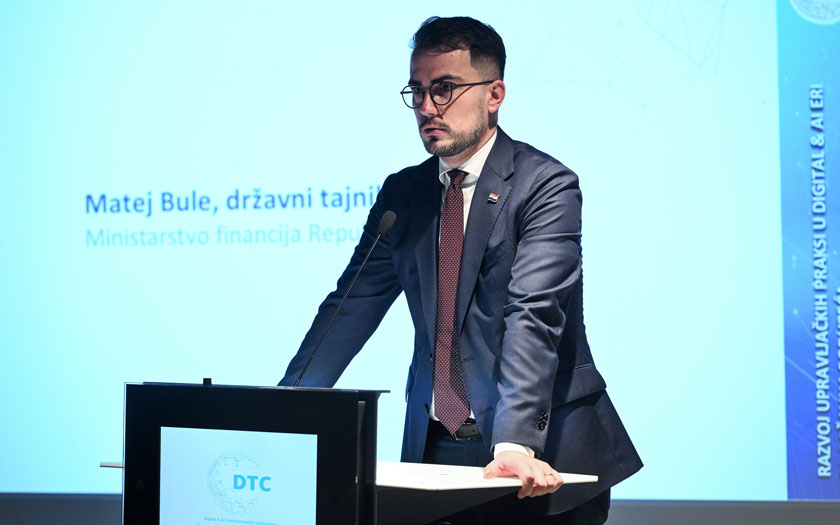
The digital transformation of Croatia is managed by the Ministry of Finance. State Secretary Matej Bule pointed out at the conference that the use of new technologies and tools is the foundation for economic growth. "Croatia currently has record-low unemployment and it is unrealistic to expect our growth to be based solely on further employment growth because those people simply are not there. We must focus on productivity and how each employee can create more per unit of time. The path to this is the widespread use of artificial intelligence and digital technologies," said State Secretary Bule.
At the opening, the participants were welcomed by representatives of the organisers and partners of the conference, including Professor Hrvoje Džapo, PhD, Professor Nina Begičević Ređep, PhD and Zdenko Lucić, State Secretary at the Ministry of Foreign and European Affairs and Deputy Chief Negotiator of the Republic of Croatia for OECD accession. "After fighting for our independence, joining NATO, the European Union and more recently the Eurozone and Schengen, OECD membership will complete Croatia’s international standing in the world. There are only a few internal procedures left that we will complete, and we will become an OECD member by the end of the year," announced Lucić.
OECD, artificial intelligence and the new responsibility of management boards
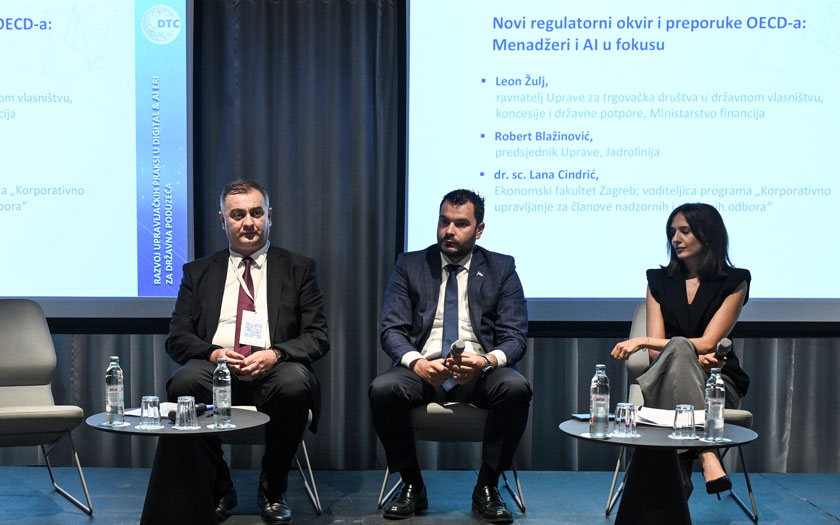
The central theme of this year’s conference relates to the new demands placed on the management boards of state-owned enterprises in the context of OECD guidelines on the application of artificial intelligence, European regulations such as the AI Act, the Data Act, the CER and NIS2 directives and the national legislative framework. At the opening of the conference, the attendees were addressed by Antonio Gomes, Deputy Director of the OECD Directorate for Financial and Enterprise Affairs.
The programme is organised into three thematic sections. The first is dedicated to OECD recommendations and regulatory changes that bring new responsibilities to state-owned enterprises in the field of artificial intelligence and corporate governance. The second section focuses on developing the business capabilities and management teams needed for successful digital transformation, while the third covers examples of international practice and concrete AI solutions that are already showing measurable business effects.
Strengthening management capabilities as a prerequisite for competitiveness
Conference participants point out that the successful application of artificial intelligence is not primarily a technological but a managerial issue. New regulatory requirements, a growing volume of data, the need for integrated risk management and accelerated technological development require the strengthening of board and management team competencies, alongside the development of organisational capabilities that enable more effective decision-making and increased business agility.
The organisers particularly emphasise the importance of cooperation between the state, the economy, science, media and professional organisations through the ‘5-Helix’ model, which should enable the continuous improvement of management processes and faster adaptation to global changes and new technological trends.
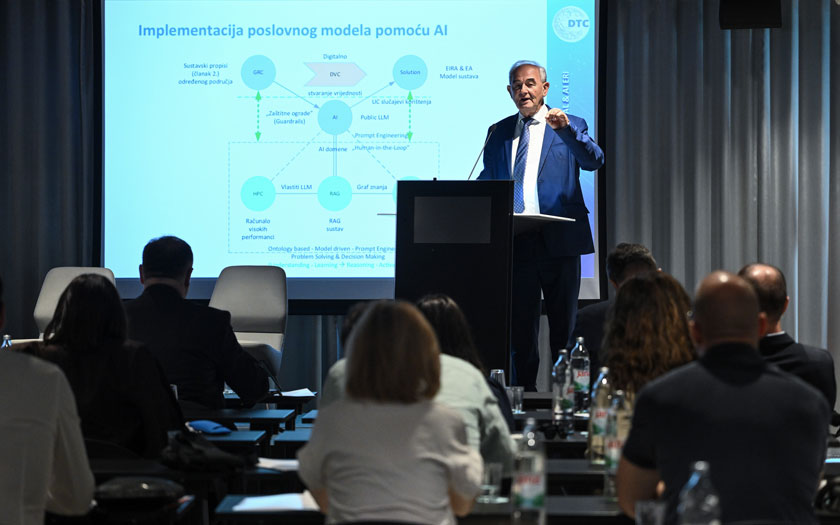
The conference continues on 15 July with online workshops dedicated to generative and agentic artificial intelligence, with a special focus on the practical application of AI solutions in state-owned enterprises and the public sector.