Hotel Summit 2026: The entire hotel business in one place

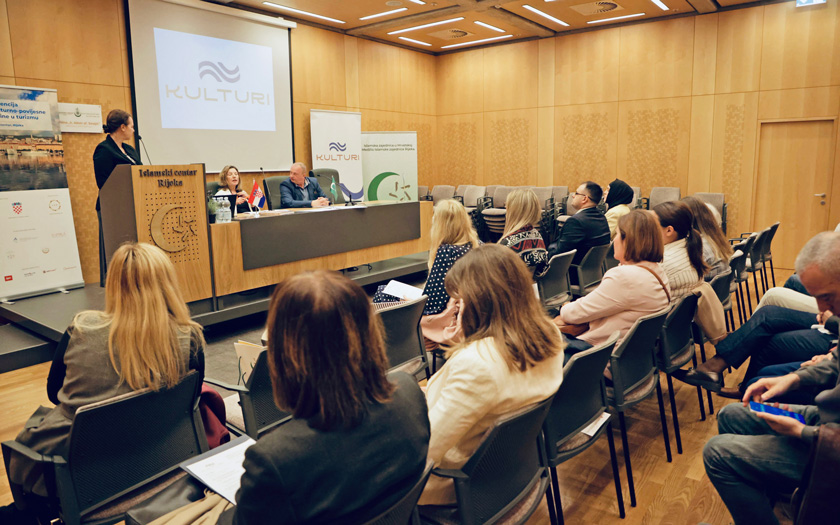
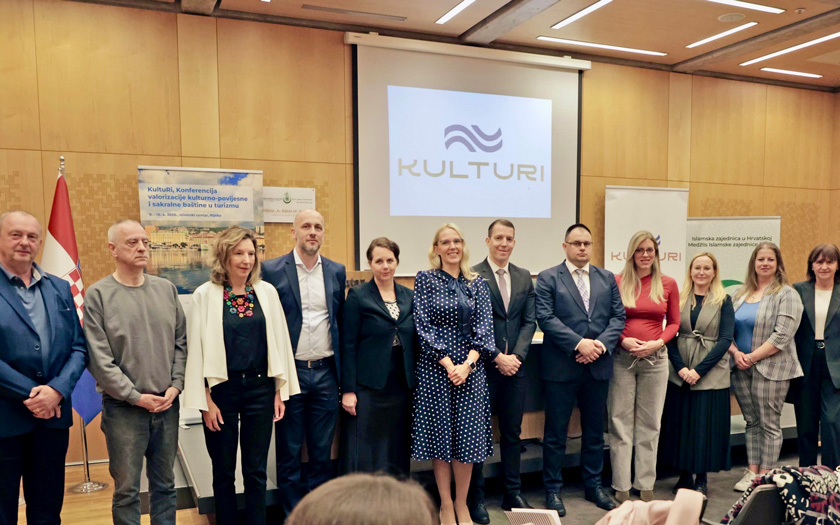
On 9 and 10 April 2026, Rijeka hosted the KultuRi conference – the Conference on the Valorization of Cultural, Historical and Sacral Heritage in Tourism, which once again brought together relevant stakeholders from tourism, culture and education to explore the sustainable development of destinations through the integration of heritage and gastronomic resources. This year’s edition took place at the Islamic Centre in Rijeka, further emphasizing the importance of including sacral and cultural infrastructure in contemporary tourism flows.
The programme opened with a guided tour of the centre. Hidajet ef. Hasanović, chief imam of the Islamic Community in Rijeka, presented the historical development of the Islamic Community in Croatia in his welcome address and highlighted the role of the Islamic Centre in Rijeka as an open space for all and for intercultural dialogue. The architectural value of Rijeka’s mosque, built according to the design of Dušan Džamonja, further confirms the potential of sacral heritage as an attractive and differentiating element of the tourism offer at the European level.
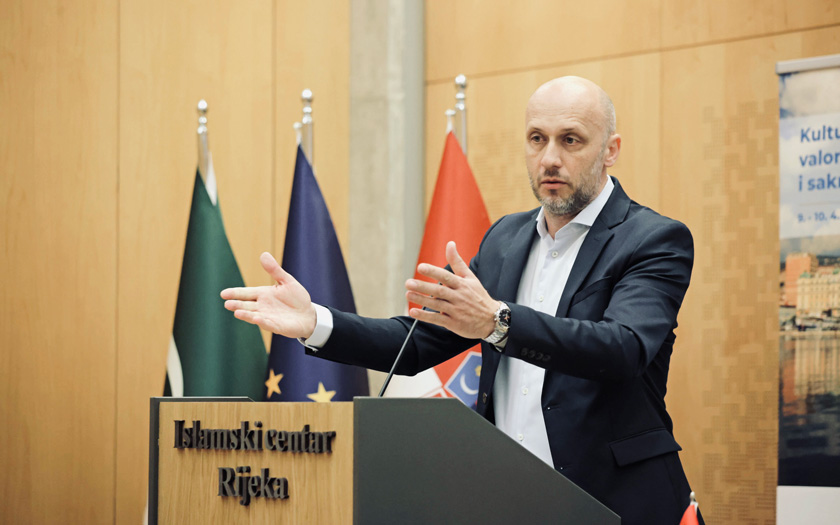
Organizer Sunčana Matić of LUX promocija highlighted Croatia’s high standards of religious freedom as a foundation of social cohesion, harmonious coexistence among different religious and national groups, and quality intercultural cooperation, which is also reflected in Rijeka’s identity as a city of pronounced multiculturalism, representing Croatia in miniature as a positive example. She stressed the role of gastronomy as a medium for preserving and interpreting Rijeka’s identity, thereby contributing to the shaping of an authentic and recognizable tourism destination. She thanked the host, the Islamic Community, as well as the sponsors – the City of Rijeka and the Ministry of Tourism and Sport of the Republic of Croatia – and all event partners, emphasizing that the conference was realized with the support of the City of Rijeka and the Rijeka Tourist Board.
On behalf of the Rijeka Tourist Board, Jelena Grubelić Krušeta presented strategic activities aimed at developing the gastronomic offer of Rijeka and its surrounding area. She emphasized that the continuous enhancement of the offer through gastronomic events and innovative cultural tourism projects contributes to the diversification of the tourism product, the extension of the tourist season – making the destination more competitive and resilient to market changes – and an increase in visitor length of stay.
At the start of the programme, the panel discussion „Can culinary heritage become a sustainable tourism product?” was held, featuring Karin Mimica (Abisal) and Zlatko Puntijar (Stari Puntijar), moderated by Sunčana Matić. Zlatko Puntijar emphasized the importance of preserving and interpreting historical recipes in a contemporary way, which also underpins his unique cookbook collection. He noted that Croatia, as a centuries-old crossroads of European routes, has historically adopted and transmitted a variety of culinary influences. Travellers brought recipes that local hosts adapted, while Croatian dishes simultaneously found their way to other regions, creating a rich exchange of spices and gastronomic innovation as part of the country’s heritage.
Karin Mimica presented the historical development of Rijeka and the influence of different rulers, highlighting today’s multiculturalism as a strong foundation for the development of gastronomy. She emphasized the successful cooperation with the Rijeka Tourist Board on the Rijeka Gastronomic Ports projects, which connect heritage with the contemporary tourism offer. In the final part of the panel, the topic of gastronomic brands in destination development was opened, with Karin Mimica highlighting the importance of strategic destination creation and promotion through gastronomy as one of the key drivers of modern travel.
The central thematic framework of the conference focused on gastronomy as one of the key resources for the sustainable development of tourism. Over the course of two days, numerous experts from culture, tourism and hospitality discussed the role of gastronomic heritage in shaping competitive destination products. It was emphasized that Croatia’s historically layered cultural influences have resulted in an authentic gastronomic identity, representing significant potential for differentiation in the global tourism market.
The lecture „The Rijeka Chocolate Elephant” was delivered by Velid Đekić, MA of the Rijeka City Museum, who took the audience through history and presented the cocoa and chocolate factory established in Rijeka in 1896. The factory was an important part of the city’s industrial development, successful and known for its predominantly female workforce. It produced a range of confectionery products, among which the Slon and Adria brands stood out. The elephant motif represented an unusual, exotic marketing approach that would still be considered innovative today. The factory used modern promotional methods, including posters featuring predominantly attractive figures and attractively designed packaging. After several ownership changes, the factory was destroyed in bombings during the Second World War. Today, it is remembered as the first chocolate factory in Croatia and a valuable part of the country’s industrial and tourism heritage, as well as an inspiration for contemporary projects and the development of Rijeka’s tourism identity.
The lecture „We Have Always Eaten and Drunk Well” was delivered by Zlatko Puntijar of the Stari Puntijar restaurant. It presented Croatia, located on important European routes, and the centuries-long development of its rich and diverse gastronomic heritage under the influence of different cultures and peoples, which contributed to the exchange of culinary traditions. Turkey, potatoes, corn and tomatoes, for example, entered Croatian cuisine early, were adapted to local tastes and have retained their original quality to this day. Zagreb, or more precisely Zagreb’s Grič, was home to four peoples: Croats, Hungarians, Germans and Italians, each of whom contributed to the culture. Written records and the first printed cookbooks, the oldest of which in Croatian dates back to 1868 – the cookbook by Gjuro Deželić – show that Croats have always kept pace with Europe in gastronomy and testify to the continuity and development of the cuisine. An important indicator is also the historical handwritten cookbook of Count Nikola Zrinski, which suggests that foreign and domestic influences shaped indigenous dishes that are still considered part of Croatian culinary identity and tradition today.
Muhamed Mandžić, Head of the Halal Quality Certification Centre, in his lecture „Halal as a Function of Strengthening a Destination’s Tourism Potential”, emphasized the halal concept as an instrument for tourism development and strengthening the competitiveness of destinations in line with global trends. The halal standard is recognized in the contemporary tourism offer as an added quality that enriches a destination’s offer, encourages diversification and enables access to a growing market. The importance of the halal certification system was highlighted through standardization, education and strengthening user trust. The continuous growth of halal tourism worldwide was also emphasized, confirming the potential of implementing halal standards for the development of Croatian tourism, attracting new markets and enhancing the overall tourism offer.
The lecture „From Local Sweet to Intangible Heritage: Vrsar Amaretti and a Valorization Model in Tourism” was delivered by Klara Trošt Lesić, PhD, Director of the Vrsar Tourist Board. The development of the Vrsar amaretti project was presented as an example of the valorization of local gastronomic heritage in tourism. The project began with research into historical sources, recipes and community testimonies. A model was developed involving local residents, educational and event content, and gradual integration into the tourism offer, branding and recently won awards. The development of the Vrsar amaretti project, which is being advanced at a scientific level, places emphasis on preserving authenticity and avoiding superficial commercialization. The applicability of this approach in other destinations was also considered as a smart tool for sustainable development and differentiation in the tourism market.
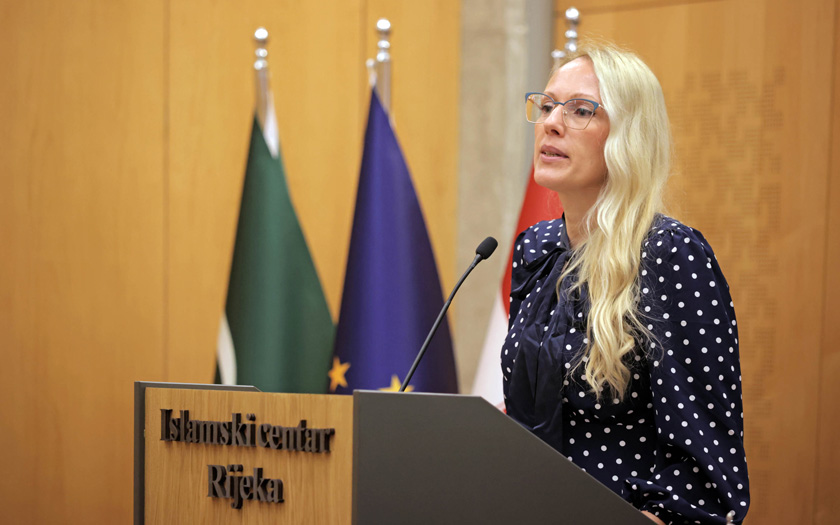
„Fažana’s Challenge in the Network of One Tradition” was the title of the lecture by Melita Peroković, Director of the Fažana Tourist Board, which described the beloved local project – the Little Fishing Academy „Sardela” in Fažana. This valuable educational and gastronomic project has been developing for decades and is dedicated to preserving fishing tradition and the preparation of blue fish. Through events from spring to autumn, Fažana becomes an open academy for residents and tourists. The programme includes practical learning in tool-making, fish preservation and sardine preparation. Special emphasis was placed on heritage, visible also through the sculptures on the waterfront symbolizing the importance of the sardine and further strengthening the destination’s recognizability on the foundations of tradition.
„Flavours of the Past in the Function of the Present: The Gastronomic Heritage of Kraljevica” was the title of the lecture by Jelena Mateševac Skočilić, Director of the Kraljevica Tourist Board. Kraljevica was presented as a coastal town of rich history and gastronomic heritage that reflects the identity and lifestyle of the local community. Gastronomic heritage is important to residents because it preserves tradition, culture and historical dietary patterns. Kraljevica is distinctive for the intertwining of the Frankopan court cuisine and the coastal cuisine. For the tourism valorization of heritage, particular emphasis was placed on the tuna fishing tradition and the preservation of local specialties such as the mendulača cake and local donkey milk. The contemporary offer is complemented by craft beers. Gastronomy represents significant tourism potential for Kraljevica and contributes to preserving heritage and developing the destination. Through food, projects successfully connect the past and the present, creating Kraljevica’s recognizable identity.
The lecture „Connecting Gastronomy, Heritage and Local Communities” was delivered by Marko Radić, Head of the Promotion Department of the Republika Srpska Tourist Board in Bosnia and Herzegovina. Local gastronomy in Bosnia and Herzegovina represents an authentic combination of tradition, identity and experience. Every dish carries a story about people, land and customs. The model of linking tourism, local producers and gastronomy developed in Herzegovina has proved to be an example of good practice and serves as an inspiration to many communities on how to present their culture through food and stimulate local development. Particular emphasis was placed on the development of the successful and tourist-favourite Hercegovina House project.
The lecture „The Role of Gastronomic Heritage in the Development of Creative Tourism” was delivered by Prof. Elena Rudan, PhD, Vice Dean of the Faculty of Tourism and Hospitality Management in Opatija. She emphasized that contemporary tourism increasingly includes gastronomic heritage as a key element of destination recognizability, linking culture, identity and authentic experiences. Through traditional dishes, local ingredients and culinary techniques, tourists actively participate in destination life through workshops, tastings and similar activities. Creative tourism emphasizes participation, learning and creation, thereby deepening the overall experience of the stay.
In this context, the Horizon Europe project CROCUS (2024 – 2027) – Cross-Border Cultural and Creative Tourism in Rural and Remote Areas – was presented as an example of an approach based on gastronomic heritage. The project successfully encourages cross-border cultural and creative tourism in rural and remote areas and contributes to preserving tradition, strengthening the local economy, creating added value for the destination product and developing a distinctive destination identity in the tourism market.
„Gastronomy as Collective Memory and Identity Capital of the Croatian Diaspora” was the subject of the lecture by Branka Bezić Filipović from Aspira University of Applied Sciences. The concept of identity in diaspora is most often associated with language, religion and national symbols, but the experience of the Croatian diaspora shows that identity can endure even when these elements are lost or altered. Gastronomy then takes on a key role, preserving a sense of belonging through taste, smell and family rituals. In line with the theories of collective and cultural memory by Halbwachs and Assmann, food becomes a medium for transmitting identity through recipes and holiday customs. Examples of cookbooks from Croatian communities, such as the one from Tacoma, confirm the importance of women as keepers of tradition. Traditional dishes such as pashurate or lumblija, adapted to new environments, retain the symbolism of origin. The gastronomy of the Croatian diaspora is therefore not merely a collection of recipes, but becomes an emotional archive and a system of meaning that connects emigrants with their roots. It enables continuity of identity despite cultural and linguistic changes through generations in different countries around the world. Language may be lost, but the taste we recognize as our own remains. As long as that taste exists, identity exists too.
The lecture on the innovative topic „VR in Tourism” was delivered by Maja Staraj, Head of the Regional Centre of Competence in Tourism and Hospitality of the Opatija Hospitality School. The project VR4T – Virtual Reality for Tourism explores the use of virtual reality in enriching the tourism experience, heritage interpretation and education. The project connects digital transformation, sustainability and vocational education, showing that VR is no longer merely an attractive technology, but a tool that is already changing the way we learn, present destinations and shape the tourist experience. In the field of cultural heritage, VR opens up space for stronger and visually richer interpretation of sites. It enables the use of 360° video, 3D simulations and interactive content that improve the understanding and presentation of destinations. The role of VR in developing competencies and enhancing service quality in tourism was emphasized. The project also includes the educational VR4T course for teachers and staff, focused on practical application and contemporary trends. VR is viewed as an upgrade of the real experience, contributing to innovation, sustainability and the future competitiveness of the tourism sector, while creating higher-quality visitor experiences.
„Varenik as Part of Gastronomic Cultural Heritage” was the title of the lecture by Petra Mandac, Vice Dean of Aspira University of Applied Sciences. The protection of designations of origin and geographical indications is an important instrument for preserving traditional products, local identity and the economic development of rural areas. Varenik, as a traditional product from the island of Brač, has potential for formal protection within the food quality system. However, in order to assess the perception, understanding and significance of such protection, it is necessary to develop reliable research tools that will enable its systematic evaluation, Mandac emphasized.
„Three Lovran Flavours – Events Based on Traditional Diet” was the lecture by Zvijezdana Klobučar Filčić, Director of the Lovran Tourist Board. Lovran was presented as a destination that builds its identity through preserving traditional food, community and the contemporary interpretation of heritage. The concept of Three Lovran Flavours brings together the Asparagus Festival, Cherry Days and Marunada. Food is presented as a carrier of identity and cultural memory. The balance between tourism attractiveness and the preservation of authenticity was emphasized. The importance of local tradition and community involvement in the development of sustainable tourism was also highlighted. The Secrets of Lovran project – an interpretive walk through the old town – meaningfully connects all three events and places gastronomic heritage in a broader spatial and cultural context, linking them into a complete tourism experience.
Particular emphasis in the conclusions was placed on the need for the systematic valorization of traditional culinary elements through their contemporary interpretation in the tourism offer, including the development of innovative menus and experiential tourism products. The importance of modern development approaches was also highlighted, including the application of digital technologies and virtual reality (VR) in heritage interpretation, further enriching the user experience and adapting the offer to the needs of future tourists.
The KultuRi 2026 conference ultimately confirmed that gastronomy, as an integral part of cultural heritage, plays a key role in the development of creative tourism. Through stakeholder networking, knowledge exchange and the implementation of innovative practices, it is possible to reduce overtourism, develop sustainable and competitive heritage-based tourism products, and at the same time contribute to preserving identity and empowering local communities.