CRO Commerce 2026: How to prepare eCommerce for Black Friday and the era of AI

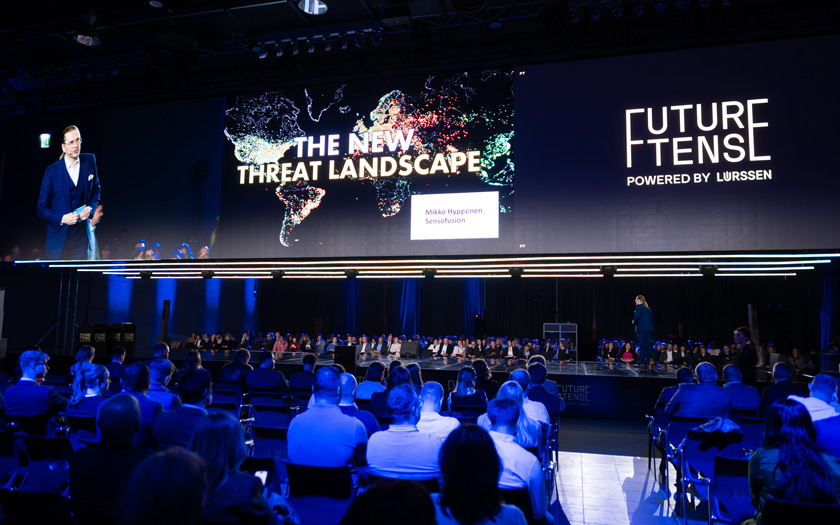
Digitalization and the integration of artificial intelligence (AI) into everyday processes have delivered significant efficiency gains, but at the same time they have opened the door to new forms of vulnerability. This was one of the central messages of the sixth edition of the Future Tense powered by Lürssen conference, which brought together leading experts, futurists and decision-makers from the public and private sectors at Mozaik Event Centre in Zagreb.
The conference’s keynote star, Mikko Hyppönen, a globally recognized authority on cybersecurity, sent a clear message:
If it is smart, it is vulnerable.
Hyppönen, who has spent three decades tracking the evolution of digital threats, emphasized that cybersecurity is no longer solely the domain of IT departments, but a critical business issue that directly affects operational continuity, client trust and the physical security of facilities.
AI autonomy and a new era of cyber resilience
One of the most intriguing questions raised at the conference was how much autonomy we should hand over to artificial intelligence. Hyppönen believes that autonomy itself is not an inherent risk, but warns that greater system autonomy significantly scales every mistake that occurs. In the context of industry and energy, cybersecurity now stands alongside physical security, as confirmed by Croatian leaders such as Ivan Paić of Končar and Teuta Duletić of Lürssen Design Center Kvarner.
Digitalization of critical infrastructure inevitably increases exposure, while hybrid conflicts on a global scale are increasingly targeting energy and production systems. The experts’ conclusion was clear: cybersecurity must not be treated as an afterthought, but as an integral part of technological development from the very beginning.
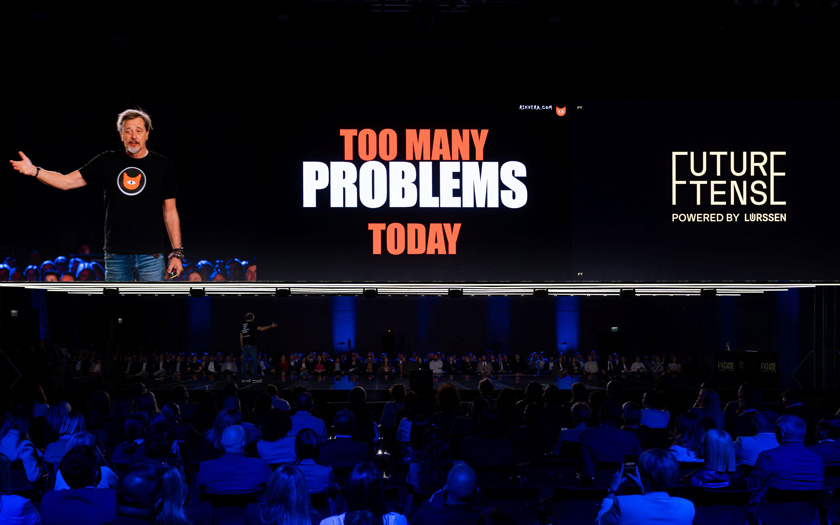
Awakening curiosity: why is today the slowest day of the rest of our lives?
Rik Vera brought a special sense of energy and dynamism to the conference stage with his talk „What It Takes to Lead Next“. In a highly engaging yet deeply thought-provoking presentation, Vera confronted participants with the paradox of modern times: today is the fastest day we have ever experienced, but at the same time the slowest day of the rest of our lives. Technological progress is exponential, and business leaders already need to prepare mentally for 2040 if they want to remain relevant.
Vera drew a parallel with Alice in Wonderland, calling on leaders to reawaken childlike curiosity in themselves and their teams. In his view, in a world changing at incredible speed, the greatest danger is not technology but a closed mindset. „We must learn to ask questions again and be ready to embrace radically new ideas“, Vera said, stressing that the ability to adapt is inseparably linked to our willingness to look at the world with open eyes.
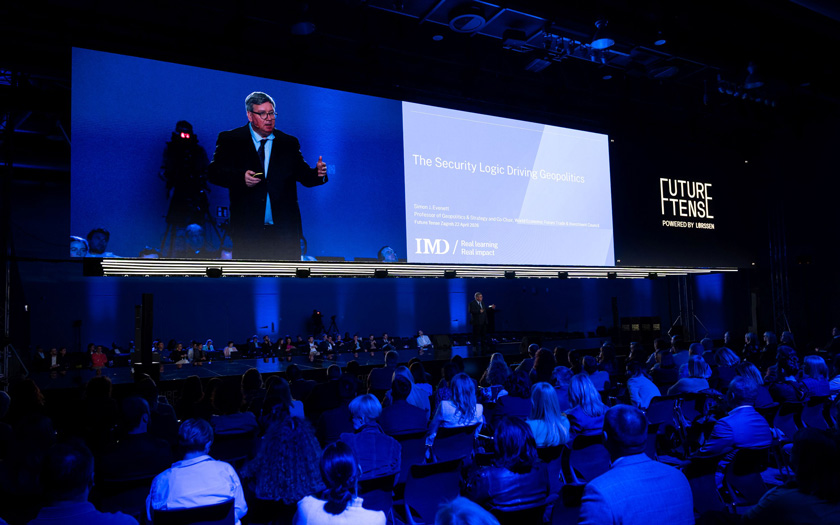
Geopolitics as a constant factor in business planning
Beyond technology, the conference also took a deep dive into geopolitics and the global economy. Prof. Simon J. Evenett pointed out that the world is entering a „new reality“ of fragmentation in which geopolitical instability is no longer a temporary disruption, but a permanent factor that managers must build into their strategies. According to Evenett, it is crucial to understand how narratives shape public policy and to expect chain reactions in every market.
A particular focus was placed on Europe’s energy independence. Andreas Rörig, CEO of E.on Croatia, explained that Europe’s energy transition is no longer merely a gradual move towards green solutions, but a structural „reset“ driven by the need for security and affordable prices. The challenge of the future lies not only in innovation, but also in the speed of delivering solutions that can be applied at scale.
From traditional shopping to „agentic commerce“
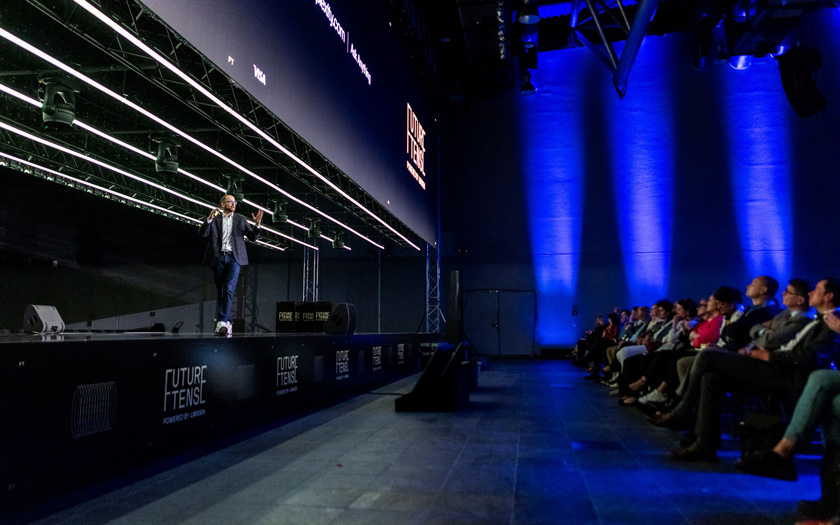
The future of commerce and payments may bring the most tangible change for end users. Frantisek Jungr of Visa presented the concept of „agentic commerce“. This is a model in which AI agents autonomously search for, compare and purchase products on behalf of users. The projections are impressive: by 2030, this way of shopping could generate between three and five trillion dollars in retail transactions.
Alongside technological and economic themes, Future Tense also touched on human potential. Danish scientist Susanna Søberg spoke about longevity and metabolic health, reminding the audience that resilience and the physiological capacity of leaders are the foundation for leading in stressful times.
The conference once again confirmed its role as a platform which, in cooperation with partners such as the Copenhagen Institute for Futures Studies (CIFS) and leading companies including Lürssen, Končar, Visa, Erste and Nestlé, is preparing a new generation of leaders for the challenges of tomorrow. The future will be more complex, but those who see instability as an opportunity for innovation will stay one step ahead of the rest.