How the life philosophy of Rambo Amadeus found its place in an exclusive retreat event for hoteliers

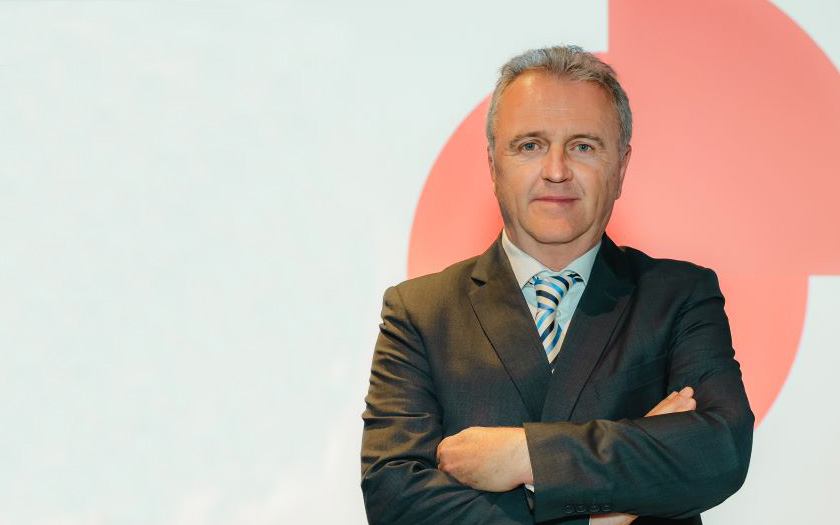
The current geopolitical and economic environment is creating new challenges for Croatian tourism. As Europe grapples with energy uncertainty and the consequences of the conflict in the Middle East, the global travel market is becoming increasingly unstable. These new circumstances, together with the latest findings of the Croatian Tourism Association (HUT), were the reason for our conversation with Veljko Ostojić, Director of HUT.
According to the findings of the survey Ahead of the 2026 tourist season, the sector is seeing solid booking levels, but also expects cost growth to outpace revenue growth, alongside the alarming finding that as many as 59 percent of surveyed hotels plan to reduce or completely suspend investment. We therefore spoke with Veljko Ostojić about where the sustainability threshold of domestic tourism lies, whether prices have reached their “ceiling”, and how an inadequate accommodation structure affects Croatia’s position compared with its Mediterranean competitors.
We are entering the 2026 season with stable bookings, but also with pronounced cost growth. How visible is that pressure already in hotel operations, and where is the sustainability threshold?
Cost pressure is already very real and measurable in operations because, according to current sector expectations, this will be the third consecutive year in which costs are growing faster than revenues. Labour costs per employee rose by more than 15 percent last year, while revenues grew by around 8 percent, and this year we are facing new pressure on labour costs, as well as inflationary pressure on energy, food and beverage costs, and rising коммунal costs at the local level. In such conditions, there is less and less room for investment, and in the medium term that means a decline in the quality and competitiveness of Croatian tourism in relation to Mediterranean competition. The survey you mentioned showed that 59 percent of surveyed hotels expect to invest less or not at all because of these pressures, which is a major difference compared with last year’s survey, when 90 percent said they would invest more.

In the context of current geopolitical tensions in the Middle East, do you expect Croatia to benefit as a safe destination, or will global uncertainty nevertheless slow demand?
Croatia does have a certain comparative advantage in these circumstances as a safe and geographically close destination to our key source markets, especially for guests travelling by car. This is reflected in the current booking situation, which remains stable, as well as in the actual tourism traffic recorded so far. According to the results of our March survey, most properties – 55 percent of them – report stable booking levels compared with the same period last year, while 33 percent report booking growth of 3 to 6 percent. As for expectations for the full 2026 season, most properties – 81 percent – expect to repeat last year’s overnight stay levels, while 14 percent expect growth of up to 3 percent.
However, caution is present because global uncertainty always works in two directions – on the one hand, it may stimulate part of the demand, but on the other, it slows decision-making and increases caution around travel, which is particularly visible in long-haul markets and among guests who depend on air transport. That is why we also expect a more pronounced last-minute booking trend this year and greater demand volatility, which means that tourism businesses will once again need to monitor the situation closely and actively manage supply.
The weakest accommodation structure in the Mediterranean is not working in our favour
Rising fuel and travel costs are increasingly mentioned as an additional challenge and as something that will affect the guest mix. Do you believe that this year we will have to rely even more on nearby European markets and higher-spending guests? Do we have a sufficiently strong luxury tourism offer and the infrastructure for such guests?
It is reasonable to expect that rising fuel and travel costs will further redirect demand towards nearby European markets, where Croatia has an advantage. At the same time, since higher-spending guests will be less affected by renewed inflationary pressures, we can expect the top tier of the offer – four- and five-star properties – to perform better.
What is not good is that we do not have many such properties. In Croatia, hotel accommodation accounts for only 9.2 percent of total accommodation capacity, which is the weakest accommodation structure in the Mediterranean. Such an inadequate accommodation structure is the main cause of overtourism in the high season, which is placing growing pressure on more and more of our destinations, but it is also behind Croatia’s lowest average daily tourist spending compared with Mediterranean competitors.
Given rising tourism prices, do you think Croatian tourism has reached a “ceiling” in terms of pricing, or is there still room for further increases without losing competitiveness?
Given expected demand, there is no room for significant price changes, so 72 percent of properties plan to increase their average daily rate (ADR) by between 3 and 6 percent this season compared with last year, which is roughly in line with the estimated inflation rate. So I would say that we are approaching the ceiling, but room for further growth is becoming increasingly narrow and has to be managed very carefully, because the market today reacts much faster than before to perceived value for money.
At the same time, we should not forget that Croatian hotels, taken as a whole, are neither the most expensive nor the cheapest in the Mediterranean. Hotel companies have invested several billion euros over the past 15 years in improving the quality of both properties and services, as well as the overall guest experience, and the quality of our hotel offer has improved significantly. That is precisely where the key lies – prices can rise only if they are accompanied by a rise in quality and the overall experience. Otherwise, the risk of losing competitiveness is very real.
Investment standstill: why greenfield hotel investment is missing
HUT warns about cost pressure limiting investment. To what extent is this already slowing the improvement of hotel quality, and could it affect Croatia’s competitiveness in the long term?
As I mentioned earlier, almost 59 percent of tourism companies plan investments over the next two years that are lower than or equal to those in the previous period, while the remainder planning to increase capital expenditure are directing it primarily into the refurbishment of accommodation units and public areas, as well as sustainability and energy efficiency projects. This means that we still have no greenfield hotel investment in Croatia, while every year we continue to record growth in accommodation capacity through short-term tourist rental properties. In this way, we cannot improve the inadequate accommodation structure we currently have, nor can we increase tourism’s overall positive contribution to the domestic economy.
How do you assess the current investment climate in tourism – will the announced projects be delivered, or can we expect delays due to rising costs and uncertainty?
Large and well-prepared projects will be delivered, although possibly at a slower pace than originally planned. At the same time, some projects, especially those on the edge of profitability, could be postponed. That is not unexpected in these conditions. But it is important to stress that interest in investing in Croatian tourism still exists. The key question is how successful we will be in speeding up processes and creating the conditions for these investments to be realized, because the main obstacles remain the same.
Speed of response is becoming a key competitive advantage
How flexible are Croatian tourism companies today in managing prices and supply in conditions of uncertainty? Is there still room for faster adaptation to the market?
Croatian tourism has already proven several times that it can achieve strong results in difficult circumstances. That is the result of the knowledge and experience of tourism professionals and the development of various revenue management tools. However, the market is changing faster and faster, and there is still room for further improvement, especially in the areas of digitalization and analytics. Speed of response is becoming a key competitive advantage. We are once again on the threshold of such a year, and I strongly believe that tourism professionals will know how to make the most of this difficult year as well.
If I had to predict now how 2026 will end, I would say it will be similar to 2025.
If the global situation deteriorates further, which market segments would you consider the most resilient for Croatian tourism?
In such conditions, drive-to destinations are certainly more resilient, while air-access destinations are more exposed.