Behind the scenes of the European Gymnastics Championships: 2 years of preparation, 2,000 participants and 20,000 overnight stays for Zagreb

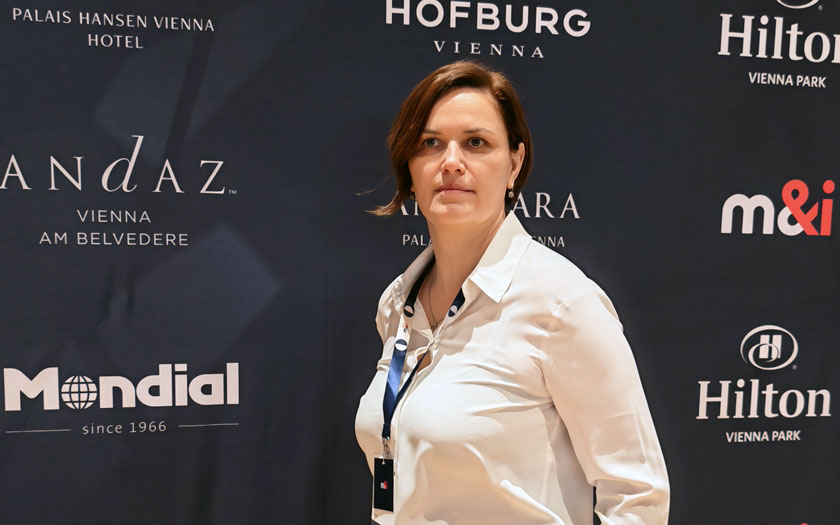
Meetings and incentives industry is often viewed through the lens of impressive locations, gala dinners, and attractive incentive programmes. However, behind every successful event lie months of planning, logistics, and coordination, as well as the people who ensure everything runs flawlessly. One of them is Marina Marunić, director of the Toptours DMC agency, who has witnessed the development of Croatia as a MICE destination through her long-standing work, along with changes in the expectations of international clients.
In an interview for PoslovniTurizam, she revealed how her path led from Generalturist to running her own agency, why she still believes in the importance of trade shows like IMEX, what today’s clients are actually looking for, and why Slavonia and Baranja consistently win over business guests from all over the world.
Your story in tourism began at Generalturist, which served as a school of sorts for many tourism professionals. Looking back today, how do you view those days, and how did it come about that you are now the owner of the Toptours agency?
can proudly say that the time I spent at Generalturist was a school that money cannot buy. Generalturist was a place where I learnt an immense amount, met a great deal of people, and saw how operations run within a large agency.
The Toptours agency is a family-owned business. It was founded by my parents. At the beginning of my career path, I decided to step away from the family business and work at Generalturist. After it, unfortunately, ended up in bankruptcy, I returned to the family company. Today, I have completely taken over the management of the agency and am its sole owner.
What types of events do you organise most frequently, and who and from which countries are your most common clients?
Our core business consists of incentive trips and events. The clients are mostly from Europe – the Benelux market and the DACH countries, alongside overseas countries, primarily the USA and Canada.
The work of a DMC agency often looks highly attractive from the outside, but behind every successful programme lies a huge amount of logistics, coordination, and creative problem-solving. What would you highlight as the biggest challenges in the work of a DMC agency today?
When I took over Toptours, I thought the hardest part was sales – that is, convincing the client to choose us. That is indeed a challenge, but over the years I have realised that the real work only begins once we start executing the project.
In the beginning, I used to wake up in the middle of the night thinking about how to resolve situations that a certain project put before us as a challenge. How to set up a programme or an event so that everything functions perfectly. Everything would somehow fall into place when I could visualise every single detail of a gala dinner or an activity. What can still keep me awake at night to this day is that responsibility towards the details that are invisible, but highly critical for everything to function perfectly.
One of the constant challenges is continuous investment and the desire to provide true value to the client. Sometimes we also have to educate our clients that we are not selling them a "transfer and dinner", but rather a sense of security – so they can focus entirely on their guests, knowing and feeling certain that behind the scenes, someone is taking care of everything. This is a level of trust built over years.
Likewise, a personal challenge of mine is that I live my job, and what drains me the most at times is being constantly available. When you work with international clients, there is no real end to the working day. I have accepted this as part of the job, but also as a part of myself.
Visibility, trust and concrete projects: why trade shows are still important
You recently returned from this year's IMEX. In an era of digitisation and online meetings, is it still worth physically attending large trade shows? How did this year's IMEX look from your perspective, and can you reveal to us whether concrete business deals are truly struck at the stands?
I started attending large trade shows as part of the internationalisation of our business – an EU project we launched in 2020. Consequently, in 2022, I attended 16 trade shows all over the world. That project helped us step into international waters and break into the markets we work with today. Following that experience, I concluded that attending a trade show is essential – for business, for the brand, and for visibility. Naturally, trade shows are not our only method of promotion, but they are personally very important to me. In my calendar, IMEX Frankfurt and IBTM Barcelona are two trade shows I never miss.
However, I must be honest – this year I was very worried while preparing for IMEX. International buyers were not booking appointments through the IMEX app in the way we were used to, so I wondered what it would look like on the ground. Then, something fantastic happened. There were meetings – in fact, more than ever – but they were different. People came prepared. They came with intent. They knew what they were looking for and why. Instead of the usual "tell me something about your company", the conversation flowed in the direction of: "We have heard about you, we have a project for Croatia, and we wanted to meet in person before sending the RFP." The quality of the conversations was on a completely different level.
What we could see is that Croatia is evidently on the radar. Not as an exotic, unknown option, but as a serious MICE destination in demand, while Toptours DMC is recognised as a reliable partner for projects in Croatia.
So, I can only confirm once again – YES, I believe that attending trade shows is necessary. We must be there, be visible, and talk to people.
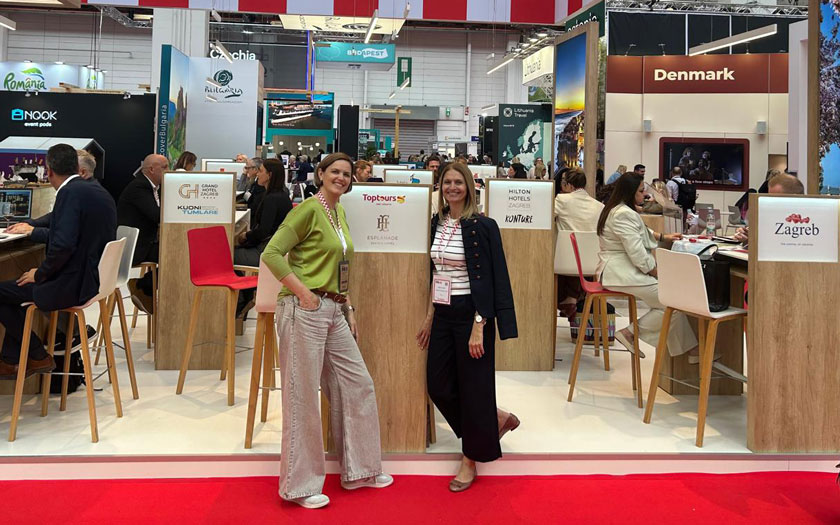
At trade shows, you always share a table with the iconic Esplanade Hotel. How did this collaboration come about, how is it developing, and does such synergy between an agency and a hotel play a special role in attracting large international clients?
The collaboration between Toptours DMC agency and the Esplanade Hotel came about for very pragmatic reasons – the costs incurred by exhibiting at such large trade shows as IMEX and IBTM.
We were brought together by the Zagreb Convention Bureau. Given that both of us are from Zagreb, we realised we shared the same goal, and our offerings are highly complementary. I am sorry we do not have a slightly "more romantic reason", but I think finances, meaning the costs of promotion, are a very good reason for joint collaboration. We are not the only ones; we see that others have also realised this is a highly interesting and functional way of joint promotion. I can say that we cooperate and function very well together at the stand.
What I have noticed as a trend in recent years is that clients increasingly want direct contact with the hotel, while they need a DMC for everything that happens outside the hotel – for the experience, for organising parts of conferences, and events at special locations. When we present ourselves like this at a trade show, the client sees us as a hotel with tradition and reputation, and an agency that knows the destination. They do not have to choose between us - they get both. This is precisely what often makes the difference.
At IMEX, we jointy reached a client who organised their annual conference at the hotel, while we organised the programme outside the hotel and a beautiful gala dinner at Lauba for that same client. Five years of joint exhibitions and joint projects is no small feat. I can say that we are now already a reliable and well-tuned team for the best presentation of Zagreb, the Esplanade Hotel, and the Toptours DMC agency.
Perfect logistics + a moment that could not be planned = a memorable experience
International clients today are increasingly looking for authentic experiences and local stories. How much have the expectations of business groups changed in recent years, and what delights guests the most when they come to Croatia?
I am glad to say that the perception of Croatia is changing, that it is slowly transforming into a year-round destination. When I first started working in MICE, I remember that a lot of inquiries were related to the location of the hotel – whether it was right on the beach, whether it had a beach bar or which was the nearest beach bar, and whether a cocktail party could be organised by the sea. This is still sought after today, but it makes me happy to see that conferences and incentive trips are happening during periods when the sun and the sea do not hold such a massive influence.
Information is accessible to everyone today. Anyone can create an itinerary on their own with the help of Google and AI tools within an hour. AI is increasingly entering the spheres of our business. That is why our job is changing, and creating experiences and impressions is our main goal. Today, clients are looking for a partner – someone who has the ability to organise special experiences, access to a specific institution, a private cellar, a studio, a kitchen... They are looking for a partner who can create that special experience. We create such experiences because we have an excellent relationship with our suppliers and trust that has been built over years.
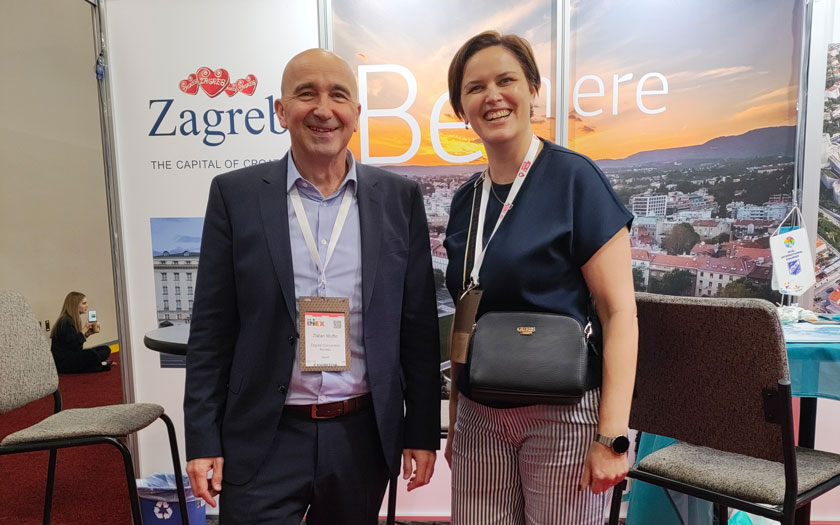
How do you at Toptours balance the high level of professionalism that clients expect with that warm, local story you want to tell them through the programme? Where are the biggest challenges, and where are the opportunities?
Professionalism and warmth are not opposites, though they are often perceived as such. A large corporate client arriving with a precise brief and budget does not want less authenticity. They simply want that authenticity to be reliable. They want the local story to be told on time, without technical glitches, with a microphone that works, and wine at the perfect room temperature.
Here I must be honest – I like a schedule too. I like to know what comes next, I love it when all the details are sorted, and when the team knows their role. Yet, I have learnt something important over the years: the schedule is not the goal; the schedule is the framework.
I often go on site inspections with clients personally and regularly receive the comment: 'how come you are so relaxed?' That makes me laugh a little every time.
I am not relaxed because I do not have a plan. I am relaxed because I have a plan good enough to know when I can modify it.
Because sometimes a moment happens – a guest enters a space, gets a vision, stops completely, starts asking questions, a conversation begins that nobody planned... At that moment, my job is not to look at the watch. My job is to recognise that right now, the very thing these people came for is happening, and the schedule can wait. The biggest challenge is educating the team to think the same way. Protocol exists to liberate us, not to enslave us. Professionalism is not rigidity, but the ability to manage even when the plan goes in a different direction, without the guest ever sensing it as chaos.
And the opportunity? The opportunity lies in the fact that when it works – when you combine perfect logistics with a moment that could not be planned – you get an experience that the guest remembers for years. That is what we strive for.
This interview will also be read by hoteliers and event venue managers. From the perspective of a DMC director, what is the most important thing a hotel or venue must have (apart from the infrastructure itself) to be a perfect partner to an agency? Where does collaboration most frequently break down, and what turns it into a long-term partnership?
Let's not lie to ourselves, infrastructure is very important for our line of work. All our hotels, event venues, locations – all of it matters immensely to us. However, what is also highly important is the feeling – when I walk into a hotel or event venue and feel that the people working there care. Those who do not just work to get the job done, but truly care. Who know why we are there, what we are trying to achieve, and what that event means to the client. I do not like it when someone speaks in a manner of – that is not my client, you deal with them. Because that is our client. When everyone in the chain understands this – from the reception, through the kitchen, to the tech team – that is when things work. Not perfectly, because perfection does not exist, but they work because we all share the same goal: client satisfaction.
Croatia possesses a luxury that most European destinations lack
Croatia is positioning itself more and more seriously as a meetings and incentives destination. Where do you see our greatest advantages today, and where is there still room for improvement to make us more competitive against leading European destinations?
Croatia as a destination is incredible. I am not saying this just because I am subjective and love my country. Within a three-hour drive, you can have the Mediterranean, the continent, history, nature, and gastronomy that changes every hundred kilometres or so. This is a luxury that most European destinations lack, and we can build our brand awareness on that.
As I have already mentioned, Croatia is recognised as a MICE destination. Dubrovnik is a micro-location that everyone knows. Zagreb, in particular, is recording a growth in interest that honestly brings me joy. A city that has capacity, character, that is not oversaturated with tourism, and that surprises. We are starting to tell stories – about food, about wine, about people, about culture. Clients recognise this.
Of course, there is also room for improvement. We need to align procedures better, especially when we talk about large events. Often, obtaining permits to use locations is a long-drawn-out battle. The administration sometimes sets rules as if we are there for them, rather than as if they are there to make our jobs easier.
One of the challenges is also the high seasonality which is still very present, especially for coastal towns. Our clients see this through fewer flights in the winter months, a portion of hotels being closed for a certain number of months, destinations that are sleepy and slow at those moments... but also through prices and availability during those peak months of the high season.
To be a serious MICE destination throughout the entire year, we must work on that balance. I could talk for hours more about the legislative framework, about government levies which are very high, about investing in people, in their education, the struggle with a shortage of people, the import of labour... These are all challenges we must respond to and work on continuously.
If you had to highlight one hidden micro-location or experience in Croatia that regularly leaves foreigners breathless (and might still be under the radar for domestic organisers), what would it be?
I cannot say that Slavonia and Baranja is a micro-location within Croatia, but it is definitely a micro-location when we put it into a global context. Even though I was born in Zagreb, my father’s family is from Slavonia, so Slavonia is not just a destination for me. It is a memory. I remember running through the fields as a child, picking corn that we would roast immediately by the campfire, family gatherings where the table was always overloaded and where no one ever left hungry. Čobanac that simmered for hours. Carp on forks by the river. That scent, that warmth, that lightheartedness...
That is the authenticity we want to show our clients. Hospitality that is not staged; it is lived there. Gastronomy that leaves a feeling of home. A tradition we want to present in the most beautiful way possible.