Falkensteiner takes over management of Austria’s largest thermal resort Loipersdorf

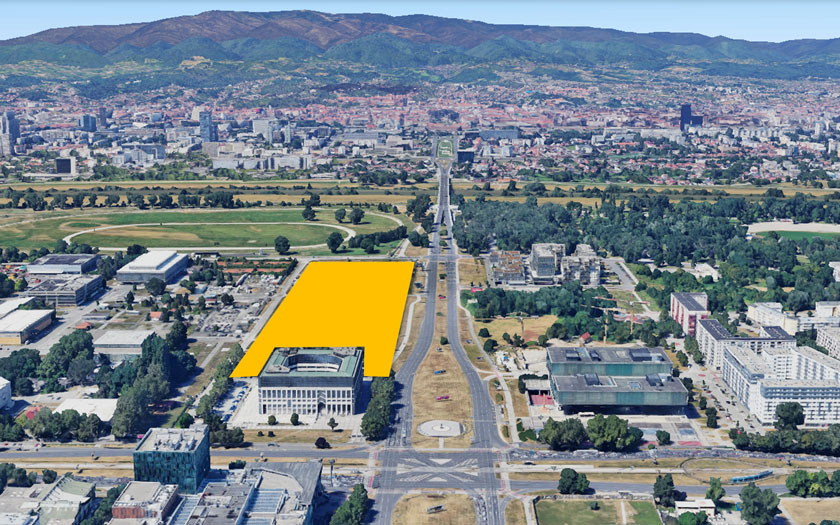
The construction of the Zagreb Congress Centre is one of the most anticipated infrastructure projects for the Croatian meetings and event industry. The last time we wrote about the project was during the public consultation, when the entry of the project into a new development phase was announced. The deadlines that were announced on that occasion have passed in the meantime, but it seems that this does not mean that the project has been put aside or forgotten. The City of Zagreb informs us that the elapsed time was used for consultations with representatives of the meetings industry and the refinement of programme guidelines so that the future centre would better respond to the needs of the international market. Since several months have passed since then without new official information, the interest of the profession in the status of the project is justified. Especially because this is a project that could significantly change the competitiveness of Zagreb on the European convention map.
The positive information is that the reasons for shifting the originally planned dynamics are not an administrative delay, but a desire to incorporate the proposals of the professional public into the project and to ensure the highest quality functional solution for the future congress centre.
Consultations with the profession nevertheless brought project refinements
According to the City of Zagreb, during the preparation of the project a series of working meetings and consultations were held with representatives of the Croatian National Tourist Board, Zagreb Tourist Board, Croatian Meeting Professionals Association (CMPA) and other relevant stakeholders. The aim was to gather market experiences and needs so that the future facility would meet the modern requirements of organisers of international congresses, conferences and business events. The feedback received was incorporated into the further elaboration of the project, with special emphasis placed on the flexibility of the space, the ability to adapt to different event formats and functionality that meets the expectations of the international convention market.
One of the most important decisions relates to the main hall. According to the Best Use Study for the development of the congress centre, the future complex envisages a main hall with a capacity of 2,500 participants, an additional hall with 500 seats, six modular halls with an average area of 150 square metres and 25 meeting rooms with an average size of 40 square metres. It was precisely the layout and functionality of these spaces that was one of the main topics of discussion among representatives of the meetings industry. While part of the profession advocated a more flexible execution of the main hall, the biggest controversy related to the fact that, alongside an amphitheatre hall, a large number of smaller spaces could limit the possibilities of holding certain event formats if they were not modular and interconnectable.
According to the City, following the consultations held, it was decided that the main hall remains designed as an amphitheatre because, as the City points out: "precisely such a solution best suits large international congresses and conferences where visibility and the quality of following the programme are key elements of the user experience". It was concluded that smaller halls will be designed so that they can be connected into one larger flat-floor hall, allowing the space to host exhibitions, banquets and other event formats that require an open and multifunctional space. For now, however, it is not specified exactly which halls the connection possibility applies to. The open question remains whether only the six modular halls will be connected into a single unit or whether the connection will also include the additional hall with a capacity of 500 participants, which would significantly affect the final possibilities of using the space.
However, consultations and meetings are continuing, so we will only know the final solution for the main and other halls with certainty after the publication of the competition for the architectural solution.
Decision and competition programme in preparation
The project is currently in the preparation phase of the Decision on the Implementation of the City Project, which needs to be adopted by the Zagreb City Assembly. In parallel, a competition programme is being drafted, which will form the basis for launching a public urban-architectural competition. At this stage, the architectural programme of the future building, functional requirements and urban planning conditions that the designers will have to respect when creating their proposals are being elaborated in detail.
For now, the City of Zagreb does not want to come out with new deadlines. As the competition programme is still being drafted, it is not possible to confirm when the competition will be announced or whether it will be of an international character. All decisions, they say, will be published after the completion of preparatory activities and the adoption of the necessary acts.
A higher quality project more important than speed
Although part of the meetings industry would certainly like to see a faster implementation of the project, current developments show that the City of Zagreb has decided to use the additional time to align the project with real market needs. Such an approach could prove to be more important in the long run than sticking to the original deadlines.
It is encouraging that representatives of the profession are actively involved in shaping the future centre and that the project is developing while taking their experiences into account, but we hope that the deadlines will not be extended too much because of this. The next important milestone will be the publication of the urban-architectural competition, which will show for the first time what the future Zagreb Congress Centre could look like in the area of the Zagreb Fair.