Jubilee 20th Croatian Camping Congress: Croatia leading camping destination by quality in Europe for 2027

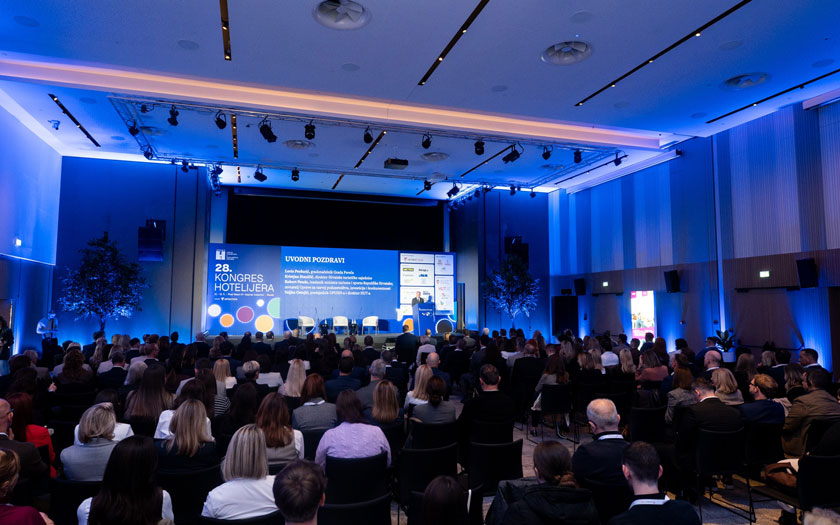
Croatian tourism has achieved another high-quality tourist year, yet in order to maintain competitiveness in an increasingly demanding Mediterranean market in the coming period, it is necessary to launch a significant investment cycle both in existing hotel capacities and in the construction of new, particularly greenfield hotel projects, was the main message from tourism experts at the 28th Hoteliers Congress – powered by Istratech, held at Pical Resort 5*, Valamar Collection in Poreč.
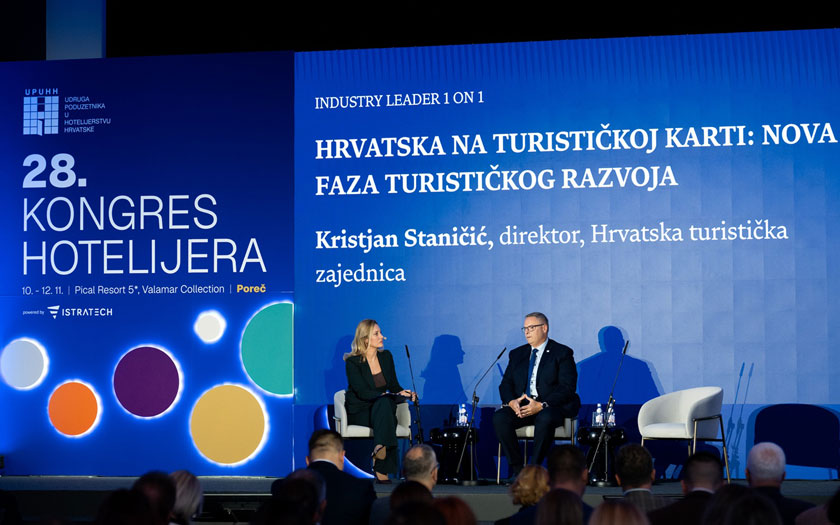
“This tourist year has also shown that despite numerous global challenges and unpredictable circumstances, Croatia has maintained its position as one of the best and most desirable destinations in the Mediterranean. Guests are looking for high quality of service, a diverse offer and safety, whilst at the same time being increasingly open to discovering new destinations. In recent years, the trend of last-minute and even last-second bookings has been particularly pronounced, which is why we must adapt in our communication, monitor the competition and continuously focus on quality,” stated Kristjan Staničić, Director of the Croatian National Tourist Board, who announced the launch of new air routes for the upcoming season, targeted promotional campaigns and additional efforts in positioning the domestic tourism offer on AI platforms.
An analysis of the life cycle of hotel properties conducted by the Croatian Tourism Association (HUT) and the Association of Employers in Croatian Hospitality (UPUHH), presented at the Congress and carried out on a large sample of domestic properties, showed that as many as 82.3 per cent of domestic hotel properties are in a phase of maturity or decline, whilst the average age of a hotel is 55 years. The average time elapsed since the last major renovation is 12 years, and 18 per cent of hotels had their last major renovation more than 20 years ago. As many as 91 per cent of three-star hotels are in a phase of maturity or decline.
As a consequence, as many as 84.6 per cent of the properties covered by the analysis require increased investment over the next five years. It is estimated that the total investment needs of the Croatian hotel industry over the next five years amount to €5.2 billion. The largest share of investment, 65.1 per cent, relates to the renovation and modernisation of existing properties, whilst 20.2 per cent is planned for the construction of new hotels. The remainder relates to energy renovation projects, capacity expansion and digitalisation.
At the same time, 78.2 per cent of properties plan to retain their existing category, whilst 21.8 per cent plan to upgrade it towards the highest four- and five-star categories. Alongside investments in existing capacities, the survey showed that domestic tourism companies plan to build 23 new hotels over the next five years, of which 17 will be four-star and six five-star. Their realisation would increase the total number of hotels in Croatia by 2.6 per cent, which would, for example, increase the share of off-season overnight stays in total annual overnight stays from 17.5 to 20.2 per cent, generating an additional 2.96 million overnight stays outside the peak summer months.
However, this is nowhere near enough to improve the structure of accommodation capacities in Croatia, which, with only 9.2 per cent in hotel capacities, is by far the worst in the Mediterranean and represents the main obstacle to the further development of domestic tourism.
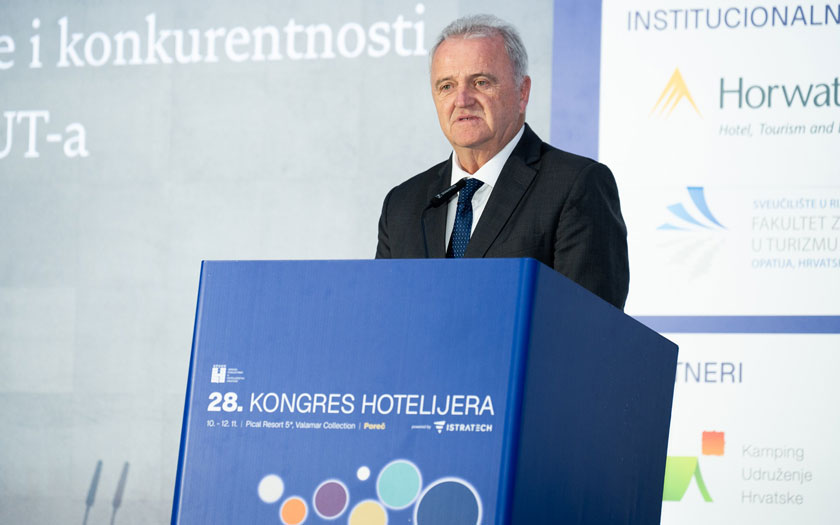
“Hotels and hoteliers can be considered the winners of the 2026 tourist year, primarily thanks to continuous investment in quality. Nevertheless, Croatia needs at least 80,000 to 100,000 new hotel beds over the next ten years, and it is particularly important to encourage greenfield investments in the hotel industry, which remain extremely rare. Why are there not more such projects? There are several reasons, ranging from land prices, the sluggishness of local administration, legal uncertainty and construction costs to the business model of hotel operations. We must ensure a more stable and predictable business environment as well as new investment models, such as mixed-use resorts, which can ensure an adequate return on invested capital and stimulate the implementation of new projects. It is equally important to systematically develop facilities that will increase the attractiveness of destinations throughout the entire year. Despite the challenges, we are optimistic about 2027 and expect the continued good results of the Croatian hotel industry,” stated Veljko Ostojić, President of the Association of Employers in Croatian Hospitality and Director of the Croatian Tourism Association.
The Pical Hotel project in Poreč was highlighted as an important example of domestic hotel industry development, being the largest hotel investment in Croatia worth more than €200 million, which has brought fresh momentum to the entire destination. The message from tourism experts is that we need more such investments in high-quality hotel capacities because hotels generate significantly higher tourism revenues with considerably less pressure on natural resources, alongside extending the tourist season.
In addition to direct positive effects on destinations, investments in hotels also generate additional public revenues. The fiscal impact of realising the planned investments by domestic tourism companies worth €5.2 billion over the next five years would be a one-off €493 million, whilst additional annual fiscal and parafiscal levies following the investments would amount to €431 million. This confirms that investments in the hotel industry have broader economic effects, ranging from increased added value and employment to higher revenues for state and local budgets.
To maintain the competitiveness of domestic tourism in the next phase of development, stronger activation of investments in the hotel industry is necessary, warned Siniša Topalović, Partner and Managing Director at Horwath HTL Zagreb. An analysis by Horwath HTL showed that compared to regional competition, Croatian tourism is slowing down in terms of investments and declining in competitiveness—particularly in air connectivity and the tourism business environment—and consequently in attracting foreign tourists. Whilst in the period from 2013 to 2019 Croatia was one of the tourism stars of the Mediterranean, increasing the number of foreign guests by 61 per cent, from 2019 to 2025 that percentage stood at only 1.5 per cent, by far the lowest among countries in the region. Topalović emphasised that hotels must be treated as strategic infrastructure, and in the coming period this infrastructure in Croatia needs stronger support at the national level, particularly in the context of investment conditions, physical capacity growth and further product quality growth. As he pointed out, even countries significantly more competitive for tourism investments than Croatia, such as Singapore, are providing additional incentives for hotel investments. For example, Singapore has introduced co-financing programs covering up to 70 per cent of hotel renovations and is opening up space and state-owned land for new hotels. Topalović stressed that without more active encouragement of investments in accommodation and tourism amenities, we will not be able to reverse the stagnation we are currently experiencing in terms of tourist traffic.
At the 28th Hoteliers Congress, the traditional awards for the best hotel directors were presented, with the winners selected by an expert jury of UPUHH. The awards were presented in partnership with the international hospitality and tourism school Les Roches from Switzerland, which awarded hotel directors scholarships for selected Executive MBA and Master programs. Dražen Mofardin, Director of Pical Resort 5*, Valamar Collection, was awarded for excellence in hotel opening. In the category of small hotels with up to 50 rooms, the award went to Lovorka Struna, General Manager of Boutique Hotel Alhambra & Historic Villas. The award for best director of a 3* and 4* hotel with more than 50 rooms was won by Denis Terlević, Director of Valamar Amicor Resort. The award for best director of a large 5* hotel with more than 50 rooms went to Marko Bačić, Director of Grand Park Hotel Rovinj. A special lifetime achievement award for long-standing contribution to the development of the Croatian hotel industry was presented to Vlado Lučić, who has dedicated 47 years of his life to actively building Croatian tourism and the hotel industry across numerous companies and in various positions.