Incentive Travel Index 2026: Participate in the global survey shaping the future of incentive travel

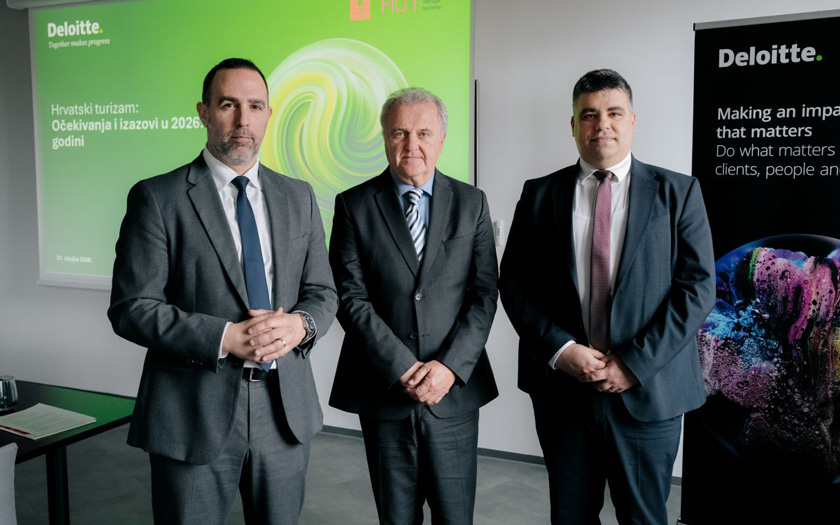
Despite increased geopolitical uncertainty, domestic tourism companies are entering this season with currently stable booking levels and cautious optimism about how the season will develop, but also with expectations of continued cost growth that could, for the third year in a row, outpace revenue growth and squeeze the space for much-needed investment, according to the key findings of a survey conducted in March by Deloitte in cooperation with the Croatian Association of Hotel Employers (UPUHH) and the Croatian Tourism Association (HUT).
The survey was carried out from 6 to 17 March and covered tourism companies operating a combined total of 259 hotels and campsites with more than 51,000 accommodation units.
Bookings and prices remain stable
Most properties, 55%, currently report a stable level of bookings compared with the same period last year, while 33% are seeing booking growth of between 3% and 6%.
Pre-season optimism is further supported by a comparison with 2023, which offers a more relevant benchmark because Easter fell early that year, as it does this year. In that comparison, as many as 80% of properties are recording booking growth of up to 3% versus March 2023.
Most properties, 67%, are not seeing any significant changes in booking volumes across different source markets, while 100% report no indication of changes in the average length of stay compared with last year.
As for the full 2026 season, 81% of properties expect to match last year’s overnight stay levels, while 14% expect growth of up to 3%. At the same time, 64% expect a stronger last-minute booking trend than last year.
Given these demand expectations, there is little room for significant price changes, so 72% of properties plan to increase the average daily rate (ADR) by between 3% and 6% this season compared with last year, which is around the estimated inflation rate. The most positive trends are seen in the 5-star and 4-star hotel segments, as well as campsites.
In line with this, 55% of properties expect total annual revenue growth of up to 3% compared with last year.
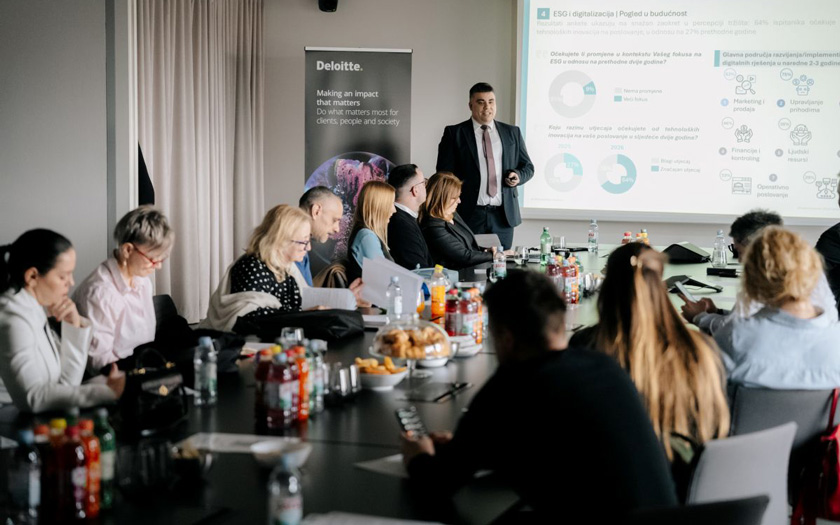
„Respondents’ expectations for the upcoming season are most positive in the upscale and luxury segments, as well as generally for properties where more significant investments have been made in recent years. Also, given that in just one year the share of respondents expecting a major impact of technological innovation on operations has more than doubled, this again confirms that the era of status quo in Croatian tourism is behind us. Alongside continued investment in product quality, respondents are increasingly focused on the stronger use of AI solutions in business, primarily in marketing and sales, followed by revenue management and guest relationship management“, said Vjeran Buljan, Assistant Director in Deloitte’s Strategy and Transactions advisory team.

Labour and energy costs continue to rise
However, the sector is once again under pressure from rising costs, and that pressure is highly likely to intensify beyond the survey’s expectations due to the deepening energy crisis.
As many as 76% of companies expect cost growth to exceed revenue growth, which would mark the third consecutive year of such a scenario in tourism.
Labour costs are also expected to continue rising: 40% expect labour cost growth of between 3% and 6%, 30% expect increases of between 6% and 10%, and 29% expect labour costs to rise by more than 10%.
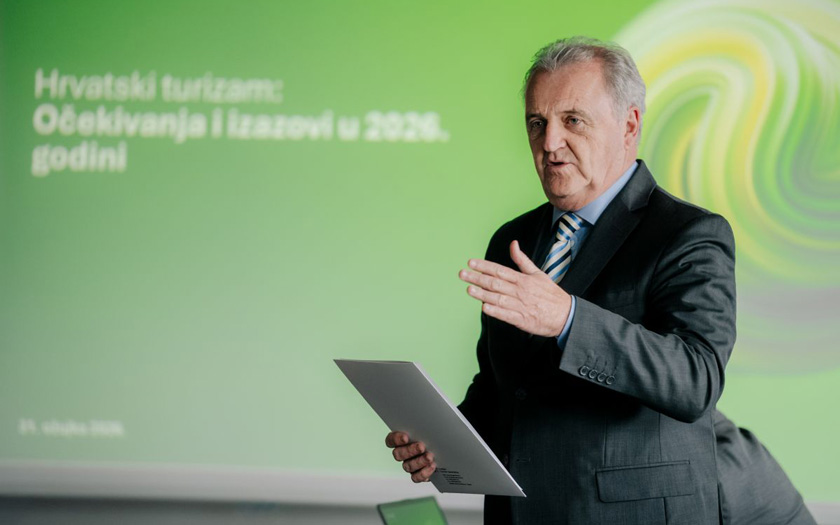
„Croatian tourism is entering the 2026 season with cautious optimism. Everything points to another season in which the offer will need to be actively managed in response to various challenges if we are to repeat last year’s result, but what is certain is that we are facing another year in which cost growth will outpace revenue growth. This reduces the sector’s profitability and investment potential, even though it must protect its competitiveness through continued investment in quality upgrades and sustainability. Still, we are confident that even in this challenging year, tourism will once again prove to be a part of the economy that can be relied on to cushion the spillover of adverse economic trends into the wider economy and public finances, just as it did during previous crises”, said Veljko Ostojić, Director of HUT.
Domestic tourism companies have also identified the key risks for the next two years. While most of them, 74%, expect demand growth of up to 5% over that period, the main concerns are a possible decline in demand from key source markets, challenges related to the availability of qualified labour, and the perception of Croatia as an overpriced destination, where the risk is highest due to a mismatch between prices and quality in food and beverage offerings across destinations.
Investment focused mainly on refurbishment
In line with these expectations, almost 59% of companies plan investment over the next two years at levels equal to or lower than in the previous period, while the 42% planning higher capital expenditure are directing it primarily into the refurbishment of accommodation units and public areas, as well as sustainability and energy-efficiency projects.
HBOR stands out as the most attractive source of financing, followed by own capital and bank loans.
The main barriers to increased investment remain regulation and slow spatial planning processes, issues related to tourism land and maritime domain, project profitability, and the availability of qualified labour.