The transformation of money - find answers to the most important questions at the Money Motion conference

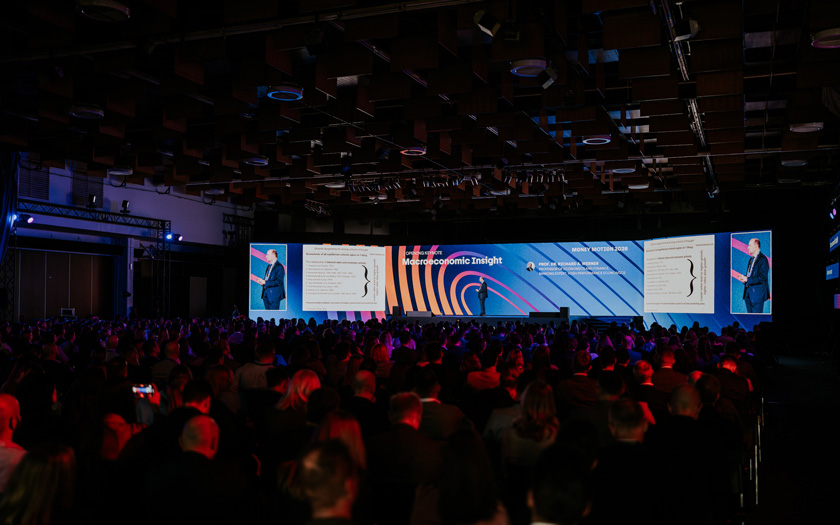
The Zagreb Fair hosted Money Motion 2026, the largest FinTech gathering in the region. More than 2,500 visitors registered on the first day of the conference, which was opened by Croatian President Zoran Milanović. He stressed that this is a complex topic still unfamiliar to many citizens, but one that needs to be brought closer to the public in the interest of financial literacy, entrepreneurship and fundamental human rights.
The opening was also attended by Zagreb Mayor Tomislav Tomašević, who said that FinTech has shown how innovation drives changes that even the largest systems can no longer ignore, and that the City is working to keep pace with these trends through three digital projects it is implementing – eTransparency, transparent asset management and participatory budgeting.
The first day was marked by key insights and discussions. Richard A. Werner, one of today’s best-known economists, criticised the ideology of ‘degrowth’, advocating economic growth and the establishment of 50 to 100 local banks in Croatia. Frank Schwab warned banks of the need for top-tier mobile products, predicting the disappearance of those that fail to adapt to machine-to-machine transactions by 2035. A blockchain discussion between Zoran Balkić and David G. W. Birch focused on the intrinsic value of crypto versus its real-world application. A panel on agentic payments and AI agents (Bartosz Ciolkowski, Panagiotis Kriaris, Reinhard Höll, Vedran Bajer, Srđan Košutić) highlighted the need to build new trust in AI agents, redefine business processes and prioritise protection against “dark LLMs” and synthetic identities. The first day also saw the launch of the new Automation & AI Stage, along with a competition featuring 18 startups.
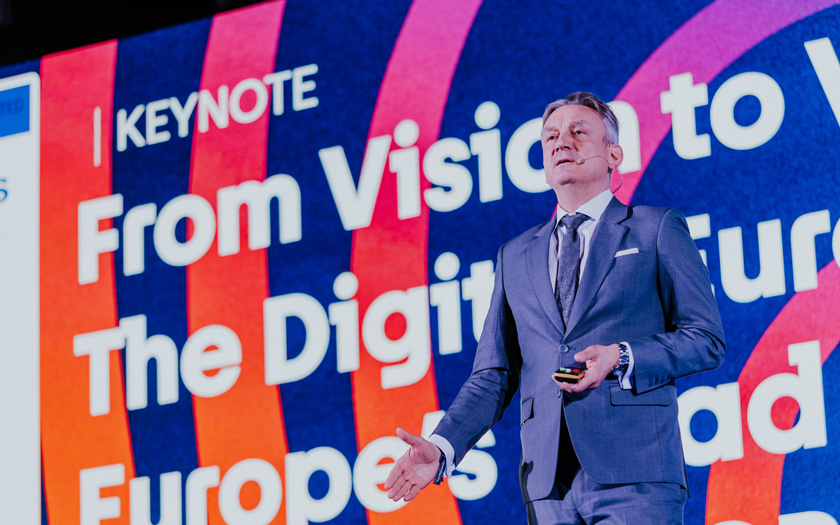
The future of Europe’s banking and monetary system, as well as its economic independence, was a central theme on the main stage during the second day of Money Motion 2026. A particular focus was placed on the digital euro, a topic introduced at the start of the day by Boris Vujčić, Governor of the Croatian National Bank.
“The digitalisation of the euro is currently a hot topic in the European Parliament. We hope the legislation will be adopted this summer, which would allow us to launch a digital euro pilot project shortly afterwards. This is not just a technological issue – it is about securing an independent monetary payment system for Europe and providing a major boost to the continent’s digital transformation, both politically and functionally.”
He explained that the digital euro will not be mandatory for citizens, but it will be mandatory for merchants already accepting any form of digital payment. For citizens, he added, its use will be completely free of charge. He then addressed concerns about data and anonymity. “Concerns about access to data are legitimate, but the system is designed so that the ECB will not have insight into citizens’ individual data. Information about the account holder will be held exclusively by their commercial bank.”
He added that the digital euro is the safest way to store money because it is backed directly by the central bank.
In his presentation, Jürgen Schaaf, adviser at the European Central Bank, emphasised that there are two forms of the digital euro. One is for citizens, and the other is for banks. “A distinction needs to be made. The first is simply a digital version of cash – everyone is included and that is true digitalisation. The second is the creation of a new infrastructure for banks in the EU, based on blockchain.”
An equally important project at European level is the EU ID digital wallet – the digital identification of European citizens. It is expected to serve as the basis for user identification when paying with the digital euro, and Hendrik Bourgeois of Mastercard believes it will also be a key tool for connecting the European market.
“If we implement it successfully at EU level, digital identity will become critical infrastructure for absolutely everything – not only for banks, but for all social and business processes. However, much work remains to align digital identities across all member states. That harmonisation will be demanding, and if speed is prioritised, we must be very careful not to compromise security in the process.”
Leaders of four of Croatia’s leading banks discussed the impact of technology, regulation and changing customer expectations – Balazs Bekeffy of OTP banka, Christoph Schoefboeck of Erste banka, Liana Keserić of RBA and Marko Badurina of HPB.
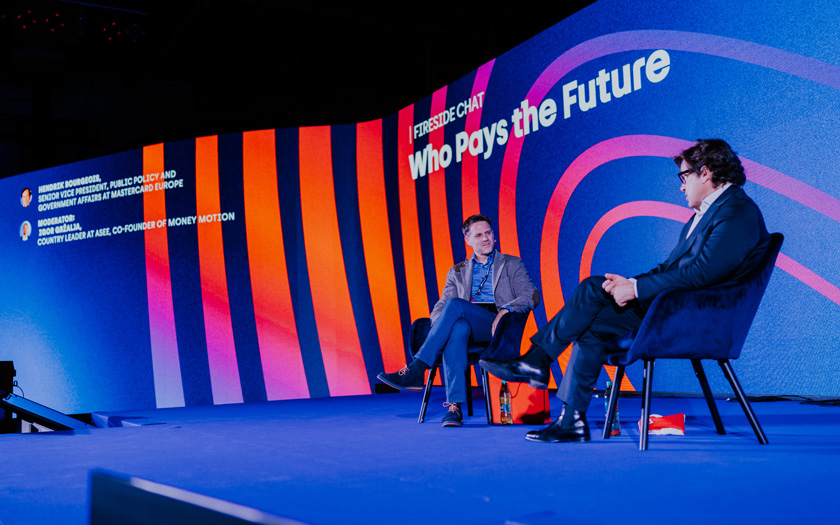
One of the main topics was the balance between the advantages of large international banking groups and local flexibility. Bekeffy pointed out that belonging to a group enables rapid knowledge-sharing, for example in cybersecurity, while Badurina stressed the advantage of local decision-making, which allows faster adaptation of customer experience and technology to the needs of the domestic market.
Participants agreed that artificial intelligence is already changing banking processes, but it will not replace banking’s core value – trust and the human relationship with clients. AI is already being used to optimise processes and analyse data, but real transformation requires changes in organisation and ways of working.
This was also emphasised by Ana Zovko, Executive Director for IT and Digital Business at Croatia osiguranje. “When a new technology emerges, there is a lot of talk but little implementation, and that was also the case in my industry. We decided not to wait and started our transformation six years ago. Culture and speed are both essential because AI requires a lot of experimentation.”
She advised everyone to start today rather than tomorrow, because the key lies not in the best AI strategy but in learning through examples. “We formed a team at group level and created an AI hub across all levels of the organisation, implementing many AI projects. This cannot be done individually – it has to involve the whole organisation. That is why organisational culture is crucial, and the company supported it, which is very important. You need internal support and a culture that enables it.”
The impact of artificial intelligence on industry was a prominent topic on the new Automation & AI Stage by A1 Hrvatska during the conference’s first day. The programme brought together experts from the technology, financial and telecom sectors to discuss the development of AI, security challenges and practical examples of business implementation.
In the opening lecture, Darko Jovišić spoke about the current state of the AI market and the shift from large language models to smaller, specialised systems. He emphasised that Small Language Models (SLMs) enable faster and more cost-effective implementation of artificial intelligence because they require significantly fewer computing resources and can run locally on devices. This creates room for solutions that are more accessible to companies and more secure, as data does not have to leave the organisation.
An important topic was also the security of AI agents, particularly in the financial sector. Panel participants warned that we are entering a new phase of cyber threats in which attackers use AI to automate and accelerate attacks. Tomislav Vazdar pointed out that the security approach must change, because organisations now need to understand not only their users, but also their own AI agents and how they operate within systems.
The stage also hosted discussion on the European Union’s regulatory framework. Andrea Čović Vidović, Head of Representation and Head of Media at the European Commission in Croatia, stressed that the purpose of regulations such as the AI Act is not to slow down technological development, but to build trust in the market and ensure that artificial intelligence is developed in line with European values and security standards.
The programme also offered a series of practical examples of AI implementation in business. These included systems for automating administration, document analysis and connecting business systems with AI agents, as well as examples of use in the telecom and financial sectors.
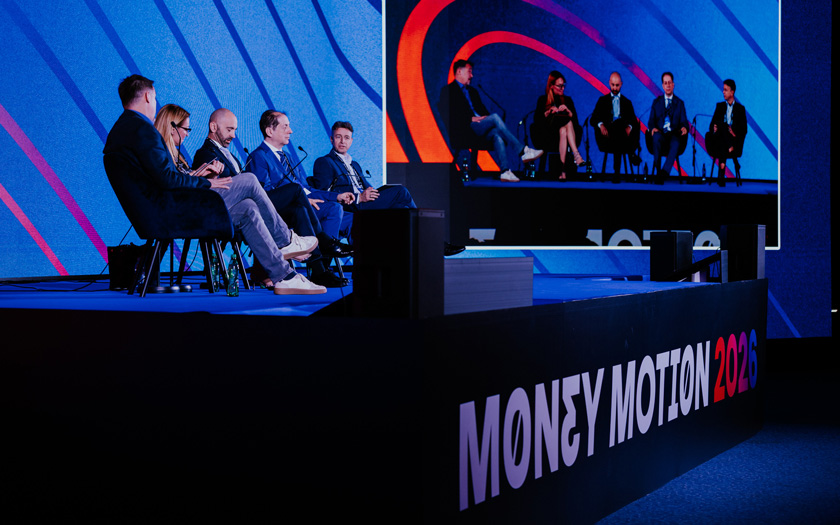
During the second day, the same stage transformed into the futuristic FinTech2030 Stage, offering this year an overview of the most important market trends still ahead of us.
Hanan Nanić said in her opening presentation that money, infrastructure and the way value is accessed no longer behave like fixed hardware, but rather like flexible software. This is reshaping the balance of power in finance: money is becoming programmable, AI is moving from analysis to decision-making, wallets are becoming tools of identity and ownership, and infrastructure is fragmenting.
This shift was further explored through discussions on stablecoins, the digital euro, AI and digital wallets. A panel on the “internet of money” suggested that the future will likely be a combination of traditional finance and crypto, where bank trust and the technological flexibility of blockchain will need to coexist.
A panel on AI in financial decision-making highlighted that AI is already involved in investment processes and that, particularly in lower-risk decisions, its role will grow, with humans remaining the supervisory layer.
The discussion on digital wallets raised the question of who actually controls access to identity and assets, while the closing panel on global payments showed that the future will bring both greater fragmentation and new standardisation.
Mislav Javor of Biconomy gave an insightful presentation on stablecoins and cross-border payments. He noted that there are currently two parallel realities in payment systems: within the SEPA zone, transfers are almost instant and free of charge, while outside it, transactions often take several days and cost between 20 and 40 euros.
Tickets for the next edition of the Money Motion conference in 2027 are available on the Entrio platform at a price of 149€.