
Hotel Summit 2026: The entire hotel business in one place

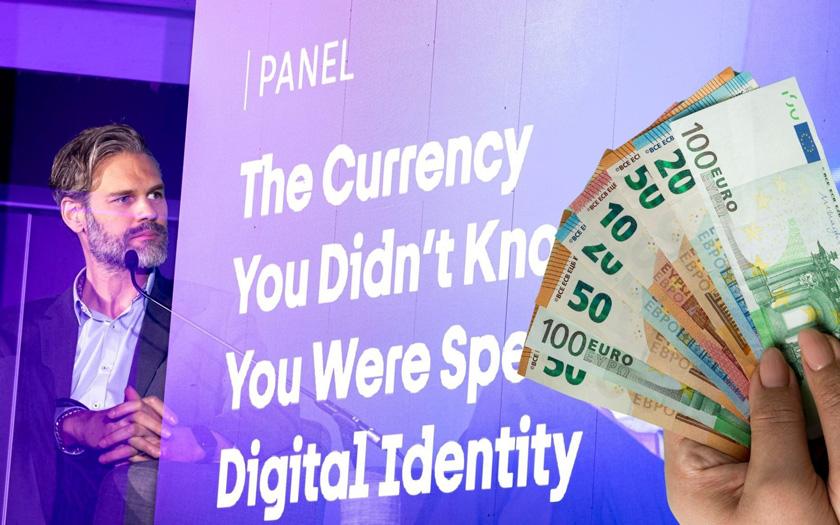
The fourth edition of the Money Motion conference will take place on 11 and 12 March at the Zagreb Fair Congress Centre, with the support of leading companies from the financial and technology sectors. It will bring together experts from banks, tech companies, regulatory institutions and the startup community. The programme offers an overview of the key trends shaping the future of finance – from cybersecurity to digital currencies and asset tokenisation. Tickets are available via the official conference website or the Entrio platform.

The industrialisation of fraud: security becomes a strategic advantage
Financial fraud has grown sharply in recent years, with artificial intelligence increasingly being used in both its design and execution. Experts warn of the rise of what is known as fraud as a service – automated black-market platforms that make fraud possible for almost anyone, even without advanced technical knowledge.
"Fraud has become industrialised, which means it is no longer a marginal risk, but a shared challenge for the entire financial ecosystem. Those still relying on static rules and post-incident controls are already falling behind; today’s environment requires real-time intelligence, identity and collaboration between banks, merchants and networks. That is why security has become one of the most valuable advantages in payments," warns Bartosz Ciolkowski, Division President, South East Europe at Mastercard.

This industrialisation of crime is changing the way security is perceived – it is no longer just an operational function, but a key competitive advantage for financial institutions. Organisations that treat security as a strategic priority protect user trust and their reputation, while others respond only under pressure from increasingly sophisticated attacks. Estimates of the global cost of cybercrime further underline the seriousness of the situation, as by the end of the decade these costs could reach levels with a direct impact on the stability of the financial system.
“The transformation of cybercrime, strongly accelerated by artificial intelligence, has profound implications for the financial market. According to estimates by Cybersecurity Ventures, the global cost of cybercrime could reach approximately USD 12.2 trillion per year by 2031 if the current growth trend continues. Organisations that have made security a strategic priority protect user trust and their reputation, while others respond only under pressure from increasingly sophisticated attacks. These differences in preparedness have direct consequences: user trust, financial system stability and institutional reputation now depend directly on the ability to manage security risks,” explains Robert Preskar, Director of the Security and Card Business Product and Solutions Development Department at ASEE Croatia.

How to harness the potential of artificial intelligence in preventing financial attacks on organisations and users will be one of the key topics on the AI & Automation Stage, the newest stage at the Money Motion conference.
New European regulation increases banks’ responsibilities
The European regulatory framework is further increasing the responsibility of financial institutions in protecting users. The new rules require a higher level of security standards, and in certain situations banks will have to bear the cost of fraud if the protection provided was inadequate.
At the same time, the challenge remains to strike the right balance between strong security and a simple user experience. Advanced authentication mechanisms, anomaly detection systems and multilayered risk management are becoming standard, but the human factor – user awareness and caution – remains a critical element of protection.
Investment by financial institutions in fraud prevention and detection systems to protect their users is a key aspect of the European Union’s PSD3 regulation. In other words, banks today have greater responsibility than ever before in protecting citizens and businesses, and if they fail to apply a sufficiently high level of protection, they will have to bear the cost of attacks.

“For years, HPB has been investing in the improvement of monitoring systems, anomaly detection and multilayered risk management – from cyber protection and fraud prevention to business continuity management. At the same time, the security of digital services is part of our customers’ everyday experience: from advanced authentication mechanisms to rules for protecting data and financial transactions, thereby further strengthening trust in online and mobile banking. Still, even the most advanced security systems cannot fully replace the conscious and responsible role of people. Attention, awareness and responsible behaviour by both clients and employees in the digital environment remain one of the key elements of security,” emphasises Josip Majher, Member of the Management Board of HPB.
Marijo Sutlović, Director of the Cyber and Information Security Department at OTP banka, agrees that in a world of scalable and personalised fraud, security is more than a function – it is a major, if not essential, precondition for trust in banks and the financial system: “For many years, banks have used systems based on AI and analytical models, enabling them to detect anomalies, fraud and compromise. In this way, almost invisibly, they provide their users with an added layer of security and ensure the reliability of digital channels and the transaction system as a whole. At the same time, as the range of security services expands, the challenge for banks is to strike a balance between strong protection and the simple user experience that has become imperative. Security has today become one of the most important financial services, because without it, trust disappears – and in a world where our assets are inseparably linked to different digital channels, trust is the true value that makes the difference.”
How will we pay for coffee in 2030 – and will Europe finally get its own financial infrastructure?
Alongside security, the other major theme of the conference will be the transformation of money itself. The digital euro and asset tokenisation raise questions about the future financial infrastructure – how value will move in an economy operating 24/7, and who will control the key systems.
From the payments industry’s perspective, digital assets are not seen as a threat to the existing system, but as its upgrade through interoperability and new services. Still, Europe faces a challenge, as private global projects already have considerable market momentum, increasing the pressure to develop its own solutions.
“The technologies behind new forms of digital currency represent a new opportunity for payments and for our network. We have been working with partners in this space for years, and the market already includes a number of Mastercard programmes that allow users to buy and use digital assets,” says Hendrik Bourgeois, Senior Vice President, Public Policy and Government Affairs, Mastercard Europe.

Figures from 2025 show just how much is at stake. Nikola Škorić, co-founder of Electrocoin and Money Motion, warns that the private sector already has serious momentum: “Europe is significantly lagging behind the leading private stablecoin issuers, as US stablecoins USDC and USDT together processed more than USD 30 trillion in transaction value in 2025, an enormous global volume that far exceeds most nominal European initiatives.”
In that context, the digital euro is becoming more than a technological project. “If we look at the hard facts, Europe is moving towards a world in which money becomes digital infrastructure, not a product. The digital euro should bring state-backed stability into the online environment, while the tokenisation of real-world assets will show how quickly and efficiently value can move when it is recorded on blockchain. This will not ‘kill’ crypto. Rather, it will separate speculation from real-world use and force projects to show what they are truly for. When institutions adopt the same technology, the network effect becomes enormous, and what was alternative yesterday becomes standard tomorrow.”
His outlook for the end of the decade is pragmatic: “By 2030, citizens will probably pay and send money using a combination of the digital euro and regulated stablecoins. Bitcoin and similar assets will remain important, but more as a global, neutral store of value than as a means of paying for ‘coffee around the corner’. The real shift is that blockchain will become invisible. We will use it without even thinking about it. And when technology becomes boring, that is usually a sign that it has won,” concludes Škorić.
A tokenised economy brings a new financial architecture
If the digital euro represents the public layer of money, tokenisation represents a new way for assets to move. Robert Markuš, Director of Smartis, stresses that this is a deeper transformation: “If the digital euro becomes the new public settlement infrastructure and tokenised assets enter mainstream financial flows, then we are not just digitising assets – we are redesigning the ‘waterways’ of the financial market.”

In his view, three infrastructure layers will determine whether the tokenised economy can develop safely and with operational stability: interoperable real-time settlement infrastructure, identity-driven compliance and trust architecture, and cryptographic security and operational resilience built into the design.
Banks, he warns, will not be able to choose between the old and the new, but will instead have to build hybrid architectures in which tokenised deposits, central bank digital money, DLT platforms, RTGS systems, SEPA and card schemes coexist. Markuš also underlines that in a tokenised economy, identity becomes just as important as liquidity. Strong digital identity, orchestration of KYC/KYB processes, AML monitoring adapted to tokenised flows, and programmable compliance are no longer additional features, but system foundations.
The discussion moves to the stage
This topic will not remain at the level of theory. On the main stage of Money Motion, the panel “Digitalised Euro: Stablecoin, Tokenised Deposit or CBDC?” will be held, featuring Alexandre Soroko (Visa), Martin Bruncko (Schuman Financial), Jürgen Schaaf (ECB) and Ronaldo Oliveira (Hard Yaka Ventures).
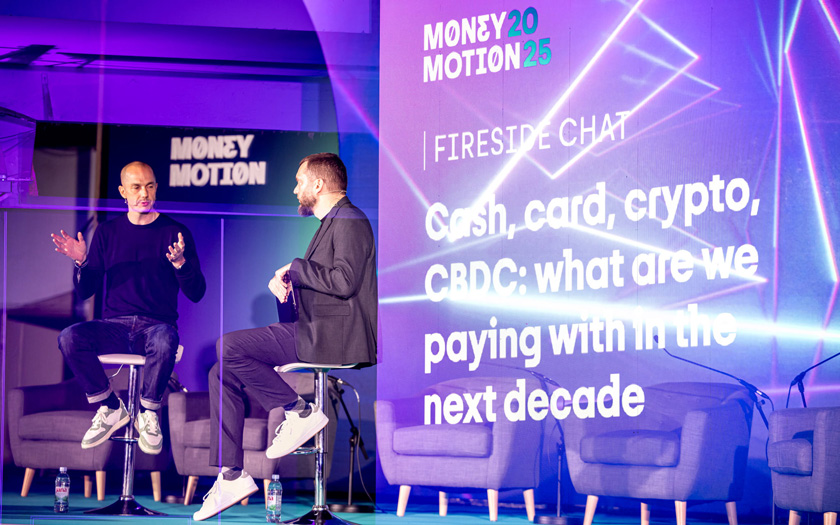
Jürgen Schaaf will also deliver the keynote “From Vision to Value: The Digital Euro and Europe’s Road towards Wholesale CBDC”, while Faustine Fleuret will open the geopolitical dimension of tokenisation in her keynote “From tokenising to decentralising finance: EU policymakers vs. US strategy makers”.
Alongside the main discussions, the Expo Stage, sponsored by Raiffeisen Bank International, will introduce a special format. On Wednesday, the first day of the conference, Damjan Rudež and Alojzije Janković will hold a fireside chat, after which Janković will play a game of blind chess – a symbolic demonstration of strategic thinking in an environment where the pieces increasingly move beneath the surface, and where the audience will play an important role.
Because that is exactly what is happening with money. The digital euro, tokenisation and interoperability may soon become boring infrastructure. And in finance, that is usually the clearest sign that a system has become the standard.