Behind the scenes of the European Gymnastics Championships: 2 years of preparation, 2,000 participants and 20,000 overnight stays for Zagreb

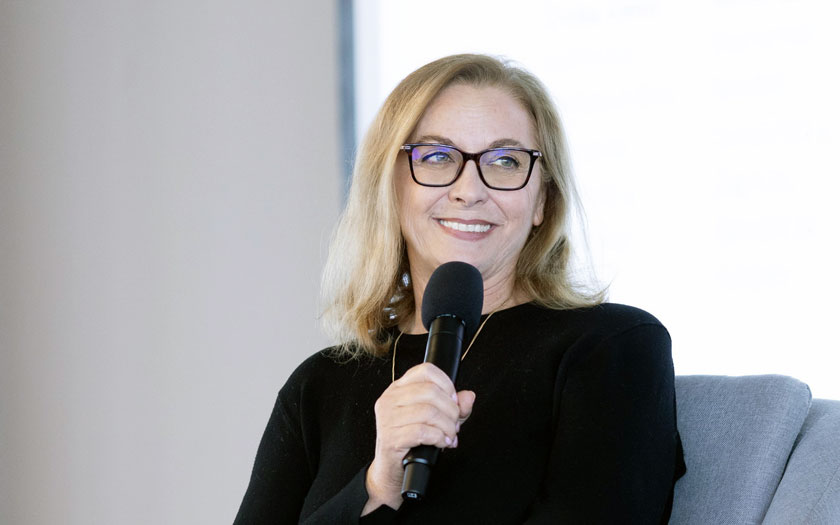
Dr sc. Ljiljana Kukec is one of the most prominent names in the field of franchising in Croatia and the region, as well as someone whose professional career has been deeply intertwined with hospitality, event organisation and international business meetings. She completed her doctoral thesis on the topic „Franchise potential of small enterprises“ at the Faculty of Economics in Osijek, and behind her lies substantial experience in private entrepreneurship, academic work and consulting at prestigious international institutions such as the University of Luxembourg, Swiss School of Business and Management, Oxford Business College and the University of Vern in Zagreb.
She is president of the Croatian Franchise Association, a member of the governing bodies of the European Franchise Federation and the World Franchise Council, and an active consultant at international level. She has organised numerous international trade fairs, forums and conferences, and her professional journey began in the world of luxury hospitality – at the very heart of the events industry.
In an interview for PoslovniTurizam.com, she explains how her experience in hotels shaped her as an organiser, consultant and leader, why details are crucial in international events, and what Croatia needs to do to further strengthen its position as a serious congress destination.
From fashion runways to state protocol: lessons from luxury hospitality
Your professional career started in the hotel industry, in the international hotel companies Four Seasons in Milan and Sheraton in Zagreb, where you worked as an event manager on several interesting events, such as Fashion Week in Milan. Which experience or event from that period of event organisation would you single out as the one that influenced you the most, and that you still remember with great fondness?
My career beginning was more a matter of circumstances, we could even say coincidence. I was an entrepreneur while I was still a student, and then, in a somewhat illogical sequence, I enrolled in history and archaeology and graduated through the extra‑mural programme. My professional career formally started with that degree, but that phase lasted shorter than I had expected.
In the early nineties I was living in Milan and working on various project‑based jobs at exhibitions and museums, when someone mentioned that Four Seasons Hotel was hiring and that I should apply, since it was about a permanent job. I went to the interview more out of curiosity than with a clear plan, and left with an entirely new professional direction. That is how I ended up in the hotel industry and almost immediately realised that I had found an environment that suited me far more than I could have imagined at first. I went to that job interview without even knowing what Four Seasons actually was. They hired me on the same day because they urgently needed people who spoke Italian and English.
At the time, that hotel was not investing at all in marketing, yet it still had occupancy rates exceeding 90% per year. For many hotels in that high category, this is only a dream. Of course, besides the brand, the hotel’s location in a somewhat side street, where the only residents are mainly the Versace family villa and the hotel itself, and which leads onto Via Monte Napoleone – probably the world’s best‑known street for fashion brands – contributed a lot, as did the fact that the hotel was part of the Fashion Week organisation. All the models stayed there, as well as high‑level guests. Some catwalk shows were even organised there. That is when I discovered an entirely new world of high‑end hospitality and the world of event organisation – and fell in love with both.
Although I had the opportunity to participate in organising several editions of Fashion Week in Milan and to meet almost all of the most famous names in the fashion world at the time, I was not particularly impressed by drunken episodes, arrogant behaviour or the somewhat arrogant attitudes of Naomi Campbell and similar stars. On the other hand, I have very pleasant memories of the surprisingly simple, warm and exceptionally kind Elton John, who was a real pleasant surprise in that glamorous world.
Yet if I had to single out something that was personally important, one of the experiences that left the deepest impression on me from the period I worked in international hotel companies was linked to Sheraton Zagreb Hotel. That experience was the organisation of several visits by Madeleine Albright, US Secretary of State at the time, to the Sheraton Zagreb Hotel. Organising those visits, including coordinating meetings, accommodation, press conferences and so on, was extremely complex and at the same time one of the most memorable professional experiences in my early career.
Experience very quickly taught me that on the day of the event itself everything falls into place smoothly, precisely, calmly and almost to the minute, like a puzzle.
As an event manager at Sheraton, I was only one small link in a large organisational chain of these events, yet the whole system functioned like a Swiss watch. Approximately three months in advance, I arranged everything with the US Embassy in Zagreb, from protocol and meeting schedules to accommodation, timings and security procedures. When every detail had been worked out and the entire hotel was familiar with the protocol, about two weeks before the visit, representatives from an American agency from Vienna arrived and went through everything again, changing almost the entire plan. A few days before the actual arrival, her core team and representatives from the State Department once again revised the programme and introduced additional adjustments. When I first participated in organising an event of that level I was genuinely confused by the endless changes, but experience very quickly taught me that on the very day of the visit everything falls into place smoothly, precisely, calmly and almost to the minute, like a puzzle.
In conversation with her close team, I also learned that after a completed visit they would go on a three‑week holiday, because they were completely focused on organising only one event within a single time frame. That is precisely why there was no room for mistakes. For the next visit, a different team was in charge. That level of focus, clear division of responsibilities and complete concentration on a single task made a strong impression on me and later significantly influenced my professional approach to projects.
Another small but highly symbolic anecdote has also stayed in my memory. One morning, her secretary, a very kind and young woman, came into my office, visibly worried, and asked me why in the room where an important meeting was scheduled to be held that day, dead flowers had been placed on the large table, as she described it, and whether this had some special meaning. On the table was, in fact, a large and very beautiful ikebana. At first I did not understand exactly what she was asking, but through our conversation it became clear to me that in American culture, at least at that time, dried flowers were not customary as decoration. Fresh flowers were acceptable; perhaps artificial flowers in some homes, but “dead” flowers in no way. That moment has stayed dear to me, because it perfectly illustrates how important cultural differences and symbolism are as details in organising high‑level international events.
When the audience is not drawn by the location, but by the quality of the programme
Today you act as president of the Croatian Franchise Association and you are a member of the governing bodies of European and global organisations. How did you move from the world of hotels into the world of franchising? How do your knowledge from the events industry and hospitality reflect in your work within the franchise sector and international organisations today, and how does the organisation of events differ from the perspective of a hotel compared to the perspective of an association and international association?
In parallel with my hotel career I always had an entrepreneurial side, which became decisive after the birth of my second daughter. Everyone who works in the hotel industry and the events industry knows that event management is a job that rarely fits into an eight‑hour day and more often lasts much longer. Especially because everything you do in preparation counts for nothing if you are not fully present throughout the entire duration of the event. Sometimes I even slept in the hotel, so as not to lose time on commuting and because I was available 0–24, in case something was needed. At the moment of my second daughter’s birth, returning to the hotel was simply no longer feasible, so I remained “only” an entrepreneur.
In Italy I first seriously encountered franchising and brought several Italian franchise concepts to Croatia. I very quickly realised that franchising was almost an unknown concept in this country at the time. That is what motivated me to start working more intensively in this field. In 2001 I launched Body Creator, a centre for reshaping the female body, and soon started offering a franchise model for that business as well. Because the market did not understand what franchising meant and what kind of concept that was, it became clear to me that we first had to create a market so that franchises could even come to life.
That is how in 2002 I was one of the founders of the Croatian Franchise Association. The original idea was very pragmatic: to create an environment and a market for my own franchise. I succeeded in that, because over the course of about twenty years I sold around thirty Body Creator franchises in Croatia and the region. However, through my work in the association, its membership in the European Franchise Federation and the World Franchise Council, I realised that franchising is a much broader story than just myself, and that it can bring real benefit to a large number of entrepreneurs if they know how to develop it properly. That is how I naturally entered the consulting world and today, together with entrepreneurs, I create their franchises and help them expand them here and abroad.
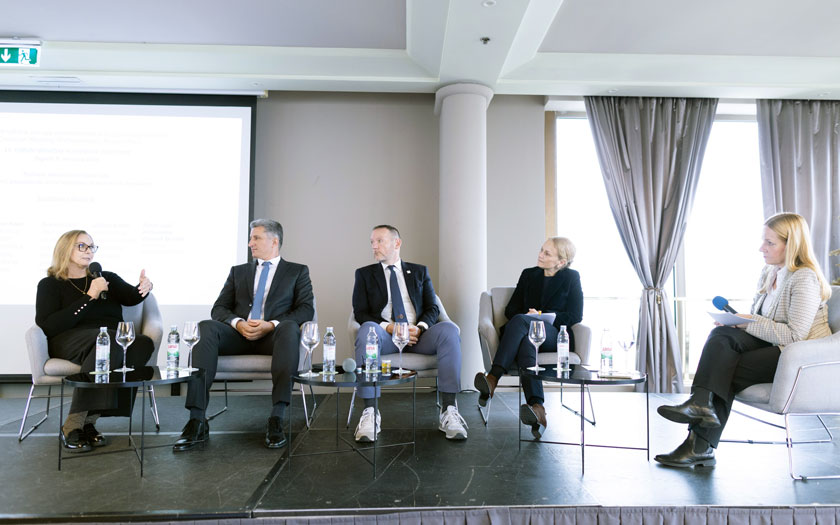
The knowledge acquired in hospitality and the events industry proved extremely useful in the association’s work. The difference between organising events from the perspective of a hotel and from the perspective of an association or international association is quite big. In the hotel you have strong infrastructure, many departments and a well‑known brand such as Sheraton or Four Seasons, which in itself attracts people. In an association, you often do not have that kind of luxury backup. Events are organised by two or three people instead of a hundred and fifty employees, and you must attract the audience primarily through the quality of the content, not the name of the location. Yet it is precisely in that that the special charm of this work lies.
When an event succeeds without a big machine behind it, the feeling of satisfaction is often even greater.
As for my knowledge from the hospitality sector, I think it has marked me forever and that it is almost a kind of professional deformation. In all hotels and restaurants, I automatically notice what is not working, where time is being lost, and what could be organised more simply, faster and more productively. Sometimes I feel the urge to stand up and say: this is wrong, you are wasting time and energy here, but of course I keep that to myself and mentally reconstruct a better version of the process.
What types of events does the Croatian Franchise Association most often organise, and how many such events are held in Croatia each year?
Over the past twenty years or so, we have organised ten international franchise fairs, fifteen international franchise forums, several hundred workshops and lectures, either independently or in cooperation with partners, as well as two business opportunities fairs for self‑employment in cooperation with the City of Zagreb.
We are especially proud of our educational step. Since 2012 we have been the founders of the Franchising course at the University of Vern, and the same or similar programmes are today being delivered at the University of Luxembourg, Swiss School of Business and Management and at several other business schools and faculties in Croatia and abroad, initiated by us, where I usually teach as well. This step is very important to us because we believe that systematic education of young people in the field of franchising creates good foundations for the long‑term and stable development of the sector. Franchises are an effective way to scale a business and to internationalise, but they are not just that. They are also a way of more sustainable start‑up of entrepreneurial activity, because they allow faster transfer of knowledge, clear business frameworks and a more controlled entry into the market. This increases the chances of success for new entrepreneurial ventures, as well as their contribution to employment and the development of local communities.
Since micro and small enterprises make up the largest part of total employment, both in Croatia and in most European countries, and also represent an important part of economic growth, investing in knowledge and skills that help them operate more securely and sustainably clearly makes sense. Education about franchising for young people gives them a concrete basis for higher‑quality entry into entrepreneurship, reduces initial mistakes and contributes to more stable business development, which is why we consider this step important at both national and European level, and it is supported by the European Franchise Federation as well.
Together with Poslovni FM, we are co‑founders of the regional Franchise Brand Leader Award, which has been given for the past four years to the best franchises in Croatia and the region. The award has several categories, and the overall winner automatically goes on to the European Franchise Award in Brussels, which is also the only way for a franchise to even compete at European level. Three years ago, Muzej iluzija was the European silver winner, in 2024 our Carwiz rent a car was among the finalists, while in 2025 Tinker Labs won in the category of new European franchise concepts, and Poslovni FM radio was a finalist in the category of companies that are an essential part of every franchise’s business.
Brend Forum as an example of an event that creates lasting value
The Brand Forum has grown into a recognisable business event. What are, in your experience, the key elements of a successful event that creates long‑term value for the destination and its participants?
Brand Forum is today one of the most recognisable business events in the region dedicated to brands and branding. It is held in Zagreb and brings together domestic and international experts, company owners of various sizes, board members and top management, to discuss brand development, their market value and impact on long‑term business results. At Brand Forum, conversations are held about country branding, personal branding, and the branding of products and services, and more. Over the years, it has evolved beyond the classic conference format and become a platform for knowledge exchange, networking and creating concrete business opportunities.
As a member of the organising committee, together with Dr Božo Skok, Tomislav Ravlić, Dr Aldin Dugonjić, Silvijo Šimc and, of course, Darko Buković as the driving force behind the entire event, I experience Brand Forum as a project with a clear vision and strong regional reach. Its value lies not only in the quality of speakers, but also in the fact that it systematically builds a culture of branding and strategic thinking in the economy, which in the long term contributes to the competitiveness of domestic and regional companies.
From the perspective of event management, Brand Forum is a good example of an event that creates lasting value both for participants and for the destination. First of all, it has a clearly defined topic and a target audience, which is the foundation of every successful event. The content is carefully structured and combines conference panels, practical workshops, a franchise fair, several awards, B2B meetings and accompanying programmes, enabling participants not only to listen, but also to actively participate and network.
Another important element of success is the international component, because the participation of experts from different countries gives the event broader reach and additional relevance. In addition, Brand Forum generates very concrete economic effects, from strengthening the knowledge and competences of entrepreneurs, through encouraging the internationalisation of brands, to creating new business partnerships that often continue even after the event itself.
From an organisational point of view, the difference compared to classic hotel‑based events is that here you do not rely on the strength of the location or the hotel brand, but exclusively on the quality of the programme, the reputation of the speakers and a clearly defined value for the participants. It is precisely this combination of strategic content, good logistics and a strong organisational team that is the reason Brand Forum has become a recognisable and relevant business event in the region, with a visible contribution to the economy and the development of the business community.
Zagreb for business‑oriented events, the coast for networking and incentives
You have organised events in different parts of Croatia. Which destinations have proved particularly suitable for business meetings, and why?
The majority of the business events I have organised have taken place in Zagreb, and for good reason. Zagreb has long proved to be the most suitable destination for business meetings with a clear sector focus, such as franchise fairs and professional conferences. The city has the necessary infrastructure, good transport connectivity, a concentration of business audiences and institutions, and a sufficient number of potential investors, all of which are crucial for this kind of event. For events that require high‑quality content and a concrete business audience, Zagreb is still the most rational choice.
An exception in this sense were three franchise fairs that we organised in Opatija, between 2016 and 2018, in cooperation with the Rijeka Chamber of Commerce. Those were very well‑organised events, at a high professional level, and Opatija itself is an excellent destination for business gatherings, with a long tradition of congress tourism and infrastructure that can easily handle much larger events. However, franchising was still in its early stages even in Zagreb at that time, let alone in Opatija, so the level of public interest was limited. This was a period when such a topic could not attract an audience that would come specifically to Opatija for that reason. I also believe that the time is not yet right to organise such a meeting outside Zagreb, because in smaller towns most visitors are curious onlookers, while the key segment of the audience – potential investors – is still relatively small.
From an event management perspective, an additional challenge when organising such events in smaller towns is logistics. The majority of foreign speakers and programme participants arrive in Zagreb, so it is necessary to organise additional transport and accommodation outside the main business route. For smaller organisers, this significantly increases costs and organisational pressure, without necessarily bringing a larger return.
Although Opatija is an extremely attractive destination, it has proved better suited to broader business conferences or incentive events. In addition to that type of event, smaller and attractive locations such as Rovinj, Opatija or Dubrovnik are particularly suitable for conferences with a strong focus on networking, strategic discussions and exchange of experience, as well as for leadership summits, annual board meetings, industry forums and closed business retreats. In such events, the main “hook” for the audience is not sales or an immediate business outcome, but the quality of the participants, informal socialising and the time they spend together outside the classic conference setting. Large events in destinations like Rovinj work precisely because they offer a break from everyday life. Participants come because of the content, but stay because of the atmosphere, evening programmes and opportunities for conversations that take place not in the conference hall, but over dinner, during a walk or over coffee. In this kind of environment, networking often has greater value than the formal programme, and business decisions are not made immediately, but relationships begin to take shape.
In the case of franchise events, the situation is quite different. A franchise fair seeks an audience that comes with a very clear intention – potential investors and entrepreneurs ready to make a decision. Such an audience is concentrated in large urban centres and does not come primarily for the destination, but for the opportunity to talk, compare offers and make decisions. In smaller destinations this profile of visitors is harder to gather, and the event easily slips into the format of a “walkaround”, which has little real business value for exhibitors.
From the perspective of an experienced organiser, what would you highlight as the strengths of Croatia’s congress offer to international organisers, and where do you still see room for improvement?
From my perspective and experience, I would say that the main strength of our congress offer lies in people and operational capacity. Croatian hotels, event teams and production crews are very experienced, flexible and used to working in demanding conditions. I have often seen that things can be resolved quickly and pragmatically here, without excessive bureaucracy, which is extremely important for international organisers. That operational reliability is often a greater advantage than the sheer size of the venue or spectacular spaces.
Where, in my experience, we still have room to grow is not infrastructure – which is talked about constantly anyway – but in the culture of event financing, and particularly in sponsorship culture. Without high‑quality sponsors, it is very difficult today to create content‑rich and production‑strong business events. In our context, sponsorships are still often seen as a cost, rather than as an investment in knowledge, networks, visibility and the long‑term well‑being of the community.
Although every euro is important to every company today, in many European countries there is a much clearer understanding that high‑quality business and professional events are part of a broader economic development ecosystem. In some countries there are also concrete incentives, such as tax breaks for sponsorships of educational, professional and socially beneficial events, which encourage the private sector to participate more actively in community development. In my experience, when there is stable and long‑term sponsorship support, the level of an event rises dramatically, from the quality of speakers and the programme to international reach and the reputation of the destination itself.
I believe that strengthening the sponsorship culture, possibly combined with fiscal incentives, could have a significant and long‑term impact on the development of Croatia’s congress offer, perhaps even greater than the construction of a single large venue.
Examples of this can be seen in the experience of countries such as Germany, France, the Netherlands and the Nordic states, where sponsorships of professional and business events are treated as an investment in broader social and economic development and are further supported through clear fiscal frameworks and tax breaks, because a similar approach could strengthen Croatia’s congress and event industry in the long term as well.
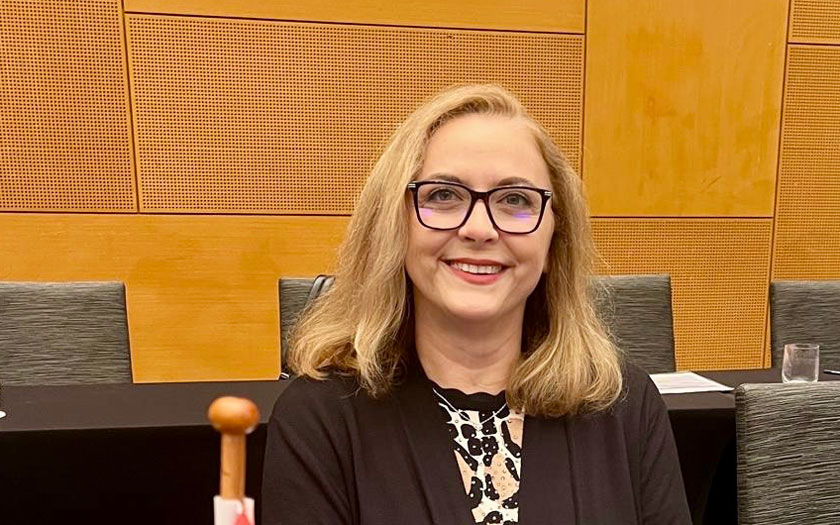
You hold the title of Croatian Congress Ambassador. What does that role mean in practice, and how does it help you bring international events to Croatia?
I am still getting to know the title of Croatian Congress Ambassador, because it is not a classic role with clearly defined tasks. In practice, I experience it mainly as a kind of soft‑power role rather than as an operational function. It is more a position of trust and credibility than a set of specific protocols and responsibilities on paper.
Through my work in international organisations, I often find myself in informal conversations about where certain events could be held. In such situations, this role functions in a very practical way, rather than formally. I can realistically present Croatia from my own experience, without exaggeration, indicate for which types of events it is excellent and where it may not be the best choice. It is not about selling the destination, but about helping to find a good match between content, audience and location.
It is precisely at these informal levels, through conversations, recommendations and connecting the right people, that this role shows its greatest value. If such contacts later lead to concrete interest or even a real event in Croatia, then I know the role has worked in practice, and not just as a title.
Does Croatia have the potential to host the World Franchise Council?
You have announced your intention to bring the World Franchise Council meeting to Croatia. What kind of event are we talking about, and what would its significance be for Croatia’s MICE industry and the destination’s visibility?
The World Franchise Council (WFC) meeting is not a classic conference, but a very specific high‑level international gathering that brings together representatives of national franchise associations from more than 45 countries. We are talking about people who in their own countries represent entire franchise ecosystems, which is why hosting such an event always carries special significance for the host country.
I have been participating in these meetings for years and can say from firsthand experience that they are taken very seriously. A decade ago, when Lebanon was the host, we were guests of the country’s president at the time. The formal and financial hosts are usually the Ministry of Economy, Chambers of Commerce and Tourism Boards, as well as major corporations. Examples like this clearly show that World Franchise Council meetings are seen not only as professional events, but also as important international business and institutional encounters. WFC meetings are held twice a year, each time in a different part of the world. Last year one was held in February in Las Vegas and the other later in Indonesia, while the next meeting is scheduled for late May in Beijing. Host status is not obtained by chance. Countries campaign for the right to host up to two years in advance, and the WFC must confirm the hospitality.
The host country bears all official organisational costs, which is why strong institutional and sponsor support is crucial.
Bringing the World Franchise Council meeting to Croatia would be significant for both the franchise sector and Croatia’s MICE industry. Although this is not an event with thousands of participants, it is a gathering of around 200 people that nonetheless has a very strong reputational impact. Delegates from around forty and more countries come as decision‑makers and return home with very concrete impressions of the host country. From my personal experience, these are events that may not be large in terms of numbers, but they are large in terms of influence. For this reason, I believe that hosting a WFC meeting would be a strong signal that Croatia can position itself as a serious and relevant business and congress destination at the global level. For this kind of organisation, we need institutional support and a few good sponsors – and everything is achievable.
How realistic and feasible do you think it is to bring that event to Croatia? What requirements must the host destination meet, and what would be the advantages of Croatia as host of such a major international meeting, as well as the biggest challenges?
I would say that bringing the World Franchise Council meeting to Croatia is realistic and feasible, provided institutional and organisational support is secured in due time. By “support” I mean primarily financial support, whether in cash or in accommodation capacities and similar contributions. The candidacy itself is not a problem, because I know how the Council operates and I have no difficulty lobbying with colleagues to have them accept Croatia as host. At this moment, for example, destinations are still applying to host the meeting in autumn 2027, so there is sufficient time.
The requirements the host destination must meet are not over‑the top, but they do demand serious organisation. A five‑star hotel is needed, where roughly a hundred rooms would be reserved, often fewer. Delegates usually come in small teams of two or three people, and the host country guarantees one double room per country, with the possibility for participants to top up additional rooms at previously agreed promotional rates.
The entire stay for official delegates is of a package type. This means that all official meetings, breakfasts, coffee breaks, lunches, dinners and accompanying activities are included in the price. In addition to the working part, it is necessary to organise one formal gala dinner, preferably with elements of a national programme and a high‑level political figure as host, for example the Minister of Economy and so on. A guided city tour and at least one excursion should also be organised, so that participants can get to know the host country more broadly, not just through the conference hall.
In the Croatian context, this opens up attractive opportunities. For example, the official part should be held in Zagreb, because that is where all the franchises operating here are concentrated and where there is also better potential for sponsorship from local concepts, while an excursion to Plitvice Lakes would be a very strong and authentic experience for international guests. As an alternative or complement, Opatija or Rovinj could also be considered, depending on the concept and logistics. Hosts often, in cooperation with tourism boards, also offer the possibility for delegates to extend their stay at their own cost at an attractive location, but on more favourable terms, which further increases the attractiveness of the destination.
In practice, the entire organisation of such an event always rests on good cooperation between the organiser, institutions, tourism boards and sponsors. When that circle is closed, bringing a WFC meeting to Croatia is no longer a question of whether it can be done, but of when and how to best use the opportunity for Croatia.
What advice would you give to hoteliers, venues and event agencies in Croatia who want to attract international associations and position themselves on the MICE map of Europe in the long term?
From what I have seen through years of working with international associations, I would say that the key lies in realism and consistency. Croatia does not have to be everything to everyone. It is far more important to clearly know for which types of events and for which audience we are a good fit, and to communicate this without exaggeration. Personally, I have often been in situations where a destination is chosen not because it is the cheapest or most impressive on paper, but because the people on the other side have a feeling that someone will take responsibility and that they will not be left alone if a problem arises. That sense of security and trust is built through people, not through presentations.
If I had to single out one common point for hotels, venues and event agencies, it would be the need to approach international partners as long‑term relationships, not as one‑off projects. When that happens, positioning on the European MICE map comes naturally, rather than as a result of a campaign.