MICE Lab in Zagreb: What is stopping a good offer from reaching the client?

From a conference that a few years ago opened space for discussions about the future of business, technology and society, Future Tense has today grown into one of the most recognisable business events in Croatia and the region. The conference brings together leading domestic and international experts from the fields of technology, leadership, sustainability and social change, and in recent years it has also made an important international step forward by expanding to Copenhagen through a partnership with the renowned Danish Institute for Futures Studies.
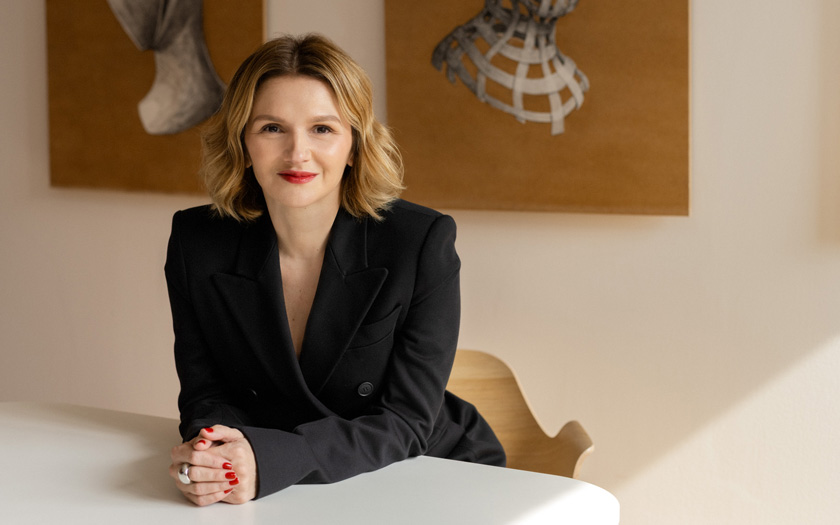
The entire project is led by Komunikacijski laboratorij and its director Manuela Šola, who has years of experience working on communication projects and events. In an interview for PoslovniTurizam, she reveals what it looks like to organise a conference that must be simultaneously content-relevant, production-innovative and emotionally memorable, why audiences are more demanding than ever and what the Croatian event industry still lacks for a more serious leap forward.
With years of work in PR, communications, and event management behind you, you know well that this field requires creativity, accuracy, and nerves of steel. Looking at your career trajectory today, which experiences truly made you who you are, and what still brings you joy after all this time?
The projects that shaped me the most were those where we had to think strategically and react quickly at the same time. Situations with no predefined solutions, but instead requiring taking responsibility in moments of uncertainty. What still excites me just as much today is the process itself, from the first idea to the moment you see the project come to life and people enjoying it.
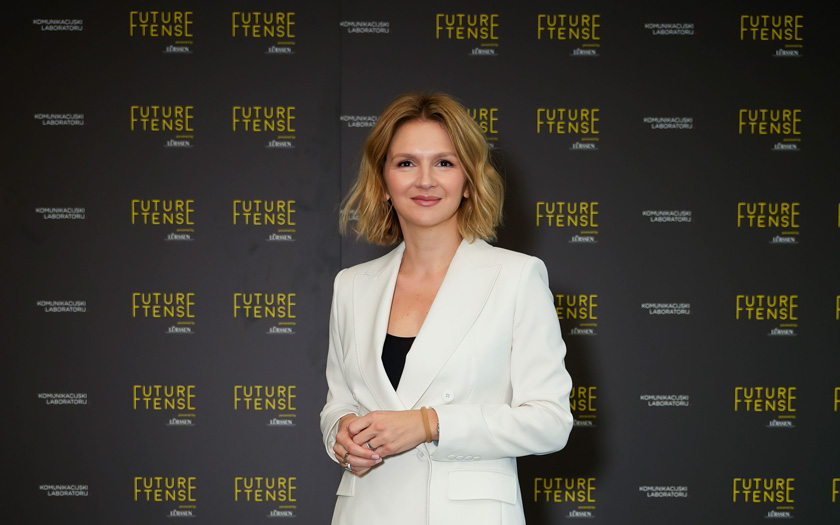
Komunikacijski laboratorij is also recognised outside Croatia, with collaborations that cross the borders of the domestic market. How do client expectations and event organisation standards differ in international projects compared to our market? What is “universal” in a good event that clients recognise regardless of location?
From our experience in Denmark, there is a much stronger emphasis on the concreteness of content and its applicability. The audience is more active, more open to participating in discussions and more inclined to ask questions. In our market, the audience is still more often in the role of listeners, although this is gradually changing.
When you organise an event in a different culture and business environment, authenticity comes from carefully balancing respect for the local context with maintaining the key elements that define the identity of the conference. These are the elements you do not compromise on and through which the audience recognises you, regardless of location. What ultimately makes any good event memorable is the experience and the feeling visitors take away with them.
If people remember you for what they learned, experienced or felt, then you have done a good job.
From the idea of futurism to a conference gathering 800 participants and a Danish edition
Future Tense has become a staple of the Croatian business scene, yet every great venture starts small. Take us back to the moment you realized Croatia was missing a conference focused on the future - what was that like, and what kind of obstacles or doubts did you have to overcome as the person behind it all?
The preparation of the first edition of the conference was primarily marked by belief in the idea itself. In the period of 2017 and 2018, when we were working on its launch, topics such as strategic thinking about the future and futurism were not yet part of the broader public discourse. Because of that, our biggest task and challenge was to bring the business community closer to why it is important to think about the future today and to encourage them to apply the knowledge and tools of futurists in their own business.
Of course, such a step forward always comes with typical organisational doubts that mostly disappear once the day of the conference arrives. The positive first reactions from the audience were a clear signal that the business community was ready for such topics and that the conference had its place in the market.
When you compare the first edition of Future Tense with this year’s one, what are the biggest differences, both in production and organisation, but also in terms of audience energy, participant expectations and the role of the conference in the market?
The differences are visible on all levels. Every year we aim to introduce new formats and production elements in order to improve the experience for partners and guests. We also see changes in audience size and engagement. This year we had the highest number of visitors, almost 800. The audience reacts more to the content, comments on it and wants to be involved. Overall, the topic of the future has become part of public and business discourse, which is also reflected in the conference itself.
In recent editions, the conference has been marked by a partnership with Lürssen and expansion to Copenhagen. How are such strategic relationships built and what was decisive for Future Tense to get its Danish address?
The collaborations we build with our partners are based on shared goals, values and a clear vision of what we want to achieve in the long term. We have been cooperating with the Institute for Futures Studies from Copenhagen for several years through the conference programme itself, primarily through speakers and content, and the strategic partnership came as a natural continuation of that cooperation. It is a highly respected institution in Denmark, with an excellent team and deep expertise, and we quickly realised that together we could expand that knowledge beyond our own countries. That is how the idea to hold the conference in Denmark was born.
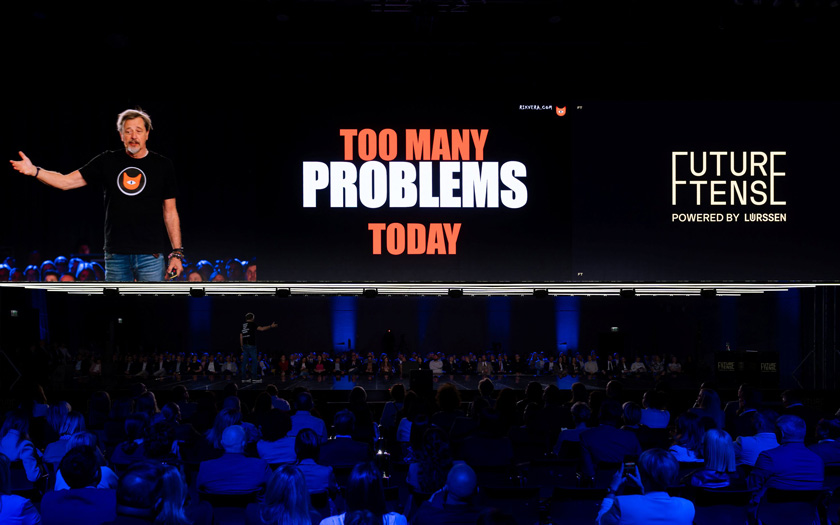
Speaker selection and venues as part of the conference identity
Future Tense succeeds in bringing top international speakers to Croatia, as well as relevant names from business, technology and social change. What guides you in selecting speakers and topics, how do you balance between what is currently popular and what will become important in a few years? How difficult is it to stay one step ahead?
Speaker selection is one of the key parts of conference preparation and we often start this process more than a year in advance. We aim to find speakers who are truly experts and relevant in their field, but also those who can clearly convey ideas and maintain audience attention.
Topics and speakers are usually developed in parallel, and the guiding thread in selection are megatrends, meaning long-term and global changes that shape every segment of business and everyday life. For that reason, we always cover topics from technology, society, leadership and sustainability. Within these areas, we look for topics that are current in that year, but also at least one new perspective that has not yet been sufficiently discussed.
You choose venues such as Lauba, the Museum of Contemporary Art and Mozaik Event Centar. From an organiser’s perspective, what is that “something” a venue must have, what do you look for when selecting a conference location?
A venue must be adaptable to the number of participants and different functions, from the stage to exhibition and networking zones. Technical equipment is also important because it significantly facilitates production, while location and accessibility are often decisive factors in the overall participant experience.
But what gives a venue its soul is when it has a story that is in some way connected to the conference or is simply unexpected for a business event. From the very beginning we wanted to place the conference in a modern or slightly unconventional setting. One year we were at the Museum of Contemporary Art, and in Denmark, for example, in an industrial space of a former newspaper printing house. Today, with a larger number of participants and further development of the conference, Mozaik Event Centar has proven to be a modular space that can be constantly transformed, which gives us creative freedom.
Croatian event industry is growing, but audience expects more
In recent years Croatia has been developing its congress and conference offer more strongly. How do you see the quality of our venues, services and professionalism of the event industry today? Where are we strong and where are opportunities still being missed?
I am glad to see that the event industry is developing and that we are getting new conferences from different sectors every year. Where I still see room for improvement is the level of innovation, especially when it comes to the application of new technologies and more dynamic content formats that more actively involve the audience in the conversation.
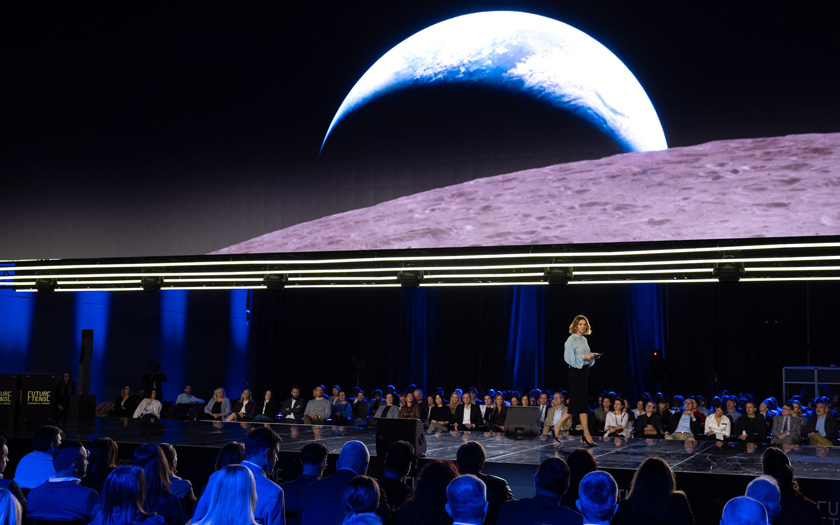
This year’s stage at the conference was truly different, unexpected and widely noticed. How did the idea for such a stage concept come about, how demanding was it to realise something new technically, and what were the reactions from speakers and the audience?
The initial reactions from both speakers and the audience were very positive, which we are glad to hear, especially when we take a small risk and try something new. The idea for the central stage actually came from practical reasons. We had to adapt the space for a larger number of people, while not wanting to lose the scale and aesthetic impact of the stage. We sat down with the technical team, went through all options and eventually arrived at a solution that suited the Mozaik space.
After all your projects, travels and large productions, what still personally drives you? Is there a moment during the event, before doors open, during the first applause or after the end, when you say to yourself: “This is why I do this job”?
The moment when all the pieces finally come together. When I see the audience following, recording, discussing during breaks and genuinely enjoying the programme on the day of the conference. Those moments confirm that we are doing something meaningful and are the best motivation to be even better next year.