Regional event industry gathers again in Zagreb at CROWD & LOUD powered by Entrio

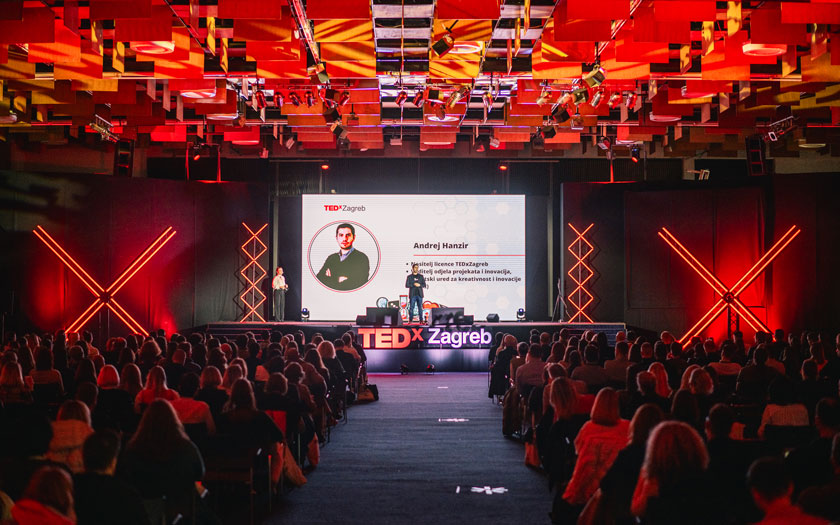
What happens when ideas from the worlds of science, technology, art and everyday life meet on the same stage? That is precisely the uniqueness of TEDxZagreb, an event that gathers more than 800 people every year. Ahead of this year's edition, Andrej Hanzir, licensee for TEDxZagreb, talks about why the live experience is much more than just listening to talks.
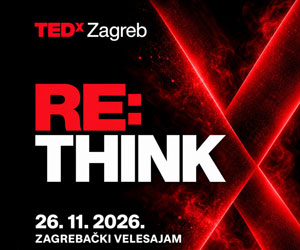
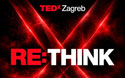
At TEDxZagreb you can come for one speaker and leave with the story of someone whose name you did not even know beforehand. That is a large part of the appeal of an event that connects different professions, experiences and worldviews on a single stage. Each speaker brings their own idea, presented in the recognizable TED format, usually up to 18 minutes long, and during a single day the audience has the opportunity to get acquainted with topics they may have never dealt with before. This year's edition, TEDxZagreb Re Think, takes place on 26 November at the Zagreb Fair. Andrej Hanzir explains how speakers are chosen among more than 300 submitted ideas, why it is important to connect different disciplines and what meetings and conversations outside the stage itself bring to the audience.
For a start, what actually is TEDxZagreb and what sets it apart from other conferences and events?
TEDxZagreb is an independently organized local event under a TED license. People from different fields meet in the same hall, and each talk brings a separate story. That breadth is a big part of the reason why the audience comes. The uniqueness of TEDx is also the format itself: speakers develop their ideas for several months with the support of expert mentors. Through this process, they shape the content, structure and performance style to bring a complex topic closer to a broad audience. This creates a well-rounded talk that clearly conveys one idea in a maximum of 18 minutes, instead of a classic presentation trying to cover an entire field.
At the same time, the life of these stories lasts much longer than the event itself. Recordings of the talks attract tens of thousands of views afterwards. For example, the talk by historian Dario Špelić from last year's edition has already exceeded 50,000 views. This means that the story the audience hears for the first time in Zagreb continues to reach new people long after the conference ends.
The format of short talks, usually up to 18 minutes, is also recognizable. During a single day, it is possible to hear very different topics without needing to be an expert in each one. Sometimes what stays most in your memory is precisely the talk for which you had no expectations.
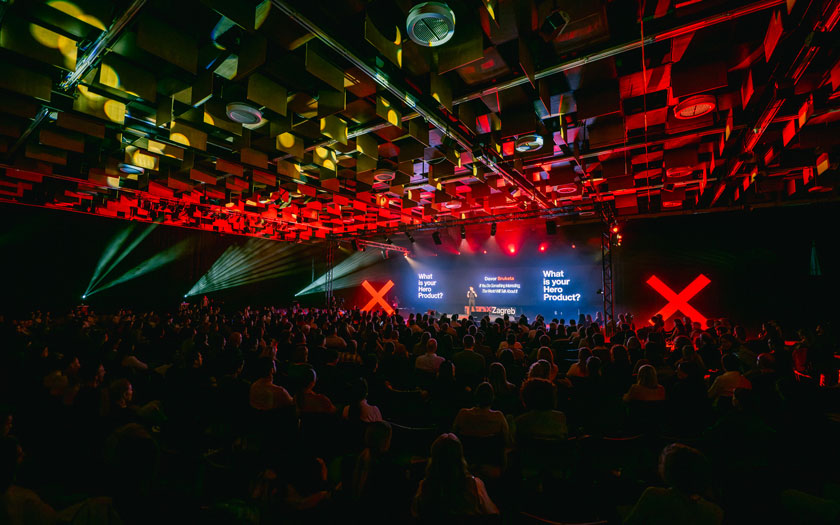
How did your story with TEDxZagreb begin and what personally motivates you to be part of this project?
I have been following TED talks since my high school days. I watched a series of TEDx talks online and then decided to join the organization. I volunteered in the TEDxZagreb team for several years, and in 2020 I took over the license and management of the event. That is why I am personally tied to TEDxZagreb: from the audience and volunteering to responsibility for new editions. It is the oldest and largest TEDx event in Croatia, which this year reaches its sixteenth edition.
How do you choose speakers for TEDxZagreb? What makes a person or an idea worthy of the TEDx stage?
A famous name can attract attention, but what matters is what the person will bring to the audience. A CV gives us context, while a talk needs to have a clear idea and a reason for us to hear it. That is why TED's slogan is precisely "ideas worth spreading". People like Bill Gates, Simon Sinek, Ken Robinson, Elon Musk, Stephen Hawking and Serena Williams have participated at TED, and even Pope Francis delivered a talk. The range of those names shows well how many different fields the platform covers.
TEDxZagreb has a team that deals with content and every year selects about ten for the stage from more than 300 submitted ideas. We are interested in whether a person has knowledge or experience that they can bring closer to others in a meaningful way. It is equally important whether they can single out what is essential for that performance from their broad professional story. The audience does not need to know everything about someone to understand why their story is worth listening to.
Who are this year's speakers?
Among this year's speakers are Vedran Bilas, Goran Vlašić, Dunja Firšt, Irena Burić, Igor Čerenšek, Ivana Pavić, Igor Šeregi, Vladimir Potočki, Damjan Geber and Marko Rakovac. Already that range of names opens up space for the encounter of different fields and experiences, from technology and psychology to film, economics and the spaces in which we live. Each performance brings a separate story. Someone will come because of a person whose work they already know, and during the program discover several more speakers they want to continue following.
Multidisciplinarity sounds like a big word. What does it actually mean to someone who sits in the audience?
It means they will not listen about a single field all day and that they do not need to know the language of a certain profession in advance. People live much broader lives than their occupations. Someone who works in finance might be interested in film, and someone from the creative industry in a scientific discovery or the way we learn.
Those fields are not separated in everyday life anyway. Technology influences culture, space influences our habits, and the way we communicate influences relationships with others. When you listen to people from different disciplines, it is easier to notice how close a topic can be to your life even though at first glance it has nothing to do with your job.
In the age of artificial intelligence, that breadth becomes even more important. In my opinion, along with expertise, we need to develop the ability to connect knowledge from different fields, ask good questions and evaluate the information we receive. AI can help us get answers, but we still need to understand the context in which we will apply them. TEDx promotes precisely that multidisciplinarity and presents a good opportunity to hear how other people approach other problems.
We can watch talks from home. What do we gain by coming live?
First of all, the opportunity to experience the talks in the hall, together with people who have also come to listen and discover. The atmosphere in the hall is completely different compared to a recording.
TEDxZagreb gathers more than 800 participants every year and it is important to us that this meeting is interesting between talks as well. In the breaks there is time for networking and meeting people from other professions. Conversation can start with an impression about a talk and continue with an exchange of experiences or the discovery of a mutual interest. I would like people to return home with a new acquaintance from which some new idea and collaboration might arise.
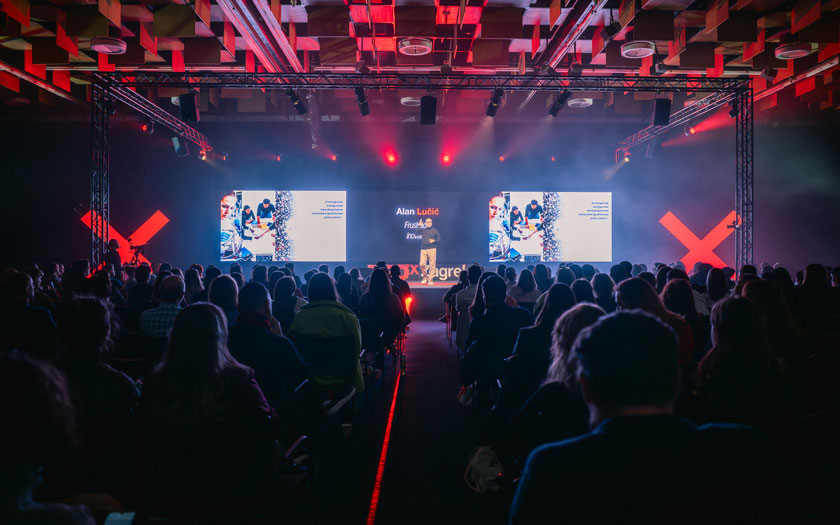
How far can TED and TEDx talks reach beyond the hall and give momentum to an idea?
Many ideas reached a wide international audience for the first time through TED and TEDx talks. Well-known talks by Simon Sinek on inspiring leadership and Brené Brown on vulnerability were held at local TEDx events and later became among the most watched on TED's platform. That is a good example to me of how a local gathering can achieve a completely different reach after a recording is published.
TED Talks today have more than 11 billion total views, and there are more than 200,000 TEDx talks. Within the TEDx program, more than 50,000 events have been held so far in 180 countries. Zagreb also has its share of that story: more than 200 speakers have passed through our stage, and recordings of performances continue to reach the audience long after the conference.
What personally motivates you to be part of TEDxZagreb?
The opportunity to bring content closer to people that they might not find on their own. Through the Croatian Office for Creativity and Innovation I work on various projects, and I find it particularly interesting to connect people who would not otherwise meet. At TEDxZagreb that meeting happens both through the program and among people in the audience.
At the same time, I have the opportunity to get acquainted with topics and people that are not part of my everyday job. It is a good reminder of how many interesting people and knowledge exist outside the circle we already know. I would like the audience to feel a part of that joy of discovery.
What would be the greatest success of this year's TEDxZagreb for you?
That visitors can single out a story because of which they are glad they came. Perhaps they learned something they immediately wanted to retell someone or discovered a person whose work they will continue to follow. I do not expect everyone from the program to take away the same thing.
I would like to hear: I came for one speaker and discovered several more people I want to listen to. I would be equally glad if visitors connect and exchange ideas that they will continue to develop together. If a collaboration or initiative arises from that meeting that does something good for the community, the event has gained value that lasts even after the stage goes dark.
If the audience took home only one message from this year's TEDxZagreb, what would it be?
Give a chance to ideas outside your usual circle of interests and remain ready to question your own attitudes and way of thinking. For me, that is the connection with the name Re:Think - curiosity that encourages us to constantly learn, check what we take for granted and connect new knowledge with our own experience. Each talk brings a different story, so everyone from the audience will take away something of their own. I would like that to continue even after the event - through conversation with a person we met, a new collaboration or an idea we decide to realize.
TEDxZagreb Re:Think takes place on 26 November 2026 at the Zagreb Fair. The program and tickets are available at tedxzagreb.com.