MedTech compliance in Croatia – when a hotel, destination and palm trees become a problem for a medical congress

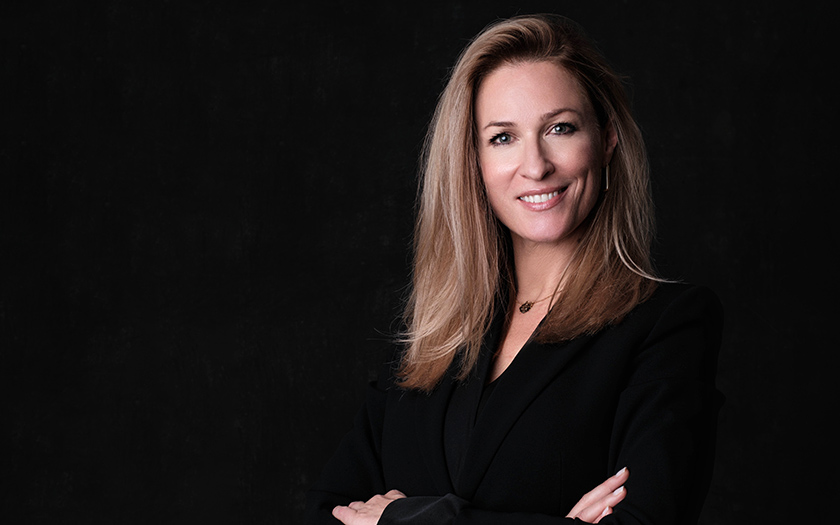
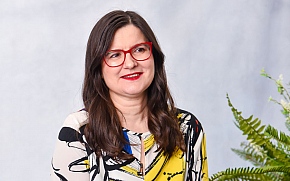
In an industry that is constantly changing, few people remain loyal to the same system for almost three decades while continuing to evolve, grow and find new inspiration. Vesna Pritchard, co-owner and director of Globtour Event, is one of those people. Her professional journey is closely intertwined with the development of destination management in Croatia, the strengthening of the PCO scene, international partnerships and numerous events.
We spoke with Vesna about longevity in business, the challenges facing modern PCO agencies, people as the key value of the industry, relationships with hotels and venues, as well as those invisible moments that often become the most memorable stories.
You are one of the co-owners of Globtour Event, yet 27 years of continuous work in the same agency is a rarity in today’s business world. What has personally kept you connected to Globtour all this time, and what fulfils you the most? How did the agency’s current structure evolve, and has the partnership model influenced the company’s stability and long-term development, and if so, to what extent?
It is true that in today’s age of mobility, 27 years in the same agency sounds a little unusual. However, the core feature of agency work is stepping out of your comfort zone almost every day, so sometimes I feel as if I have changed both jobs and work environments many times over the course of my life. This is especially true because the range of services an agency can provide is truly broad, both in terms of service types and the variety of clients and end users. I would say that it is precisely this dynamic that fulfils and motivates me every single day.
At the same time, the company’s continuity of structure has played a major role, and that is certainly the foundation of stability and uninterrupted growth. The roots of such a development path go back a long way, to the very beginnings of destination management in this region, when the then owner of Globtour Zagreb launched a whole series of tourism programmes linked to the life and history of Zagreb, integrating them into congress and incentive travel organisation. Almost 30 years ago, the agency also became the exclusive partner of what was then the world’s largest business travel management company – Carlson Wagonlit Travel – after which several generations within the agency gained expertise in the corporate segment, with a focus on the high demands of business clients. The business travel segment was, by its very nature, closely connected to the development of the MICE segment, which led to the establishment of Event d.o.o. These characteristics attracted new owners in 2005, and soon afterwards I myself became a co-owner. A few years later, we decided to merge the two agencies, bringing similar lines of business and sometimes the same clients under one umbrella. We named the company Globtour Event without much hesitation because it embraced both the tourism and corporate directions, and we have continued forward with full commitment ever since.
Along that path, Renata Nevidal also played an important role beside me, developing the spirit of this segment through her strong love for storytelling and destination management. Today, she remains part of the ownership structure, while devoting her time to other projects outside the day-to-day operations of Globtour Event. Another woman holds a special place in the agency’s development journey – Renata Vojnić, who brings rich international experience in business travel. Together, we lead Globtour Event, which has since expanded with two daughter companies in neighbouring countries.
Perhaps it is precisely this continuous “female” structure that is one of the reasons for our stability and resilience.
If you had to single out one event or project that shaped you professionally, which would it be and why?
It is difficult to single out one project, because each has played a certain role in shaping me professionally in its own way. I would say that sometimes we learn the most from business situations that seem insignificant at first glance; the only question is whether we stop and reflect on the message, how it influences a change in our thinking, and why we are or are not ready for that change. Sometimes major opportunities for growth in attitude and perspective pass us by because we fail to notice them or intentionally ignore them, because at that moment we are not mature enough, ready enough or strong enough. Stopping more often and learning from such opportunities comes with maturity. We learn throughout our whole lives.
Still, there is one situation I often remember from my younger days. It was a message from a gentleman with extensive experience and a high position in the business system, during preparations for a medical conference with a large number of participants, where he was acting as an adviser to our client. In my desire to create the highest possible profit for the client, and for us as well, I was pushing suppliers hard in order to secure the lowest possible service price. Then I received a message that surprised me, because I would not have expected it from the client’s side: „In a business relationship, both sides must be satisfied. That is the foundation of your growth. Vesna, leave them a price that is sustainable for them.“ I have applied this powerful message many times in business situations, even when it serves metaphorically in relationships with colleagues, employees and any stakeholders in a business relationship. It is not some revolutionary discovery, but the foundation is listening, respect and giving space.
Trust as the strongest currency of a PCO agency
PCO agencies are often seen as the “invisible conductors” of large systems. How would you define the role of a modern PCO agency today – where do you create the greatest value for clients, and where for the destination and partners such as hotels and venues?
Beyond technical support, the ability to finance larger conferences or events, and the provision of a full “turnkey” service, I think the greatest value for the client is the feeling of trust – the feeling that they can rely on someone in extremely stressful circumstances. Even when things start going downhill, the client must be sure that we will find an option that the end user will not experience as improvisation, but rather as a service above expectations. As for the destination, there is no need to emphasise the many roles the MICE segment brings both in and out of season. Among the most important values, I would highlight the involvement of the local community. Hotels fill capacity outside the main season, while there is a particularly good feeling in “bringing to life” a historically important venue, always keeping sustainability and social responsibility in mind.
The CWT global network has recently been acquired by American Express Global Business Travel (Amex GBT). How has that cooperation worked in practice so far, what share of business came through that international network, and will that change with the Amex GBT acquisition, and how?
This is a very large global acquisition whose implementation is still ongoing, and at this moment it is not yet fully defined how individual partnerships in smaller markets will look. For now, I can only say that it represents a major opportunity for all the markets where we operate.
What are currently the biggest challenges in running a PCO agency – operational, market and staffing-related – and how do you deal with them?
Globtour Event is an agency with a very healthy business mix, so we probably do not face the typical problems of a PCO department in weaker years, and we manage to retain employees and maintain motivation. Because these are project-based businesses, the usual difficulty lies in continuity and in non-recurring events. While a PCO can plan to some extent if there are solid client relationships around recurring conferences, the part related to events is much riskier, because they are often one-off corporate events. On the other hand, these are some general assumptions that have been challenged in recent years by the fact that these segments have grown significantly in all directions, so the greatest challenge is finding suitable staff and instilling corporate culture and standards, which can sometimes be an exhausting process.
Today, there are many PCO agencies on the market and many of them perform solidly, but there is a big difference between solid and excellent. Excellent PCO agencies always provide added value, and that is recognised. By this I mean, above all, people – project managers and team members – but also all the technological options that can make a meeting different. Also, however dry and repetitive PCO work may sometimes seem, especially in organising very serious scientific meetings, we always try to offer creative solutions, some kind of extra mile that gives additional flavour to an excellent organisation.
Keeping people motivated and communicating a culture of relationships is a major challenge – why make that one small extra step.
We also face a major challenge in optimising the decision to organise smaller corporate events, which consume a great deal of our time and resources, while on the other hand not always ending with adequate compensation for that investment. In such cases, we have to balance the importance of the client, their broader contribution, and the decision of whether to decline such work.
When the “impossible” becomes the best part of the story
Can you share a situation – a crisis moment during an event that seemed impossible to solve, but in the end became one of your favourite stories?
There are situations like that in almost every more complex event. Everyone who works in this business almost certainly has every weather app installed, and it is very likely that in many situations they have also called our well-known meteorologists. Rule number one is: always, without exception, secure an appropriate indoor backup space in case of rain. However, if it happens that just one day before the event the client decides that the indoor space is not attractive enough, the search for an alternative venue begins. So you call everyone you know and everyone you do not know, including people who might be willing to open a venue just for that occasion, or perhaps move a wedding elsewhere, which means that at the same time you are looking for a new venue for a wedding that has nothing to do with you, and planning how to tell the bride and groom they have hit the jackpot. At the same time, you are also organising transfers for 500 people, because suddenly that is needed too. For tomorrow. But it does not work. So we stay with our original plan – outdoors. And what do we do? We organise a tent, from one day to the next. A transparent one, of course, because it has to be, as described, unobtrusive and almost invisible. The tent rushes in from another city and arrives for installation. Because of it, we arrange the removal of parts of the existing outdoor setup that clash with the tent poles. The last workers are still hammering away, we are decorating the final tables, and the first guests are already arriving while the aperitif is being served. It turned out to be one of the most beautiful events of last year.
Over 27 years, you have witnessed major changes in the industry. What has changed the most in the way congresses and conferences are organised, and what remains the foundation of a good event? In your experience, what “works” with participants today – what motivates them to come, stay and return to an event?
The industry has changed most in technological terms and in communication channels. Everything else still comes back to the same foundation – people and the shared dance between them. All future activities depend on those relationships. A subtle assessment of the client profile is extremely important. These are often strong personalities, and you need to find a way to reach the core and adapt your communication accordingly, while still respecting business process standards and ethical principles. If that chemistry is right, you end up looking forward together to every new project that follows. That never changes.
During the pandemic, you opened a studio for virtual events. Is it still operating today, and how do you now see the role of virtual and hybrid formats?
That was a very stressful period. We stopped all activities completely because our work depends directly on the possibility of people meeting and moving. We had to find a way to remain engaged and, even more importantly, to stay in touch with clients. The studio was an excellent move, a great platform for keeping employees “employed” and for maintaining client relationships. It was actually a lot of fun. We learned a great deal about virtual formats, worked through the early technological problems, and were ready for reopening and the beginning of hybrid events. Some believed that live events would not come back to life, but I was sure that reopening would trigger a huge number of new in-person events. Today, more or less all of them include virtual options, thereby fulfilling the hybrid format. Our studio stopped operating once in-person gatherings became possible again. Our technical partner’s equipment could no longer remain in the space because it was needed for live and hybrid events. There was no longer any need for a purely virtual studio because we redirected our activities back into the field. We certainly expect artificial intelligence to play a major role in both the organisational and implementation sense, and that is already happening. It will be interesting to see what comes next. But human contact remains.
Congress centres, event venues and partnerships – where is Croatia today?
How has Croatia as a congress and event destination changed over the past almost three decades, and where do you now see its greatest strengths and its greatest opportunity for development – both for the destination and for the industry?
The strategy of Croatian tourism, and of a destination that lives 365 days a year, requires significant changes across all parts of the economy, so progress cannot be tectonic. Without quality congress centres, we cannot really consider Croatia a serious PCO destination. On the other hand, many strengths such as cultural heritage, historical venues, natural resources and gastronomy provide endless possibilities for incentive programmes and events. The weakness is the relatively small number of suitable spaces for larger numbers of people, as well as limited nightlife, which we then have to compensate for with creative, tailor-made offers, making us at times a less price-competitive destination than some of the countries we compare ourselves to.
What are the most common mistakes you notice destinations, hotels or venues making when they want to attract business events – and how can they avoid them? Can you share an example of a collaboration with a hotel or venue that significantly contributed to the success of an event, and why that collaboration worked?
These are business decisions by our partners which, through the categories and positioning of their hotels, eliminate, for example, medical meetings from the outset because such events are not permitted under their internal policies. I am speaking exclusively from the PCO perspective, because we very often find ourselves with a very limited choice as a result of such policies.
Today, hotels have made significant progress in understanding the concept of business events, and we now have very good partnerships with almost all hotels in Croatia. I would not single out any particular hotel company, because once again it always comes down to people. When, during an event, you have a person on site who takes care of shared needs and represents the hotel offer guaranteed by contract, and when that person is available 24/7, such cooperation means everything to us. Likewise, flexibility in capacity management conditions and the handling of published rates for remaining capacity during a conference are, in my view, good examples of business practice. I will not name names, but in the agency world we know very well who is a true partner and who is a little less of one. :)
The satisfaction a successful event brings is almost addictive.
When you look at your team, what do you consider the key qualities of a good event professional today, and how do you recognise potential in young people?
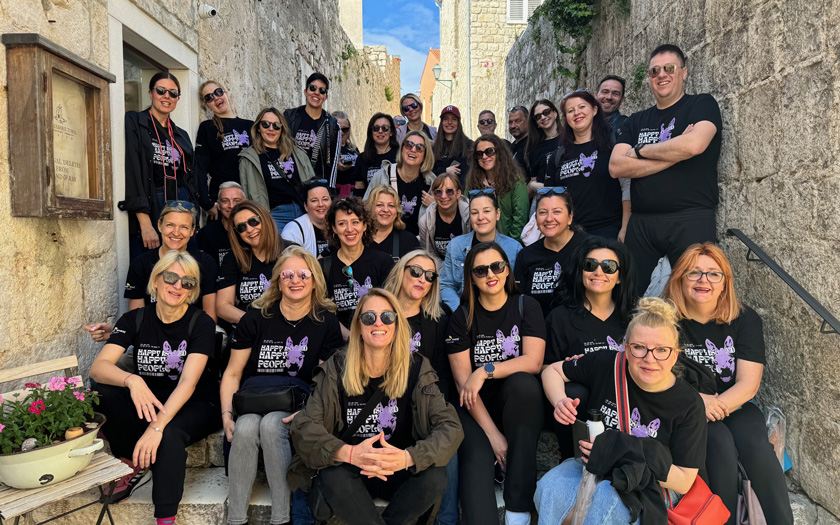
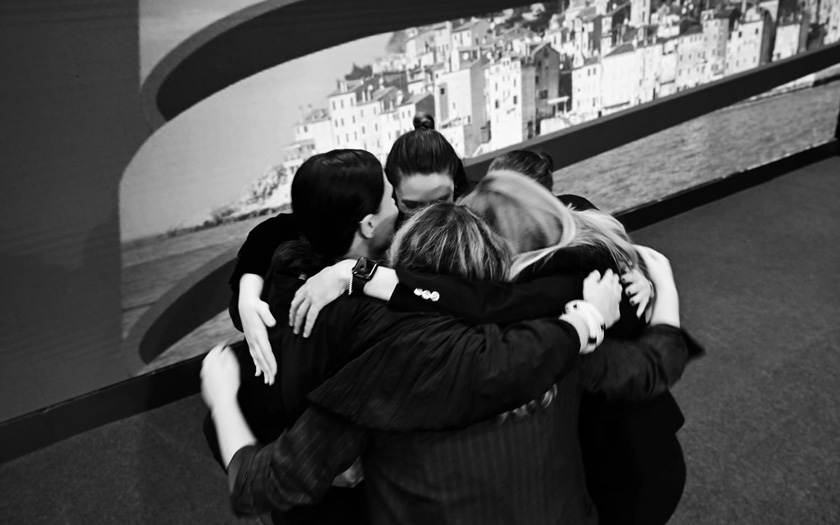
I am extremely proud of the Globtour MICE team. I am proud that each person is unique and strong – an individual, yet also a team player. An event professional must have exceptionally strong organisational skills, initiative, independence in decision-making, a firm attitude and a strong ear for people. They must be ready to distance themselves emotionally from stressful situations, but still solve them or at least offer several possible solutions. They must be ready for a long working day that stretches deep into the night, endless hours spent in spreadsheets, entertainer-like skills on site during an event, a poker face in front of the client and partners when they notice a problem, and a shoulder of support for their colleague. They must also be ready for post-event activities when they no longer feel like doing anything and the adrenaline has already dropped, and for closing projects under impossible deadlines, because by then we have already paid everyone, while still not having been paid ourselves.
Young people really are a different generation. They are much more mobile, they value their private time more, and they are less adaptable to the fully committed style of work with which our generation grew up. Still, the satisfaction that comes from a successful event is almost addictive, and they very quickly want another rush of adrenaline, however challenging it may have been. They are much faster technologically, more flexible and more open to innovation, and that is certainly an area that will continue to develop rapidly in this profession.
After everything you have been through – long nights, crisis situations, big successes and small victories – what still brings you the greatest joy in this job?
The confirmation of a new event.