Tourism traffic: 14 million overnight stays in first five months, led by Istria and hotels


The International Congress and Convention Association (ICCA) has published the latest edition of its report - ICCA GlobeWatch: Business Analytics – Country & City Rankings 2025, a global overview of international association congresses. The analysis covers as many as 12,438 international and regional meetings held during 2025 in 162 countries and territories, as well as 1,603 cities worldwide.
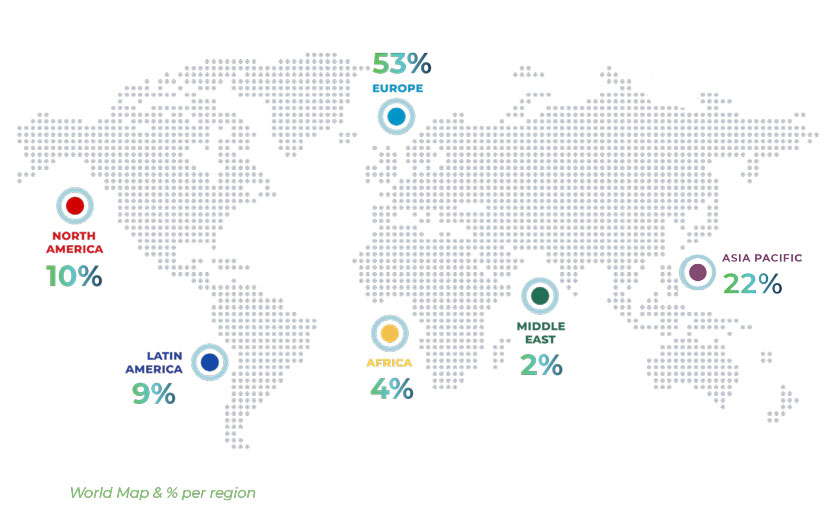
Europe (53%) holds the largest share, followed by the Asia-Pacific region (22%) and North America (10%), while Latin America (9%), Africa (4%) and the Middle East (2%) continue to increase their presence.
Significant shift at the top of the best convention cities in the world
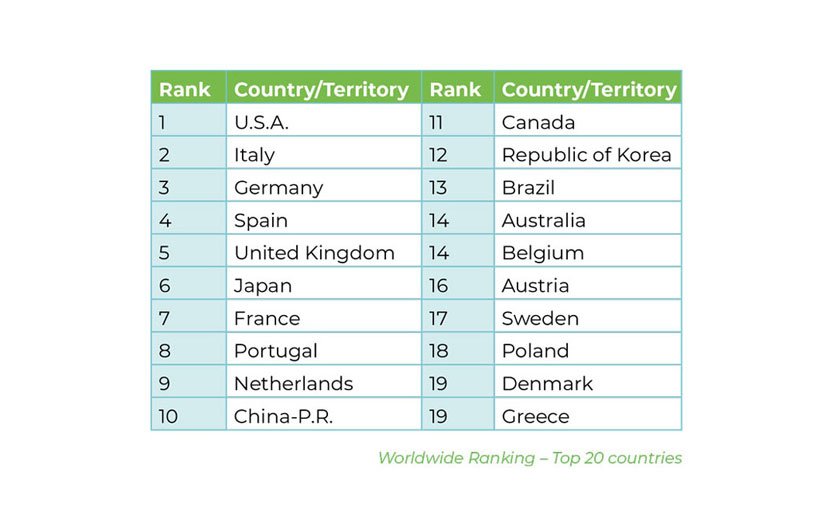
At the global level, there were no major shifts among the TOP 5 countries. First place was taken once again by the United States with 792 international association meetings, Italy (616) retained a high second place, Germany (565) swapped spots with Spain (544) and the United Kingdom (507) came in fifth.
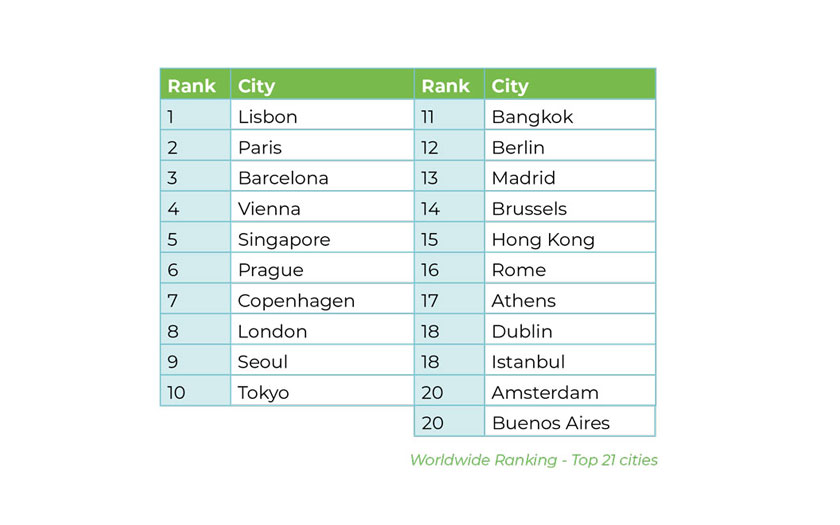
Among cities, there was a significant change at the top. With 188 international meetings, Lisbon took over the number one spot, ahead of Paris (174) and Barcelona (166), while last year’s global leader Vienna fell to fourth position with 159 meetings. The Top 10 also features Singapore, Prague, Copenhagen, London, Seoul and Tokyo.
These results confirm a trend that ICCA particularly highlights in its report – the most successful destinations no longer attract congresses solely because of convention centres and hotel capacities, but thanks to strong scientific, medical, technological and economic ecosystems.
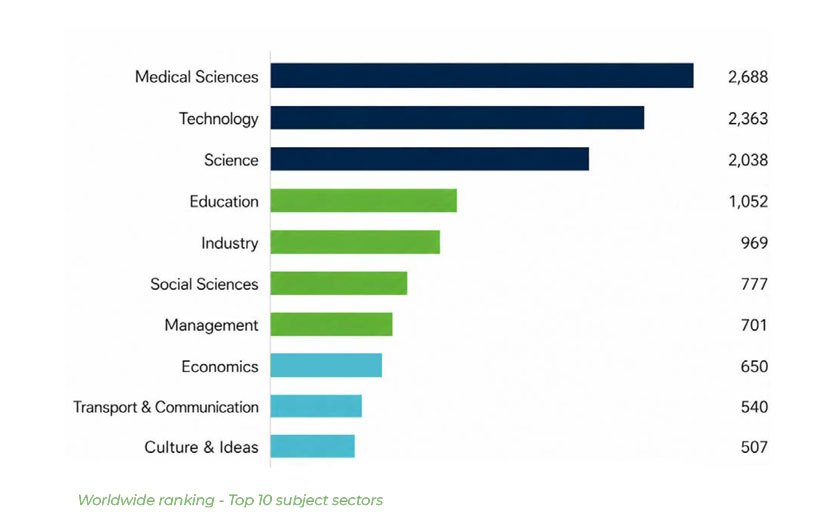
This year’s edition brings improvements designed to provide a more contextual view of international activities in the meetings sector. Alongside the main country and city rankings, the 2025 report provides detailed insights organised by region, meeting size and sector, combining data analysis with a geographical perspective and advanced information. It is particularly interesting that medical sciences, technology and science in general remain the most represented fields of international association meetings, further confirming the link between the event industry and the development of a knowledge-based economy.
Croatia in 41st place on the world list of countries
Croatia ranked 41st on the 2025 global list with 99 international association meetings and a total of 14 cities featured. This confirmed its status as one of the leading convention destinations in Southeast Europe, while Slovenia fell to 47th place with 62 meetings held. Serbia took 51st place with 56 meetings, and Bosnia and Herzegovina maintained 72nd place with 20 international association meetings.
Although this is a very respectable result for a country of Croatia's size, it is worth reminding that ICCA statistics display only one segment of the business events market. The database exclusively includes meetings of international associations that are held regularly, rotate between at least three countries or territories and gather at least 50 in-person participants. Likewise, unlike numerous competing countries, we lack a unified and systematic national model for tracking all business meetings, congresses, conferences, corporate events and incentive travel, making it very difficult to get a complete picture of the actual volume of meetings held.
The highest-ranking Croatian city is once again Zagreb. The Croatian capital secured 87th place on the global ranking with 33 international association meetings, sharing the position with cities such as Leuven, Manchester, Tallinn and Utrecht.
Dubrovnik took 116th place in the world with 23 international congresses, while Split, with 16 meetings, ranked among the top one hundred European convention cities. Also on the list are Zadar with six, Cavtat, Rijeka, Šibenik and Varaždin with three, Opatija and Pula with two, and Hvar, Poreč, Rovinj and Selce with one meeting held each.
Next-generation convention centres - profitable investments for cities
In addition to the standard rankings by region, meeting size and industry, this year’s edition introduced a new indicator: venue types. Even though the highest percentage of respondents in the survey chose universities (36%), followed by hotels (28%), ICCA points out that convention centres (27%) remain the main mainstay for association meetings.
“Cities like Barcelona, Dubai, Seoul and Vancouver have invested significant funds into their convention capacities because the return on investment is proven. Purpose-built spaces attract more meetings, longer delegate stays and higher economic returns across all sectors of the city. A convention centre is among the city’s most productive long-term assets,” the report states. It adds that incentive programmes in Saudi Arabia, India, China and the US have allocated billions of dollars for next-generation convention centres.
This is exactly why the project for a new convention centre in Zagreb gains additional importance, as it would allow the Croatian capital a more competitive positioning in the segment of large international congresses and events, and long-term strengthen its ability to attract meetings that are currently being taken over by destinations with larger and more modern convention capacities.
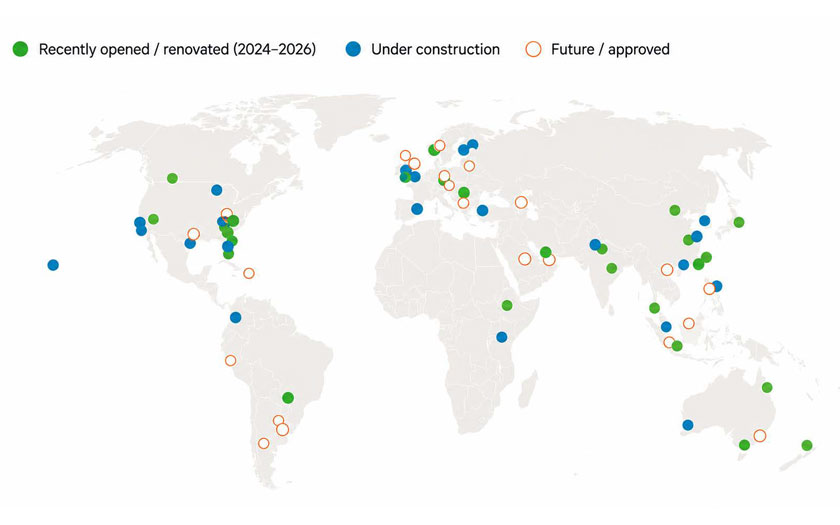
The map below illustrates the scale of what is currently unfolding regarding the construction of new convention centres worldwide. Through 78 tracked projects, spanning 36 countries and every inhabited continent, the world is simultaneously renovating, expanding and building, investing in the physical infrastructure that will host the next generation of professional gatherings. “The event venues being built and reimagined today will shape the way the world meets in the decades to come,” the report concluded.
Strategic value of the meetings and incentives industry for destinations
In its report, ICCA also emphasises that international congresses are now increasingly viewed as a long-term investment. International participants spend several times more than average tourists, and a well-organised congress can generate new business contacts, additional events, investments and return visits years after it has been held. A similar point was highlighted in the latest research by the Events Industry Council on the economic value of business events.
This is precisely why the world’s leading destinations are developing congress ambassador programmes, strengthening cooperation with universities and scientific institutions, and integrating congresses into broader economic development strategies.
Croatia has a number of successful examples in this area, but the results of the ICCA rankings also show how much room still exists for further growth through a more systematic tracking of business events, the development of convention capacities - primarily by building a national convention centre in Zagreb - strengthening bids for international congresses and, overall, a more robust national strategy for the development of the meetings and incentives industry.