The Hoteliers Club opens in Zagreb – a new regional community connecting hospitality leaders

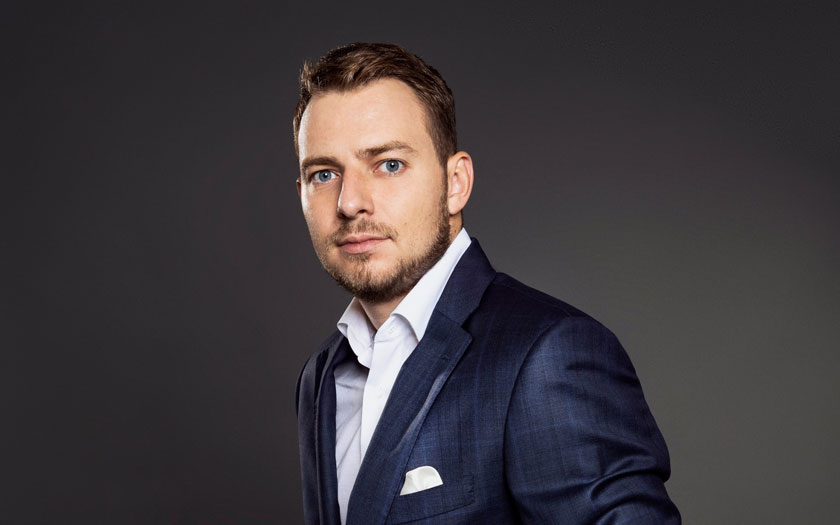
The hotel industry is a sector where people, numbers, strategy and a very concrete guest experience intersect. It is precisely the combination of these elements that has marked the career of Andrej Sovrović, Cluster General Manager for IHG Hotels & Resorts and member of the Executive Board of Delta Holding, who is also the youngest member of the company's Executive Board. He began his career at Delta through the Young Leaders programme, and since 2022 has been leading the company's hotel sector, whose portfolio includes Crowne Plaza Belgrade, Radisson Collection Hotel Old Mill Belgrade, Hotel Indigo Belgrade and InterContinental Ljubljana, whilst as Cluster General Manager for IHG Hotels & Resorts he ensures operational compliance with international standards and the development of IHG brands within the portfolio.
We spoke to him on the occasion of the Hotel Summit taking place in October in Dubrovnik, where he is participating as one of the speakers on the panel "Franchise or Management Agreement: Which Hotel Operating Model Is Right for Owners?". The topic of discussion also expanded to a much broader picture – from the future of Belgrade and the regional MICE market, to the results of the renovated Sava Centar, the impact of the meetings industry on Crowne Plaza's business, and a comparison of the hotel and MICE potential of Serbia and Croatia.
You started your career at Delta Holding through the Young Leaders programme, and today, among other roles, you are the youngest member of the company's Executive Board. What attracted you to the hotel industry and what motivates you and drives your ambition?
The hotel industry was not a plan, but a consequence of the journey. Through the Young Leaders programme, I went through very different parts of the company – from agriculture and food production to retail – and that taught me not to observe any business from a single perspective. When I came to the hotel industry, I recognised a sector where all of that comes together.
A hotel is specific because it simultaneously demands very precise number management and a very good understanding of people.
In the end, the guest does not rate our strategy, budget or organisation – they rate the experience they had that day.
That experience depends on a large number of people and details that must align. There are few industries where the results of work are visible so quickly and so directly.
I find motivation primarily in people. What brings me the most satisfaction is when someone from the team advances faster than they themselves expected. Ambition has never been a goal in itself for me – it comes from the need for what we do to be better than yesterday, equally when it comes to hotel performance, people development and destination positioning.
Franchise or management agreement – which model best suits a hotel owner?
At the Hotel Summit in Dubrovnik, you are participating in a panel on the differences in hotel management models. How do you decide between a franchise model and a management agreement, and what are the key criteria and differences?
There is no one-size-fits-all answer, because the choice of model depends on who the owner is, what they want from the project and what they can do themselves. Under a management agreement, the operator takes over the day-to-day running of the hotel – coming in with a team, standards, procedures and responsibility for results. The owner gains expertise and predictability, but concedes a part of control. With a franchise, the owner retains operations and much greater control, whilst receiving from the brand the name, standards, reservation systems, loyalty programme and sales network. It sounds simpler, but it requires serious internal organisation and know-how.
As key criteria, I would highlight how much hotel experience and staff the owner actually has, the target positioning of the hotel, how much control they want to retain, the financial structure of the project and, ultimately, the long-term intention with the asset – whether to hold and develop it or sell it at some point. So, it is not a question of which model is better, but which model suits a specific owner and a specific hotel.

So, a universal model does not exist and every project should be observed separately. Can you highlight a situation where one option was clearly better than the other?
A universal model does not exist and I think it is healthy to be skeptical whenever someone claims otherwise. A hotel is not just a building with a certain number of rooms. Location, guest segment, size, positioning, competition, investment volume and the owner's capability to run operations – all of this changes the answer.
Situations where the choice is fairly obvious do exist, however. When an owner is entering the hotel industry for the first time, or when dealing with a large and complex hotel in the higher segment, a management agreement generally yields a better result, because the owner immediately receives know-how, standards, a sales network and an operational team they could not assemble on short notice themselves. Conversely, an owner who already has an established hotel team and internal systems, and is considering a hotel in the midscale segment, extracts much more value from a franchise.
The model adapts to the strategy of the asset, never the other way around.
You are simultaneously on the side of the hotel asset owner (Delta Holding) and on the side of the international hotel operator (IHG). Where does the owner's interest end and the brand's interest begin – and how are these two interests aligned?
The advantage is that I understand both sides of the table, not just one. The owner looks at return on investment, profitability and long-term asset value. The brand protects the standard, reputation and promise it makes to guests anywhere in the world. These two interests do not collide – if the hotel succeeds long-term, the owner, operator and brand all succeed.
In practice, tension most frequently arises over pace. The owner wants results faster, whilst the brand insists on not skipping steps that make those results sustainable. The solution is almost always the same: open dialogue at the very beginning about what is desired from the project. When expectations are clearly set, it is much easier to find solutions that suit both parties. The biggest mistake is viewing the relationship between owner and operator as a negotiation where one party must win. A long-term partnership only works if both sides have a reason to want the same result.
The region's hotel market has been changing very rapidly in recent years. How do you view the competitiveness of Belgrade and the wider region in the international hotel and MICE market today? What are the biggest opportunities, and where do you still see room for progress?
Belgrade is in a significantly stronger position today than a few years ago. Most major international hotel brands have entered, the quality of accommodation offerings has been elevated, and through the reconstruction of Sava Centar, the city has gained the capacity to host events with several thousand participants. That is a change directly reflected in hotel accommodation demand.
The biggest opportunity lies in stopping to view Belgrade merely as a city break destination and positioning it as a regional business, convention and event hub. That is where the greatest value lies: a MICE guest spends more, arrives out of season and generally returns.
I see room for progress in three areas. First, air connectivity – without good direct flights, it is difficult to attract large international conventions. Second, destination marketing, where we still operate too individually rather than as a unified city. And third, content that gives guests a reason to stay an extra day. Competitiveness is not achieved by the number of rooms, but by how well the entire system – hotels, convention centres, institutions and destination marketing – works together.
Belgrade on the MICE map of Europe and the role of Sava Centar in developing the hotel offering and destination
What are the operational results of Sava Centar to date? Do they justify the investments so far, when do you expect full profitability, and where do you place it in relation to the leading convention centres in the region and Europe?
The results show that the investment decision was correct. Since its reopening, Sava Centar has hosted a large number of convention, business and cultural events, and the growth dynamics are faster than we expected. However, one thing is more important to me than the figures themselves: Sava Centar has restored Belgrade's ability to bid for events of international importance. That is an effect that cannot be measured through its balance sheet alone. That is why I would not speak of a timeframe for "full profitability". It is a long-term investment whose return is seen across the entire ecosystem it creates – hotels, restaurants, transport, air traffic and the overall revenue of the destination.
In terms of space quality, technical equipment and capacity, Sava Centar is today among the most important convention centres in the region, and I have no doubts about that. Compared to European leaders, there is room for growth, primarily in the number of large international conventions we attract annually – and that is not a question of the venue itself, but of the destination as a whole. Our goal is not to compare ourselves with the region, but for Belgrade to be an option seriously considered when choosing between European cities.
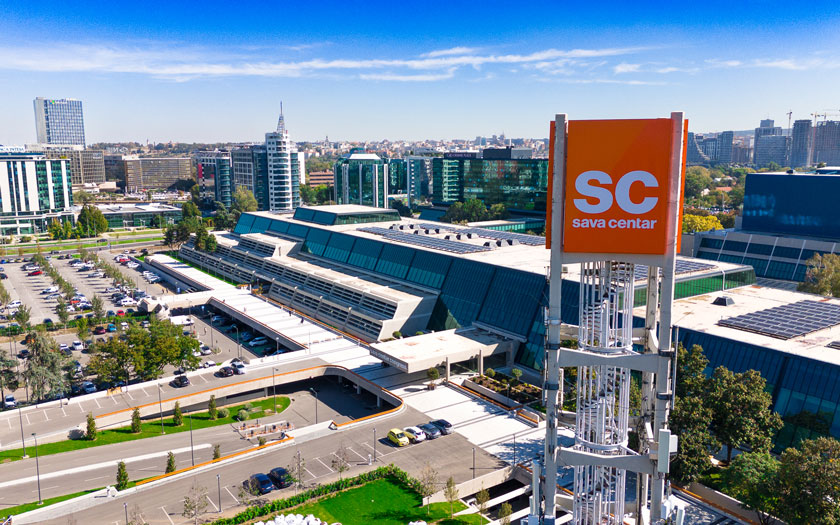
How has its reopening affected the business of Crowne Plaza Belgrade, and how much has the overall structure of hotel demand and the profile of guests coming to Belgrade changed?
The reopening of Sava Centar elevated Belgrade's capability to attract major international events, and Crowne Plaza is a natural partner in that ecosystem. With 416 rooms and immediate proximity to the convention space, we are not just a hotel where guests stay – we are part of the event offering itself.
For organisers of large gatherings, it is crucial that as many participants as possible are accommodated in one place, with simple access to the event venue. That is a competitive advantage that not many hotels in Belgrade possess.
The demand structure has changed in that we see a larger share of group and convention business, as well as more pronounced demand during periods that were previously weaker. The guest profile is changing too: they increasingly arrive for several days, extend their stay over the weekend, and seek content beyond the conference hall. This in turn changes how we plan our restaurant, wellness and overall service offering.
For a guest from Asia or America, we are the same destination. The region is much more attractive when destinations complement each other instead of dividing.
How do you view Croatia compared to Serbia from a hotelier's perspective – where is Croatia stronger today, where does Serbia hold an advantage, and what could both countries learn from each other?
Croatia has a huge advantage in international brand awareness and experience in leisure tourism. The coast, nature and a tourism infrastructure built over decades represent an exceptionally strong product, and Croatia has also learned how to sell it.
Serbia has a different structure of advantages. Belgrade is an urban, business and gastronomic destination that operates year-round, without the seasonal fluctuations that accompany the coast, and which is developing very rapidly in the MICE segment. In addition, the hotel infrastructure is being raised to a new level.
I think Serbia can learn a lot from Croatia regarding destination marketing, connecting all stakeholders in the tourism industry, and patient, long-term building of a tourism product.
Croatia, on the other hand, can look to Belgrade's experience in developing urban and business tourism and in attracting major international events – a segment that reduces reliance on seasonality. I do not think we are primarily competitors. For a guest from Asia or America, we are the same destination. The region is much more attractive when destinations complement each other instead of dividing.
Trends and myths in the hotel industry
In your opinion, which trends will impact hotel business and the MICE industry in the region the most over the next few years?
I would highlight four. The first is personalisation. The guest expects the hotel to understand who they are, what they like and what they do not need. Technology and artificial intelligence will play an increasing role there, but as a tool, not as a replacement for service.
The second is the blurring line between business and leisure travel. A MICE guest no longer seeks just a good conference room and a bed – they seek a complete destination experience. They increasingly arrive earlier or stay longer, sometimes with family.
The third is sustainability, which is moving from the realm of image into a business model. Corporate clients today request concrete data in tenders regarding energy consumption, waste management and how large events are organised. Whoever lacks that data drops out of contention.
And the fourth, in my opinion the most important – people. Technology can improve operations, but the hotel industry remains a business built on people. The ability to attract, develop and retain high-quality employees will be one of the greatest competitive advantages for any hotel.
What is the biggest myth today about a successful hotel in the region – something the industry still believes, but which you consider no longer valid?
That a good location, a strong brand and high occupancy are enough. Occupancy is the easiest thing to buy – drop the price and you will have a full hotel and a poor result. A successful hotel today must know how to manage revenue, not just the number of sold rooms; how to use technology without losing human contact; how to be efficient yet flexible enough to adapt quickly.
And one more thing that is rarely said out loud: a hotel is not built just once. It is built every day. It is a myth that success comes simply with the opening – success is seen in the fifth year, when the initial excitement has passed and the standard remains the same.