MICE Lab in Zagreb: What is stopping a good offer from reaching the client?

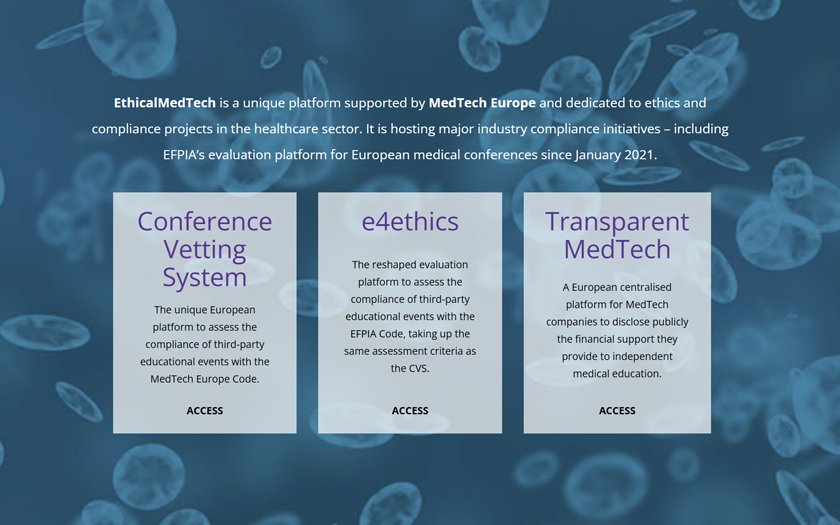
We have previously written about how international medical and pharmaceutical gatherings seeking financial support from sponsors in the medical devices industry must meet the strict criteria of MedTech Europe's Conference Vetting System (CVS). In practice, the question arises as to what these rules mean for Croatian hotels, destinations, PCO agencies and organizers of medical gatherings. It is increasingly common to hear from PCO agencies that this significantly affects their operations and that numerous Croatian destinations are being rejected as hosts for such gatherings because they are considered "touristic". Examples from Trakošćan, Poreč and Dubrovnik show why the industry seeks a more predictable application of criteria, while CROMED announces a review of Croatian meetings capacity that could open the door to a more concrete dialogue with CVS.
For now, there are no precise data showing the actual business loss for the Croatian meetings industry. There are no official statistics on rejected or lost gatherings at the national level, while individual PCOs heavily involved in medical congresses are already noticing a drop in inquiries and concrete issues with locations. On the other hand, this is a very specific market segment - Croatian PCO agencies are often specialized in certain types of gatherings, so the experience of one agency does not necessarily reflect the state of the entire meetings industry. Hotels also provide a more cautious picture. Part of the hotel sector, for now, seems not to have enough data to confirm a broader trend.
Compliance is not just a question of meeting quality
MedTech Europe and its Conference Vetting System do not evaluate the quality or professional value of a congress, but rather assess whether member companies of MedTech Europe (for medical gatherings) and EFPIA (for pharmaceutical gatherings) can financially support the participation of healthcare professionals in a specific event. Key criteria relate to the destination, hotel, accessibility, character of the event and its public perception.
According to the rules, the location should not be the main attraction of the congress; instead, it is expected to be situated in a city or town that presents a scientific or business environment. Explicitly listed as unacceptable are resort and spa hotels, hotels with beach access, hotels with a casino or golf course and other venues perceived primarily as leisure, holiday or entertainment locations.
Additionally, for European and international gatherings, destinations considered primarily seasonal holiday destinations, such as beach or island resorts, are unacceptable during the summer season from 15 June to 15 September. However, CVS leaves open the possibility that outside this period, a destination may also be declared unacceptable if it is considered predominantly touristic.
This is precisely where the Croatian problem begins. Namely, Croatia does not have many purpose-built, fully independent convention centres. A large part of the meetings infrastructure (except in Zagreb) is located in hotels and hotel complexes, and the strongest capacities for international gatherings are concentrated in coastal destinations. In other words, what constitutes a competitive advantage for the Croatian meetings industry - quality hotels, large halls, international airports and a developed tourism infrastructure - can simultaneously become an aggravating circumstance in certain CVS assessments.
When a destination becomes more important than the congress itself – practical experiences
That the issue is not merely theoretical is confirmed by the experiences of local organizers. Sanja Vukov Colić, Deputy Director of the Spektar Putovanja agency and Head of the Congress and Incentive Department, points out that the greatest practical difficulties stem from complex sponsorship rules, location and accommodation criteria, and strictly prescribed durations of the scientific program.
She sees a particular problem in the fact that key meetings infrastructure in Croatia is located precisely in high-category hotels and resorts that, alongside congress halls, feature wellness, spa, beaches, clubs and other amenities. "Organizers and PCOs face the extremely demanding task of finding an adequate venue out of season that meets technical capacities while remaining compliant with MedTech Europe and EFPIA criteria. In this context, the status of luxury destinations like Dubrovnik and Opatija comes into play, as well as certain inland destinations such as Tuheljske Toplice, Sveti Martin na Muri and Trakošćan, for which organizers cannot secure approval," states Vukov Colić. She also warns that evaluations are often based on the impression given by hotel websites, without insight into the actual technical conditions under which the congress takes place. As part of a solution, she proposes dedicated hotel congress websites that would present exclusively the business, rather than touristic, offer to CVS.
According to her experience, during 2024 and 2025, there were several situations where locations were rejected in repeated evaluations. As concrete examples, she cites Poreč and Hotel Parentium, as well as Dubrovnik and Hotel Sheraton in Srebreno. In both cases, following additional appeals to the highest body of Ethical MedTech, holding the gatherings was ultimately approved, but with the note that these were exceptional cases that will not be tolerated in the future. These involved a national congress with international participation of around 220 participants, and a symposium with international participation of around 350 participants that has been held under the high patronage of a European association in Dubrovnik for over 15 years.
For a PCO, such a situation means much more than an administrative complication. International medical congresses are planned years in advance, and uncertainty over whether a destination and hotel will be acceptable can jeopardize the entire organization and, consequently, the operations of the local PCO. We also discussed this topic, among other things, in an interview with Tatjana Mrzljak, who, as a long-standing director of the PCO segment at Filida Travel, participated in organizing numerous domestic and international professional and medical congresses.
From the hotels' perspective, the problem arises when an entire location is viewed through the category of a tourist destination, regardless of the actual function of the venue hosting the congress. One such Croatian example is Hotel Trakošćan. "Hotel Trakošćan continues to host certain business and professional events, including gatherings from the medical and pharmaceutical sectors, but we notice that the number of larger gatherings of this nature has recently decreased," states Željka Veronika Horvat, Event Coordinator at the hotel. They particularly notice a lack of inquiries from agencies that previously organized larger medical and pharmaceutical gatherings. While they cannot claim the reason is exclusively MedTech compliance, she believes that classifying Trakošćan as a tourist destination can influence organizers' decisions. "The mere fact that a hotel is located in a touristically attractive setting should not automatically present an obstacle to holding medical and professional gatherings," Horvat believes.
Croatia thus finds itself in a somewhat paradoxical situation: a destination can have a hotel with a quality congress hall, professional congress team, necessary technical equipment and conditions for a serious professional program, yet the broader perception of the destination can prove decisive in the assessment. "I think it would be useful if the application of rules focused more on the purpose and content of the event - professional program, schedule, separation from tourist amenities - while the profile of the destination itself should be merely a secondary criterion," says Maja Orsag, Director of the conTres projekti agency.
Where does objective criteria end and perception begin?
The question of perception is one of the key aspects of the entire issue. In its response to CMPA's inquiry regarding this problem, CVS explains that assessments are based on the MedTech Europe Code of Ethical Business Practice, EFPIA Code of Conduct and CVS Guidelines, and that one of the most important elements is precisely the image and perception that industry support for an event may create in the public eye.
At the same time, CVS emphasizes that assessments are not automatic. Information provided for the specific event, publicly available information, hotel and destination websites, independent reviews, as well as characteristics of the event itself are taken into account. Therefore, according to their interpretation, two assessments of the same destination do not necessarily yield the same result. CVS also explicitly mentions the possibility of an exception when an otherwise unacceptable geographical location presents a "compelling need", for instance due to a lack of alternative venues. This specific element could be important for Croatia.
Dubrovnik as the biggest test
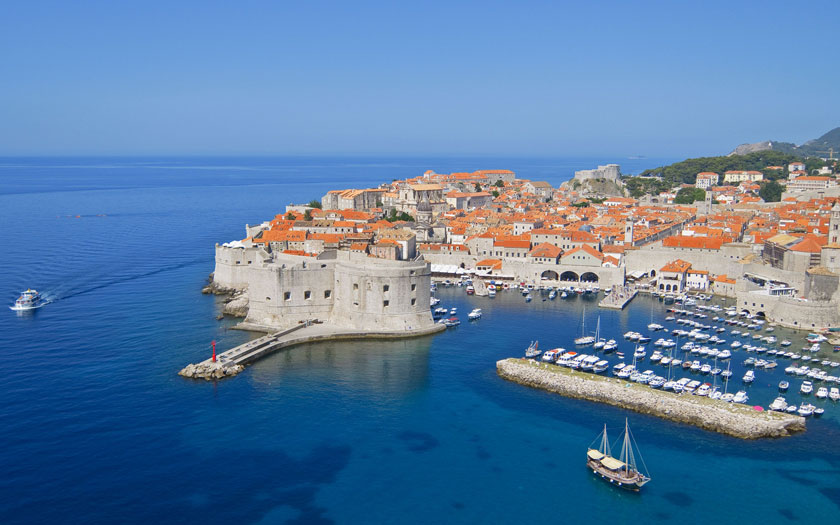
The most sensitive case currently is Dubrovnik. According to Croatian stakeholders, declaring Dubrovnik a "non-compliant" destination year-round is difficult to reconcile with its meetings infrastructure, international accessibility and long-standing role in hosting international gatherings.
Therefore, on the initiative of the Dubrovnik Tourist Board, Mayor Mato Franković sent an official letter to CVS addressing the assessment that Dubrovnik is primarily a tourist and leisure destination. In the letter, he highlighted the city's long academic and intellectual tradition, from the Collegium Ragusinum and Ruđer Bošković to today's institutions such as the Inter-University Centre Dubrovnik, University of Dubrovnik, RIT Croatia and Libertas International University. He also emphasized the city's international accessibility, meetings infrastructure and the fact that the events in question take place outside the peak tourist season.
The Croatian side's argument is simple - if the problem lies in the tourist perception of the destination during summer, why should an international scientific gathering in May automatically be unacceptable?
However, the geographical criterion does not assess the "scientific value" of a city, but rather the perception that may be created in the context of a specific event. Thus, according to CVS, even a city with a strong scientific reputation may be evaluated differently depending on the date, specific hotel, program and information provided. CVS also stresses that a prior decision does not automatically set a precedent for future events. Assessments are individual, and additional information regarding a specific gathering can influence the outcome.
Can a structured overview of Croatian meetings capacity help?
In CVS's response to CMPA, it was stated that they understand Croatia may have limited adequate meetings capacity and invited Croatian stakeholders to present their view of locations and venues that could comply with their criteria.
The President of CROMED, the national member of MedTech Europe in Croatia, Dr Damir Detić, told us that the preparation of such an overview of existing meetings capacity is underway. The goal is to present this list to CVS, along with recommendations from CROMED as the national member. According to their proposal, participation in the drafting process will not be limited to the pharmaceutical and medical devices industry: "CROMED will request and accept input from all stakeholders in the process of organizing medical congress events - PCO agencies, hotels, CMPA, convention bureaus and tourist boards," says Detić.
The idea is very concrete: to map existing capacities and state which facilities, during which period of the year, in the opinion of CROMED as the national member of MedTech Europe, meet the requirements of the ethical code and CVS. Particular emphasis is placed on seasonality. "Assessing the compliance of a location according to the requirements of the ethical code should take into account not only the location and category, but also the time of year, given the pronounced seasonality in the use of coastal meetings capacities," Detić points out.
Such an overview could represent the first attempt to show CVS concretely what infrastructure the Croatian meetings industry actually deals with. However, by itself, it does not mean that individual congresses will be automatically approved.
Ranko Filipović, President of CMPA, also warns that creating the list is not simple, as there is no single national overview of meetings capacity that could serve as a base. He believes a national overview could be useful, but cautions that every hotel and destination would still be subject to individual CVS assessment. As one possibility, he sees documenting the "lack of alternative venues" or the above-mentioned "compelling need" argument when an organizer invokes the possibility of an exception provided within the CVS rules themselves.
The greatest unknown of the entire initiative is whether a national overview can truly increase predictability or if every organizer, for every congress, will still have to undergo a separate assessment. If this process results in a clearer understanding of Croatian specifics, it could bring what organizers lack most today - not looser rules, but predictability. However, it remains unclear how much this will change the situation in practice, as well as to what extent such an overview will be considered in future CVS assessments.
Between regulations and infrastructure - how to remain competitive?
The industry agrees on another point: even the best negotiations with CVS will not solve Croatia's fundamental infrastructure issue. Croatia lacks a large, public and fully independent convention centre that could accommodate large international medical gatherings without a hotel or resort context. This is why Sanja Vukov Colić sees the future Convention Centre in Zagreb as an important part of the solution. A purpose-built public facility in a well-connected location, she believes, could open up the possibility for Croatia to bid for large international gatherings for which it could previously hardly compete against European cities with established convention centres. However, Zagreb will not solve the coastal region's problem: "In addition to the Zagreb convention centre, it is necessary to enable the further development of the meetings industry in coastal cities, primarily Split and Dubrovnik, which have international airports, accommodation capacities, favorable climate conditions and similar, by building adequate convention centres," stresses Vukov Colić.
In the current situation, Zagreb remains the safest option. As the capital and business, administrative and scientific hub, alongside existing meetings capacities and the announced new convention centre, it is least exposed to the perception of being a tourist destination that burdens part of the Croatian market.
There is another pragmatic way out mentioned among industry experts. Some organizers might simply start avoiding the international character of gatherings. If an event is organized without "international participation", in certain cases it does not fall under the same CVS evaluation regime. However, such a solution would simultaneously mean giving up on the international component, which is precisely what adds extra value to many Croatian professional gatherings.
This brings the question back to the beginning: how to protect the ethical standards for which the system was introduced, while simultaneously allowing Croatia, with its realistic infrastructure and seasonality, to remain competitive for international medical gatherings? A national overview of Croatian locations could be an important first step. However, only its creation, and even more so the manner in which CVS considers it in future individual assessments, will show whether it becomes a concrete tool for greater predictability - or just another document in a process that continues to be decided on a congress-by-congress basis.
In the meantime, the Croatian meetings industry must continue to operate within the existing system - trying to prove that a hotel by the sea can be a site for serious scientific work, that a destination living off tourism can serve a business function, and that a congress in May is not the same as a vacation in July.