Vesna Pritchard: Outstanding PCO agencies always deliver extra value

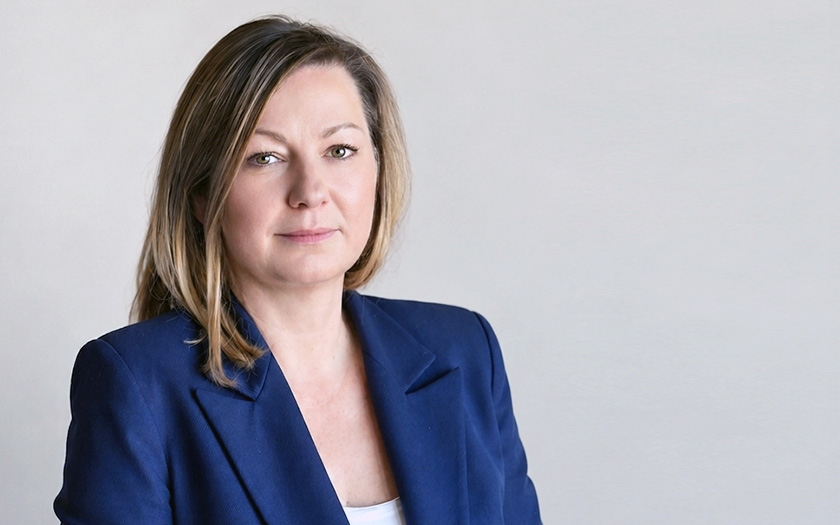
Behind Tatjana Mrzljak is more than two decades of work in the congress industry during which, as the long-standing director of the PCO segment at Filida Travel agency, she participated in organising numerous national and international professional and medical congresses. She recently founded her own agency, Exelor, through which she plans to continue developing projects in the field of business events. This prompted us to talk with her about what shaped her as a professional PCO expert, why she believes a local PCO is an irreplaceable partner to international organisers, how MedTech rules affect Croatian congress destinations and what is needed for Croatia to become a stronger player on the international congress industry market in the future.
The most valuable lessons come from challenges and working with people
You have spent almost your entire professional career in the PCO segment, leading the Filida Travel agency through numerous domestic and international congresses. Looking back today, which moments shaped you the most as a person and a leader?
I started literally from scratch. At the time I entered the PCO segment, there were not many opportunities for formal education in this field, so we learned through work. We educated ourselves, acquired new knowledge and grew together with every project. We started with smaller congresses and professional meetings, and step by step reached the organisation of large international congresses.
Looking back today, I can say that it was not successes that shaped me the most, but challenges. It is precisely the situations that you could not predict, that catch you off guard and require a quick reaction from you, that make you grow the most. Every such moment teaches you something new, makes you more resilient, more confident in decision-making and better prepared for the next challenge.
However, what developed me the most are perhaps relationships with people. No two clients are the same, and each one presents you with new demands, expectations and challenges. Because of this, you learn to listen, observe and understand what is truly important to the client, often even before they say it themselves.
Today, after all these years, what I am proudest of is not the number of organised congresses, but the fact that I can say I truly understand what it means to be a PCO. This is not just about organising events. It is a deep understanding of the client, the participants and all the processes behind a successful congress. It is the ability to anticipate potential situations, find a solution before a problem arises and, above all, know how to listen. I believe that these very skills make the difference between a good organiser and a true professional congress organiser.
You have decades of organising professional and medical meetings behind you. Is there an event that has remained particularly memorable to you – not because of its size or prestige, but because it taught you an important lesson?
One international congress particularly stuck in my mind precisely because of an experience that further confirmed to me how important it is to trust your own knowledge and experience. This was a large professional meeting held in a different country every year. Since the organising committee had many years of experience in organising this congress, I decided to respect their suggestions and assessments, even though I had a different vision for certain segments.
During the preparations, it turned out that what worked in other countries was not necessarily the best solution for local circumstances. In the end, we returned to the approach I had suggested from the very beginning and successfully executed the congress.
This experience further confirmed my belief that international experience holds great value, but it is precisely the local PCO who knows the destination, local partners, way of working and expectations of the participants best. That is why I believe a successful congress is created when international experience combines with local knowledge and expert leadership.
What have you learned exclusively through practice – something that cannot be found in any book or training course, but is crucial for the success of a congress?
If I had to single out one thing I learned exclusively through practice, it would be communication – and not just communication in the sense of exchanging information, but understanding people.
A successful congress is not run solely on plans and deadlines. It is important to assess how to speak to whom, when to be very direct and when to approach a situation diplomatically. It is equally important to know how to defuse tension, find common ground and guide everyone towards the same goal.
Such skills, unfortunately, cannot be learned from a book or during a training course. They come through practice. Some people have more natural communication talent so they acquire them faster, but experience is what ultimately makes the difference.
In tourism, I am always guided by one principle – the word "no" barely exists.
If something truly cannot be achieved, it is important to find a way to communicate this, offer an alternative and reach a solution together with the client. I believe that this very approach builds trust and long-term relationships.
This is why I believe experience, communication and understanding people are just as important as organisational skills, because behind every successful congress are high-quality relationships between people.
In the PCO business, every project brings unpredictable situations. Can you single out one challenge that seemed almost unsolvable at one point, but ultimately turned into one of your greatest professional victories?
To be honest, I have not had such a situation. Of course, there were challenges, but I never got into a position where I thought something was unsolvable. I believe this was helped by the fact that I always tried to realistically assess a project and its possibilities. That is precisely why today I believe that you should not always accept every project. No matter how hard you fight for every client, sometimes it is more professional to walk away from a collaboration than to risk the quality of execution. Reputation is not only important to the client, but also to the PCO who stands behind every project with their name.
MedTech rules in practice: Between strict regulation and the perception of a tourist destination
As someone who has worked closely with CROMED, the local representative of MedTech, you are aware of how strict their rules are – rules that meetings and congresses must comply with to be recognised and financially supported by medical device industry sponsors. Can you explain to us simply, "from the perspective" of a PCO agency, how far-reaching these rules actually are in daily work?
First and foremost, it is important to emphasise that not all medical congresses are subject to MedTech rules. However, those that are rank among the most important professional events, which is why their compliance with the rules is of vital importance.
This is most visible precisely when evaluating a destination. Croatia, unfortunately, still lacks enough purpose-built congress centres, which is why most large medical congresses are held in hotel event venues. If, for example, Dubrovnik had a convention centre, I believe the question of destination acceptability would not even be a subject of discussion. However, since the gatherings are held in hotels, the assessment often enters the territory of the perception of a tourist destination, which can lead to different outcomes in the validation process.
This very uncertainty represents the greatest challenge for a PCO. Not because we do not know the MedTech rules – on the contrary, they are an integral part of our daily work today – but because for certain destinations it is not always possible to estimate with certainty how the criteria will be interpreted during validation. This increases the organiser's responsibility and requires very careful planning together with the scientific organisers right from the start of the project.
According to MedTech rules, destinations with a strong tourist character are often considered unacceptable for medical meetings that receive their support. What exactly does this mean in practice for gems like Dubrovnik or Opatija, but also for domestic PCO agencies? How much damage does this cause in the long run to our destinations, hotels and the event industry as a whole, and how can this gap be bridged?
Opatija has been recognised as a congress destination for many years and, when meetings are organised within the periods prescribed by MedTech rules, it generally does not present a major challenge in the validation process.
Dubrovnik, on the other hand, has become much more uncertain. According to MedTech rules, professional events can be organised within the prescribed dates outside the main tourist season. However, recently we have increasingly encountered assessments that do not only consider the date of the event, but also the perception of the destination itself and the property where the congress is being held.
In practice, this means that hotel event venues on the coast, especially those with direct beach access or a pronounced tourist character, are increasingly failing the validation process, even if the congress takes place in May or October – which are periods theoretically intended for holding such events according to the rules.
For domestic PCO agencies, this creates significant uncertainty in planning, as it is becoming harder to give clients a clear advance assessment of whether a certain destination or hotel will be accepted. The consequences are felt not only by the organisers, but also by hotels that have top-tier congress capacities, and Croatian destinations that invest in the development of meetings industry.
Croatia chronically lacks large, purpose-built congress centres
It is often said that Croatia has excellent meetings capacities, but also certain limitations. From your perspective, what holds us back the most today in attracting international professional meetings, and where do we have a real competitive advantage that we might still be underutilising?
Croatia has many high-quality meetings capacities, but they are mostly located within hotels. Our greatest advantages are an excellent geographical position, attractive destinations and the hospitality for which we are recognised.
What we chronically lack are large, purpose-built congress centres that can host several thousand participants. This is precisely one of the main reasons why many large international congresses do not even consider Croatia as a possible destination – we simply have nowhere to organise them.
Meetings industry stands out as one of the key tools for developing year-round tourism. Where do you see the greatest opportunities for Croatia in the next five to ten years, and what needs to change for us to truly capitalise on them?
Meetings industry is one of the most important tools for the development of year-round tourism, and we should build part of our tourism strategy on it. Croatia has a lot to offer to international companies and professional associations, but to be more competitive, we come back to the same challenge – the lack of large congress centres.
It is equally important to change the way we promote Croatia. Aside from sun and sea, we need to more strongly emphasise the quality of our destinations, the infrastructure for business events and the facilities we can offer throughout the year.
I would like to see large congress hotels on the Adriatic operating year-round in ten years' time, with restaurants and supporting facilities open in both February and December, and for us to develop a rich off-season offer of activities focused on the inland areas of destinations rather than exclusively on the sea. Continental Croatia is already showing how successful such a model can be, but even there, larger capacities and additional investments will be needed for further development.
From Filida to her own story: "Young enough for enthusiasm, mature enough for wisdom"
After a successful career at Filida Travel agency, you decided to make a professional turn and go your own way. How did this decision mature, what was the main "trigger" and in what direction do you plan to develop your new project? Will the focus remain purely on PCO work, or are you preparing something completely new?
After many years at Filida, I felt it was time for a new professional chapter. I wanted to keep doing what I built my name on and gained the most experience in – organising congresses – but at the same time develop some new projects and services that I had not had the opportunity to realise until now.
I think I have reached a phase in life where many people make a big business turn. I am young enough to still have the energy, enthusiasm and desire to create something new, and mature enough to have experience, knowledge and, perhaps most importantly, the wisdom not to repeat the mistakes that are an integral part of every professional journey.
I believe this combination of energy and experience is my greatest advantage. Congress organisation will continue to be the foundation of Exelor, but I want to develop a wider range of services in the field of business events and business travel, creating a company that will grow together with its clients and partners.
When starting from scratch, but with years of invaluable experience in your pocket, what excites you the most at this moment, and what do you see as the biggest challenge?
The biggest challenge is certainly the uncertainty that accompanies every new beginning. When you start your own story, there is no pre-planned path and a lot depends on you and the decisions you make.
On the other hand, that is exactly what excites me the most. I have the freedom to choose the projects I want to develop, set my own pace and build a company in line with my values and vision. After all these years of work, that is a privilege I particularly appreciate and one that gives me extra motivation for this new chapter.
If you were to advise a young person today who wants to build a career in the congress industry, what three things would you tell them are more important than tools, technologies and certificates?
First, I would tell them not to skip the beginnings. Tourism is best learned in the field. You need to get to know Croatia, travel, see how other countries work, get to know their customs, gastronomy and lifestyle. Only then can you give high-quality advice to a client and understand what the right choice for them will be.
Second, I would tell them to develop communication skills and the ability to listen. A good tourism professional does not sell a destination – they understand the client's needs. Sometimes the greatest value lies in telling a client that the destination they envisioned might not be the best solution and suggesting something that will better suit their goals.
Third, let them invest in education. Technology is available to everyone today, and it is no longer what makes a difference. The difference is made by knowledge, experience and the desire for continuous improvement. In business tourism, there are more and more high-quality education programmes and certificates, and they are backed by top experts from the industry. If I were hiring a young person today, a candidate who invested time in such education and obtained a relevant certificate would certainly have an advantage.