Croatian tourism must transition from growth to development – MICE, investments and premium offer are key to competitiveness

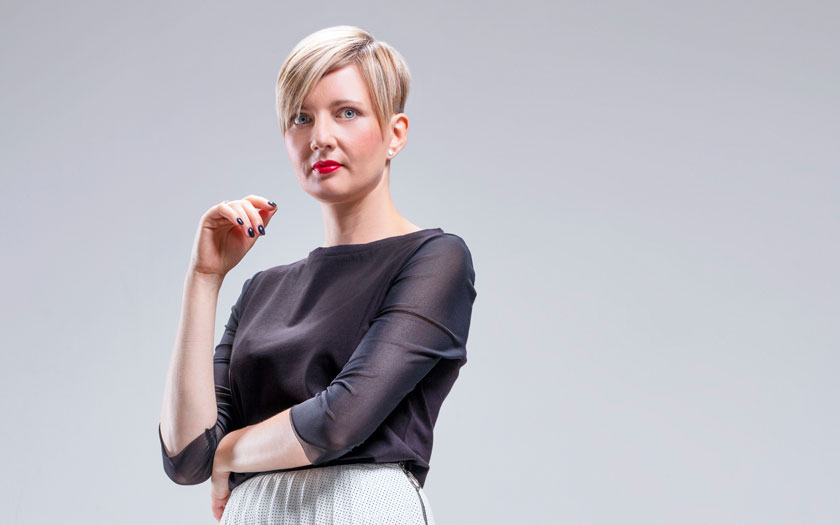
In recent years, Best Stay has profiled itself as one of the recognisable business platforms for the hotel industry in the region. What began as a hotelier conference now includes new formats aimed at leadership development, knowledge exchange, connecting experts and opening up new business opportunities in the region. Behind the platform's development is Martina Lucić Čanak, with whom we spoke about the greatest challenges of modern hospitality, expansion into the Montenegrin market, the role of artificial intelligence and technology, and the trends that will shape the hotel industry in the years to come.
When you took over Best Stay, what vision did you have for the project and what did you want to change or improve compared to the existing format?
Since its inception, Best Stay has had a very clear and important role in the market. Back in 2015, it was among the first concrete business events aimed at hoteliers and tourism professionals in the region. At the time, this was extremely important because the industry needed a space where people did not just talk about tourism in general, but very specifically about hotel management, operations, sales, technology, operations and development.
When I took over the project, I cannot say that from day one I had a fully defined picture of everything Best Stay would grow into. In the meantime, the market has changed so rapidly that it would be unrealistic to claim everything was mapped out in advance. What I did know very clearly was that I did not want the event to be an end in itself. I did not want a conference that takes place, ends and then nothing actually changes.
From the beginning, I felt that Best Stay had the room to grow from a single event into a broader business platform from which new products, new formats and new ways of connecting people with the same mindset could grow. It is a mindset of people who want to seriously contemplate tourism and hospitality, work on themselves, develop their companies and make more concrete decisions for the future of their business.
After the first event we delivered, it was clear to me that I wanted to design the entire experience more powerfully. Not just the programme, but also the way people meet, talk, exchange ideas and return to their companies with concrete insights.
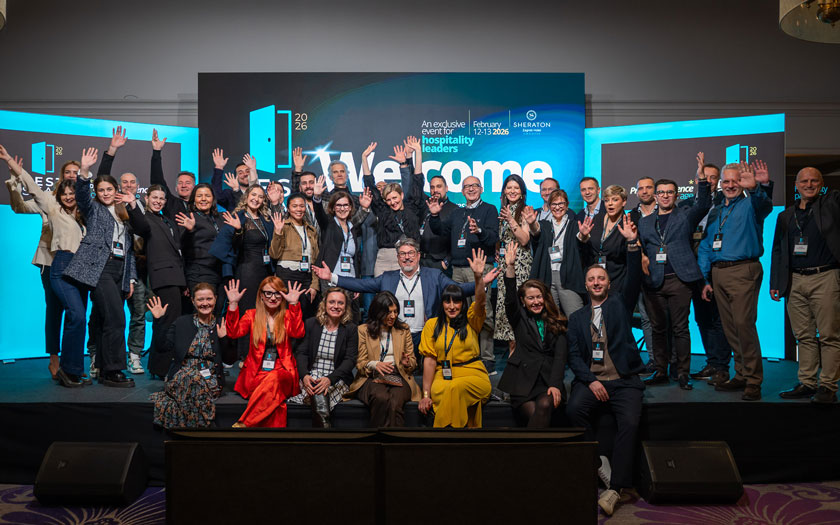
This year's edition of the conference once again gathered a large number of hotel experts and partners. When the spotlights go down and the event ends, how do you measure its success? Is it the numbers, the participants' reactions or something else?
The numbers are important, of course. They provide a certain picture, such as how many people came, how many partners participated and what the market interest was. But in business events, numbers are never the sole indicator of success. There are events that might not look spectacular in terms of pure numbers, but were extremely valuable for certain people and companies. That is why I look at the success of Best Stay through several levels.
Firstly, I look at how useful the event was to the participants. Did they get insights they can apply? Did they meet people they might not otherwise have met? Did new business opportunities, new conversations and new collaborations open up?
Secondly, I look at what happens after the event. This is perhaps the most important thing to me. If people start thinking differently after Best Stay, if they decide to involve their team in changes, if they recognise where their profits are leaking, where they need better leadership, where they need technology or where they must invest in people, then I know the event has a real impact.
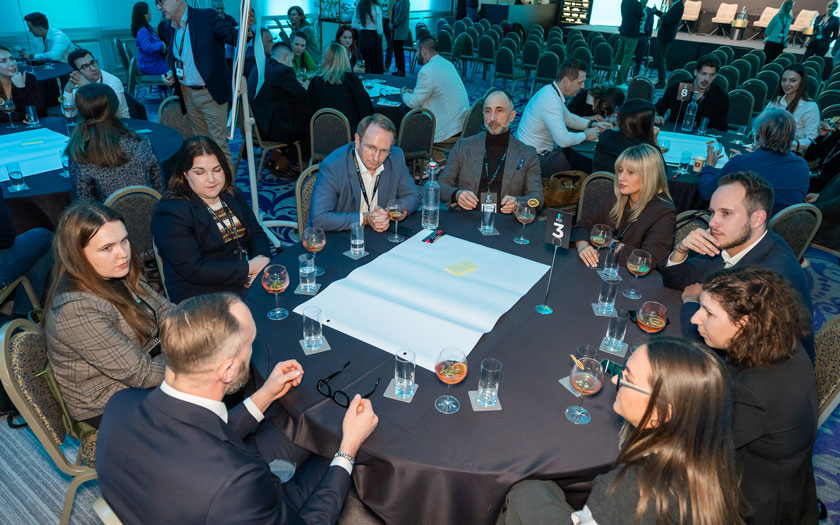
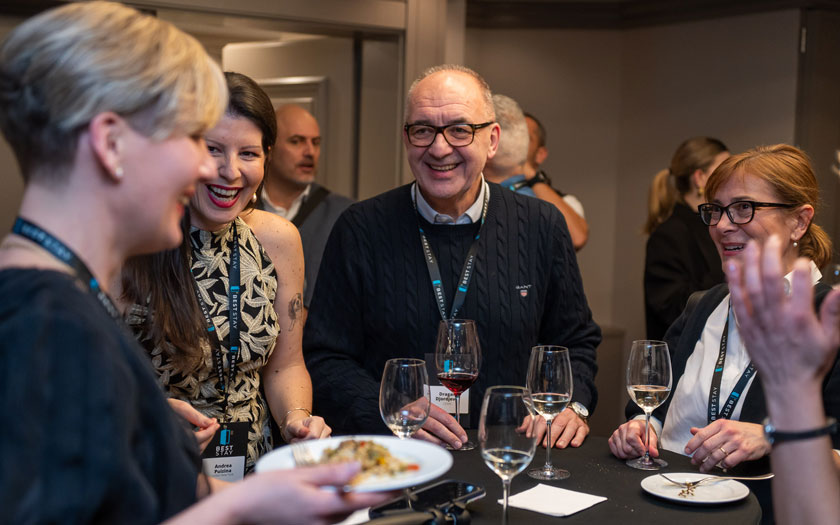
The reactions of the participants are extremely important to us, and we truly listen to them carefully. An equally important indicator is how many people return to us. I find it particularly interesting that more and more hospitality leaders are coming with their teams. This shows that Best Stay is no longer perceived merely as a conference for a single person from a company, but as a tool for team development.
This is not an incentive trip. People do not come just to socialise or get out of the office. They come because they want to do something for themselves, for their business and for the company they work for. Someone from operations can get very concrete information and ideas, but leadership is ultimately what decides what will be applied, at what pace and in what way.
I measure the success of an event through a combination of numbers, reactions and the actual change that occurs after the spotlights go down.
The Best Stay platform today covers key pillars of hotel operations: profitability, leadership, technology, as well as talent management and service excellence. Which of these segments currently represents the biggest "pain point" for our hoteliers, and where do you see the greatest room for improvement?
Today, it is difficult to isolate just one segment because they are all interconnected. Profitability is no longer just a matter of room rates, just as technology has long ceased to be just a matter of tools. Quality of service is no longer just about standards, and talent management has long ceased to be just an HR topic.
If I had to single out the biggest pain point, however, I would say it is aligning people, especially different generations, technology and profitability into one functional system.
Hoteliers are under great pressure today. Costs are rising, guest expectations are growing, there is a shortage of labour and technology is changing so quickly that it is sometimes difficult to distinguish what is real value and what is just passing hype. On one hand, everyone knows they have to change, whilst on the other hand, the question is how to actually implement that change across the organisation.
Therefore, I think the biggest challenge lies not just in technology, but in leadership. Technology can help, but only if there is a clear business logic for why it is being introduced. AI, automation, revenue tools, CRM and personalisation make sense if they help a hotel be more efficient, more profitable and better to the guest, but if introduced without a strategy, it often becomes just another layer of complexity.
The other big pain point is people. The hotel industry is still an industry of relationships, trust and experience. If employees are not motivated, trained and involved, it is difficult to talk about premium service. The guest, but also the employee, very quickly senses when the system is not working from the inside.
I see the greatest room for improvement precisely in this integration – making sure that revenue, marketing, sales, HR, operations and technology do not work as isolated islands, but as a single system. The hotels that will make the biggest leap forward in the coming years will not necessarily be those with the most tools, but those that best connect data, people, guest experience and business goals. In other words, the future is not about choosing between people and technology, but about leadership knowing how to smartly connect the two.
Montenegro as a new market and a potential boutique luxury business destination
This year, Best Stay is stepping strongly into Montenegro through two completely different formats. Did you have this exact vision of expanding into new formats and markets from the very beginning, or did this story develop naturally, listening to market needs and the impulses of participants?
The vision of expansion existed from the beginning, but not necessarily in this form. I have been active in business in the region for a long time, so it has always been extremely interesting to me, and I believe it will always be an important part of the Best Stay story. Hospitality in our region shares many common challenges, but each market also has its own specific dynamics, its own topics, its own people and its own development opportunities.
To step seriously into a new market, it is not enough just to decide to organise something there. There must be a sensible foundation, the right partners and clear local relevance. An event must have a reason for happening exactly there, exactly now and with those exact people.
In Montenegro, several important elements aligned. On one hand, the market is developing, investments are being made in luxury and business tourism, and the topic of joining the European Union opens up many concrete questions for the hotel industry. On the other hand, partners and people with whom we share similar values, a business mindset and the understanding that these things should not be done superficially have appeared.
I would say that the expansion developed as a combination of vision and careful listening to the market. First, a small window opens, then people and conversations appear, then trust begins to build, and only then do the doors open.
Without local people, local support and the right partners, such projects are not possible. Best Stay can bring the concept, experience, international perspective and structure, but every format must be relevant to the market in which it takes place.
That is why Montenegro, for me, is not just a geographical expansion, but a natural continuation of the Best Stay platform through formats that meet the real needs of the market and people who want to actively participate in the development of the meetings industry in the region.
The Best Stay Retreat in Montenegro in September is an intimate, closed format for only 8 leaders. The programme is not yet public, but we know it includes a luxury 5-star hotel, workshops with Dinka Krčelić and even a half-day sailing trip with the iconic Rambo Amadeus! How did you come up with the idea for such an unusual concept, and what do you want these leaders to take home after this experience, besides business conclusions?
The idea was born out of a very simple but important insight: people in responsible positions today are under immense pressure and often have no one to share it with.
They are constantly expected to know, decide, lead, answer and resolve. There are expectations from owners, investors, employees, partners, the market, families and, in the end, very often, their own expectations of themselves. The truth is that we can grow under pressure, but only up to a point. After that, we no longer grow, but wear ourselves out and burn out.
That is why I wanted to create a format that is not just another event where leaders get even more information. I think most of them know very well what they should do. The question is why they have not done it yet. And that is why this retreat is designed as a space where they can step away from operational noise, release the pressure and finally arrive at clearer decisions.
Everything in the programme has its purpose and a metaphorical meaning. The Lazure hotel was not chosen by chance. It is a space with history, a space of renewal, transformation and peace. The ambience itself speaks of what remains when the surface is removed and when we return to what is fundamental.
Sailing with Rambo Amadeus is also not intended as an entertaining addition to the programme. He is not entertainment, but an experience, a perspective and a kind of disruption to the usual business mindset. His philosophy of life, his need to go offline, his wooden sailboat that he built himself and the way he contemplates the world fit perfectly into what we want to achieve.
I find this role reversal particularly interesting. People who normally run large systems, make decisions and have the answers are suddenly on a boat where someone else is the captain. There, they do not have to lead; they have to listen. And that is sometimes a very powerful and often liberating experience for leaders.
The same goes for the culinary part of the programme. The kitchen, like the boat, very quickly shows how someone functions without their title. Who takes control, who listens, who cooperates, who retreats, who complicates and who simplifies. These activities are not part of the programme for the sake of activity, but are part of experiences that open up a different kind of insight.
What I want leaders to take home is not just a business conclusion. I want them to take home clarity, courage and the feeling that they are not alone in the pressure they carry. And to take home a very concrete decision: what stops, what starts and what their next move is.
The greatest value of this retreat format is precisely that it creates a space that almost no one has in everyday life anymore – a space for conversation with people who understand a similar level of responsibility, a space for silence, a space for a change of perspective and a space for a decision that has perhaps been postponed for months. That is why the format is small, closed and invitation-only. Because here, the goal is not to gather a lot of people.
The goal is to gather the right people, at the right time, in the right space and enable them to return home with less noise and more clarity.
Montenegro has been investing heavily in the development of luxury and business tourism in recent years, and joining the European Union is increasingly mentioned as an important step forward. How do you view the potential of Montenegrin tourism, and what could eventual EU membership mean for the development of the hospitality industry and business events?
The potential of Montenegrin tourism is unquestionable. Montenegro has what many destinations try to create artificially – a dramatic landscape, sea, mountains, a strong identity, authenticity, cultural layering and an increasingly prominent luxury hotel product.
What is particularly interesting to me is that Montenegro has the natural prerequisites to position itself as a boutique luxury destination, but not in the superficial sense of luxury through expensive hotels, yachts and beautiful locations, but through very carefully designed experiences, premium service, a strong local identity and quality that is felt in every detail.
Data shows that steps are already being taken in this direction. The number of high-category hotels is growing significantly, there are more and more four- and five-star capacities, and premium tourism is recognised in strategic documents as one of the key development paths. This is very important because Montenegro, due to its size, should not compete on quantity, but on quality, identity and value per guest.
At the same time, this is precisely where the greatest challenge arises. Potential is not the same as realised value. If a destination has luxury hotels but still struggles with strong seasonality, insufficient air accessibility, the pressure of the grey economy, labour issues, traffic challenges and a lack of real-time data, then its full potential cannot be fully utilised.
That is why I think the key question for Montenegro now is moving from the phase of being an attractive destination to the phase of being a seriously managed destination. In addition to a clear strategy, professional destination management is needed, followed by better quality data, better coordination between the public and private sectors, stronger marketing and the development of products that extend the season.
This is where the meetings industry can play an extremely important role. Conferences, forums, executive retreats, incentive programmes and smaller premium business formats can help extend the season, activate hotels outside the summer peak and attract guests who come with a different motivation and higher business value for the destination.
Joining the European Union could further accelerate this process, but only if it is understood as a development framework and not as an automatic solution. EU membership in itself will not solve tourism challenges, but it can open up space for stronger and clearer standards, better regulation, greater legal certainty, easier investment, access to funds, higher quality infrastructure and stronger integration of Montenegro into European business, transport and tourism flows.
For the hotel industry, this can mean the professionalisation of the entire system – higher standards, more transparency, more responsibility, but also more opportunities. For business events, this can mean greater relevance for Montenegro as a regional and European meeting destination, especially if air connectivity, premium hotel capacities, conference infrastructure and authentic programmes that do not copy other destinations, but use what Montenegro already has, are developed in parallel.
I do not see Montenegro as a destination that needs to become big. I see it as a destination that can become extremely precisely positioned – small, strong, high-quality, strategically managed and recognisable.
Precisely because of this, I believe that now is the right moment for a serious conversation: what does Montenegro want to be in the European hotel context? Just another beautiful Mediterranean destination, or a boutique business and luxury destination that knows who its guest is, what it offers them and why it is worth coming exactly there? If that answer is set clearly, the EU process can be a great catalyst. However, the real value will not come from membership itself, but from the decisions made prior to it as well as the accompanying activities.
Organising events "at home" and in a new market always brings a different kind of adrenaline. What would you single out as the biggest organisational challenge in Croatia, and what in Montenegro?
Every market has its own dynamics, and I would not say there is a single challenge that is completely tied only to Croatia or only to Montenegro. Some challenges are common to everyone today, primarily rising costs, the need for high-quality partners and the fact that an ever-higher level of execution is expected from every event.
In Croatia, specifically in Zagreb, we have the great advantage of accessibility and a central position. It is relatively easy for people to come, the city is well connected and that means a lot to us organisationally. On the other hand, as Best Stay grows, so do our needs. The challenge is to find a space that fully supports the format we are developing, not only in terms of capacity, but also flexibility, atmosphere and the possibility to design the event exactly as we want.
In Montenegro, the challenge is different because we are entering a new market and there it is particularly important to have the right local partners. For events held in hotels, the partner hotel is not just a location, but a part of the experience, safety and trust. Right from the first conversations, you very quickly feel how responsive someone is, how well they understand the format and whether you can build something of high quality together.
In both cases, it is crucial that values align. You can find a good space, but a true partnership is what carries an event. In events, unexpected situations always occur and that is part of the job. That is why it is important to me to have partners with whom we can communicate openly, react quickly and create that sense of security that, whatever happens, we will find a solution together.
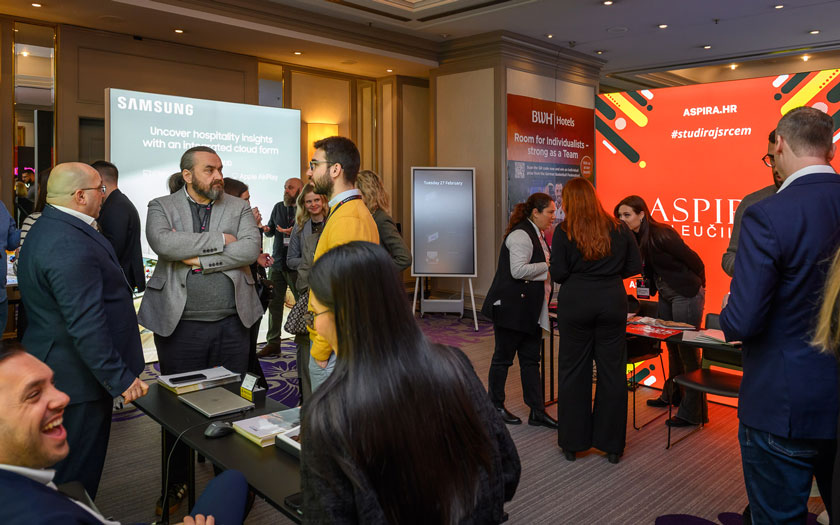
The future belongs to partnerships, not just technology
In February 2027, a new edition of Best Stay awaits us in Zagreb. When you plan events that dictate trends, how do you filter the endless information and technological novelties to offer the audience only what truly brings value and avoid passing hype?
In the last few years, it has become very difficult not to fall for the hype. Technology is changing extremely fast, new topics are constantly emerging, everyone is talking about AI, automation, data, personalisation and new tools. If I said we are always completely successful in immediately recognising what is real value and what is a passing trend, that would not be honest.
However, what we consciously do is avoid filtering information solely from our own perspective. Our most important filter is our conversations with the market. We talk to hoteliers, partners, leaders, people from operations, sales, marketing, technology and HR. We ask them very specifically what is actually bothering them at this moment, what they are missing, why they would come to the conference and what they want to take back to their company.
This is very important to us. Because the motivation for attending a conference is not always the same. Someone comes for strategic insight, someone for a concrete solution, someone for contacts, while someone else wants to bring their team to hear the same things together and make it easier to initiate changes within the organisation. We are interested precisely in that – what people expect to change after they come to Best Stay.
In addition, we follow what is happening in international markets, in the hotel industry, technology, revenue management, marketing and leadership. Personally, I travel quite a lot, observe, talk, listen and educate myself. I believe in a combination of market research and a personal feel for what is coming.
In the end, we combine all of this with the experience we have, with the vision for the development of Best Stay and with a very practical question: will this help people run their business better? If the answer is yes, then the topic has a place in the programme.
Of course, part of the programme always includes a certain amount of experimentation. I think that is important. You cannot develop an event that wants to be relevant to the future if you never take a risk and try something new. But we try to make those conscious experiments, not just following a trend because something is currently popular.
A good programme is one that does not just show what is new, but explains what is applicable, what is important and what can truly change the way hotels operate.
If you had to single out one trend that will most change the way hotels operate and cooperate with partners in the next five years, what trend would that be?
We all know that technological tools contribute significantly to change, so technology, AI and data will certainly change the way hotels operate even more strongly and quickly.
For me, the biggest trend is actually a change in the way we cooperate. Hotels will increasingly be unable to function through a classic client-supplier relationship, and will increasingly need to build strategic partnerships. This means more open communication, a clearer definition of problems and a much more concrete question: where are we now, what is really not working for us, where do we want to get to and who can help us on that journey?
In the hotel industry, technology is often talked about, but technology itself does not solve anything if people do not know how to ask the right question. AI, automation, revenue tools, CRM systems or new operational models only make sense when there is trust between the hotel and the partner, when both sides and their teams understand the business goal and when there is a readiness to talk openly about what is not working as well.
I think that is why, in the next five years, a combination of business clarity, emotional and social intelligence, and change management skills will become particularly important. Hotels will need partners who do not just come to sell a solution, but to understand the context, and partners will need hotels that know how to clearly state what their problem is, that are ready to share data, involve the team and build a relationship on long-term trust.
In other words, the biggest change will not be that we will have even more tools. We will certainly have them.
The biggest change will be in who will know how to sensibly connect those tools with people, processes and real business goals.
Over the years, you have spoken with a large number of hoteliers, investors, consultants and suppliers. Is there a piece of advice or a lesson you heard thanks to Best Stay that changed your own view of business?
The very fact that through Best Stay I had the opportunity to talk to hundreds of people from the hotel world has greatly influenced both the way Best Stay develops and the way I view business today.
One of the more important lessons I received was that you do not necessarily have to try to enter existing circles if you do not naturally belong there. At one point, I was told that if I wanted to do certain things in the hotel industry, I had to be part of a certain 'tribe'. I understand that logic, because every industry has its relationships, its informal circles and its ways of functioning. However, over time I realised that perhaps my path is not to fit into someone else's system, but to build my own circle of people – which is not necessarily noisy or the most visible, but a circle of people who share a similar mindset, values and the need to do business with quality, honesty and with a clear intention and meaning.
The second lesson, which sounds simple but is not, is: be who you are and let that become your business principle. When you try to be something you are not, people sense it. When you come from a place of clarity, without a "hidden agenda" and without the need to play a bigger or different version of yourself, that is when trust is built. Trust is not built with one good event, one good email or one good presentation, but with consistency. And that means doing what you say you will do, making it clear to people why you are doing something and showing over the years that the same intention stands behind everything.
Over time, I have learned that success is not necessarily built through constant comparison and competition. It is much more important to understand your own value, recognise the people and markets that truly need it and find the best way to deliver it. This is a principle that applies to hotels, brands and events alike. Perhaps most personally, today it is extremely important to me who I work with. Not because I expect every relationship to be easy or that we must always agree, but because I believe that good business requires a certain quality of relationship. There must be trust, respect and a feeling that things can be said openly. When that is missing, I very quickly feel that it is not a space where I can give the best of what I know.
Over the years, Best Stay has taught me that business develops most through relationships. Not through superficial networking, but through real professional and human connections with people in whom you recognise yourself, with whom you can create something meaningful, grow, sometimes make mistakes and still maintain mutual respect.
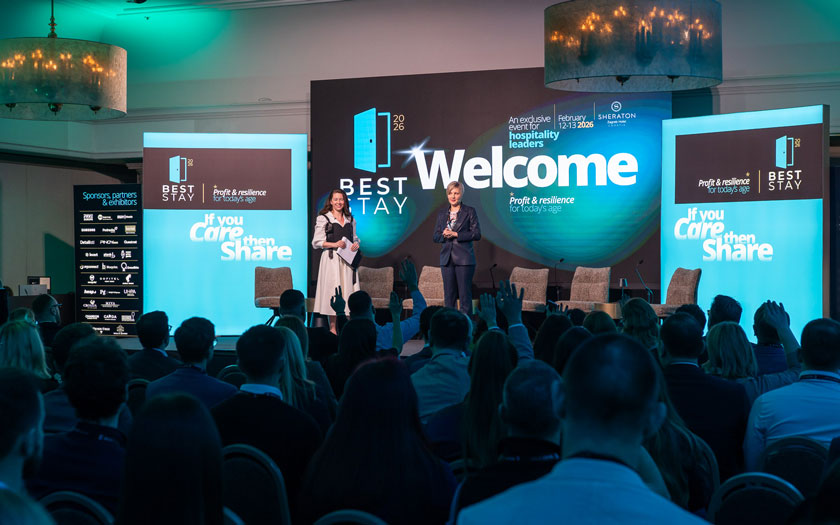
What do you know today about yourself as the organiser of Best Stay and as an entrepreneur that you did not know when it all began?
Today, I know that organising events is not just a matter of good production, programme and logistics. That is important, of course, but it is only one, often smaller, part of the job.
What I certainly did not know in the beginning is how important it is in this job to know how to carry uncertainty. An event always looks beautiful when it is all over, when people sit in the hall, when the programme starts and when the atmosphere happens. Behind that is a lot of decisions, changes, pressure, risks and moments in which you have to very quickly assess what is important, what is not, where to react and in what way.
Today, I understand better that my strength is not just in organising an event, but in creating a structure that makes sense out of many different elements, where we connect people, topics, partners, space, energy and business goals into a single experience.
Also, I know that I do not want to do events or projects that are an end in themselves. That is something I have always known and been guided by. If I do something, I want it to have a reason, value and impact. I want people to see something more clearly after it, to meet someone of high quality or to make a decision they might not have been able to make before.
As an entrepreneur, I have learned that freedom is one of the greatest values, but also that it comes with great responsibility. In my opinion, freedom does not mean working without a structure. It takes enough courage and discipline to set the structure, direction and standards by yourself according to which you want to work. I have also learned that my pace is not for everyone, and that is fine.
Perhaps most importantly, today I trust my own feelings more. When you talk a lot with the market, when you listen to hoteliers, partners, investors and people from different systems and industries, you begin to recognise patterns. You can quickly see what is superficial, as well as what has real value.
In the beginning, I was most likely thinking that I was building a conference, but today I know that I am building a platform. I also know that my job is less about having everything under control and more about creating a clear enough framework in which the right things and the right people can happen.