CRO Commerce 2026: How to prepare eCommerce for Black Friday and the era of AI

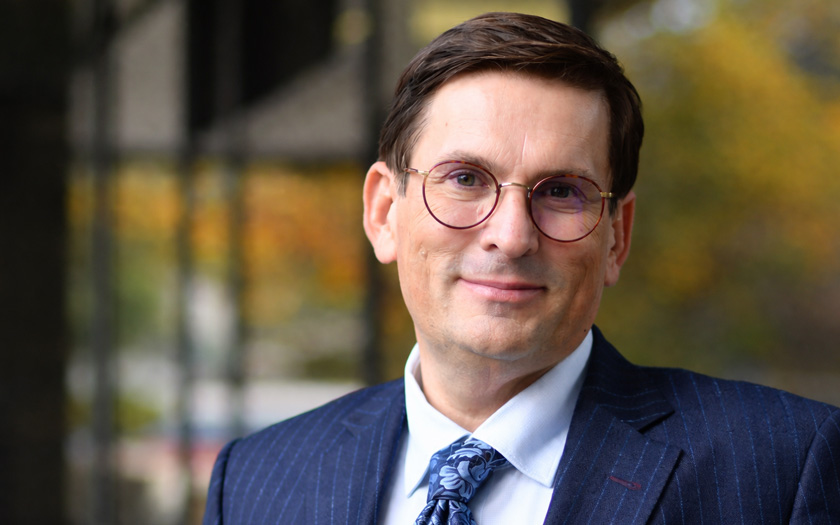
Danijel Koletić is one of the recognised names in public relations and event organisation across the region and beyond. With more than 30 years of experience in event management, corporate communications and crisis management, he began his career on national projects in Croatia and today works globally – from Europe and the Middle East to Asia.
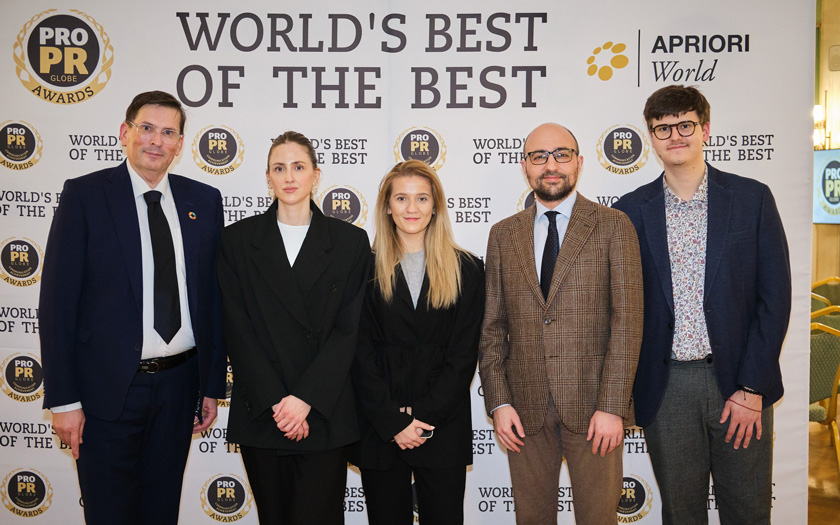
He is the founder and president of the international PRO.PR conference, the initiator of the PRO PR Globe Awards, and the first director of the London School of Public Relations in Croatia. As the head of Apriori World, he advises clients around the world in strategic communication, business development and crisis management. He is also behind a number of internationally recognised and award-winning projects, among them the “Soaps with Dots” project, carried out in cooperation with the Zagreb Association of the Blind, which received the IPRA Golden World – Contribution Award in 2020 for PR activities aimed at achieving one of the UN Sustainable Development Goals – in this case, reducing inequalities.
In an interview for PoslovniTurizam, Danijel Koletić speaks openly about the reality of organising events – from choosing destinations and working with hotels to improvisation, budget constraints and unexpected situations.
Your experience in event organisation began very early, while you were still a child, through beauty contests and tourism events. Today, you stand behind the international PRO.PR conference and numerous other international projects. Looking back at that career journey – what has changed most fundamentally in the event organiser’s job, and what has remained the same?
Every individual has their own mission, and the same applies to event management, which is made up of professionals the public often never even sees. The key is to have passion and courage – without that, it is better not to enter event organisation, unless you are financially secured by political backing.
When I look back, my first event was the “Miss Parking Lot” contest, held in a parking lot on Pavla Radića Street in Crikvenica, where I lived. As a boy, I observed, absorbed everything and had the courage to begin. Every few years, thanks to the development of new technologies, new possibilities emerge. However, beyond having an idea – which many people have today – it is important to have the courage to turn it into reality.
The secret of PRO.PR’s longevity: persistence and quality
This year, the PRO.PR conference will be held for the 23rd time. How did it begin, with what goal, and what is the secret of its longevity? How many participants does it bring together?
In 2002, I was given a crisis communication assignment for the Government of Montenegro, financed by the EU and USAID. Due to legal procedures, I had to open an office in Montenegro, but despite the business opportunities, I had no ambition to work in that market in the long term.
That was when I realised that communications carry enormous responsibility – not only in our case, but globally. I decided to bring together people who were beginning to engage more seriously with the profession, and that is how the international PRO.PR conference was created.
The first conference was held in Herceg Novi and gathered 138 participants. Due to the political circumstances at the time, participants came from Bosnia and Herzegovina, Serbia and Montenegro, while speakers came from Slovenia and Croatia.
The secret of PRO.PR’s longevity is persistence. From the very beginning, it has been one of the most influential, but also one of the most financially accessible events, thanks to its narrow focus on public relations. PRO.PR has almost no marketing campaigns – it relies on direct invitations. My motto is “quality over quantity”. This does not mean that other conferences lack value, but that I want to give participants closeness and quality business networking, and I believe I have succeeded in that.
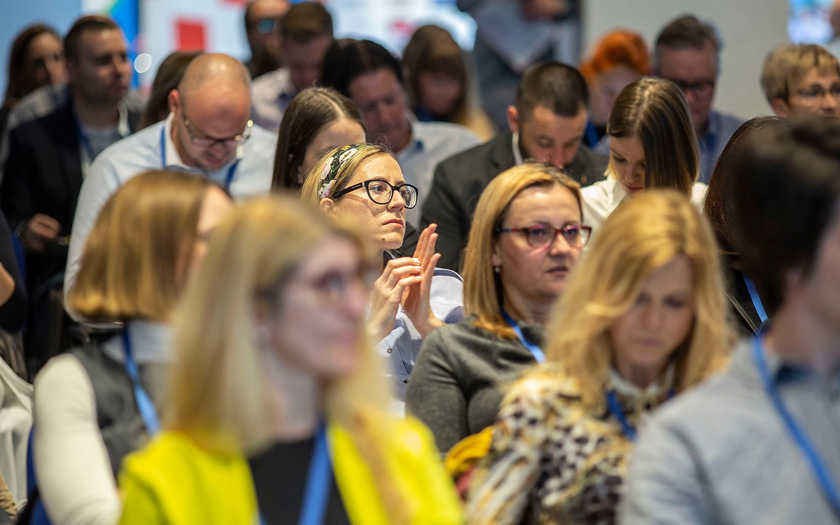
The new edition is in Podgorica, while last year’s was held in Selce. Where else has it been held over the years? What are the key criteria when selecting a destination and hotel, and what makes an ideal partner for an organiser of an international conference? Which destination has stayed in your memory the most in that regard?
Two destinations have stayed with me in particular – Ohrid and Zlatibor. In those locations, the leading tourism figures, as well as the mayors, recognised the value of the participants who had arrived and offered more than was expected.
The first criterion when choosing a destination is the understanding and support of the destination’s leading people. It is important for me to emphasise that PRO.PR is not a spectacle. It carries knowledge, but also the quality of every individual who is part of the conference – whether a speaker, participant or media representative.
Last year’s conference gathered 32 speakers from eight countries. In practice, what does the process from idea to speaker confirmation look like, and what is decisive in getting top-level speakers to accept participation?
I have a strong passion for the programme, and what matters most to me is that everyone finds something for themselves in the programme content. That is why we bring together speakers from the private, public and NGO sectors. This region is known for being made up of good hosts – we always give more, and speakers recognise that. They take memories with them. I use the network of contacts I built over the years through investment, travel and participation in other conferences to reach people I believe can make a significant contribution to the programme. It took me ten years to build that.
How much do your memberships and positions in international organisations help in that process, and how much do the personal relationships you have built over decades matter? Where is the real “lever” of success?
I joined international organisations at their invitation. They certainly have influence because they open certain doors, but without personal reputation there is no real opportunity. Recommendations and positions only matter if they are backed by consistent and recognisable professional work.
Can you share one specific situation in organising PRO.PR when you faced a major challenge – and how you solved it?
The biggest challenge for every organiser, including me, is when a speaker cancels at the last moment, even though they have already been announced. At that point I feel great discomfort because I have not delivered what was promised. Fortunately, participants mostly understand that there are life circumstances that cannot be predicted.
One of the most unpleasant situations happened when waiters tried to charge us at the end for 30 bottles of wine that nobody had drunk. Although the waiters were dismissed, the discomfort of having to prove you were right remained – calling guests to confirm what they had consumed and what they had not. But all of that is life coloured by opportunities and challenges.
As much as 70% of an event’s success comes from the venue
From your experience of working with hotels and venues – what are the three things that most often distinguish an average venue from one organisers want to work with again?
First, if a hotel does not have sufficient technical staff capacity, its own quality equipment, sound system, lighting, stage and lectern, regardless of external suppliers, it should not present itself as a congress hotel or congress centre.
Second, the availability of people from the sales department and the MICE department is extremely important. During conferences, these departments must be organised in shifts so that the organiser does not have to search for the banquet manager, the technician or reception – the contact person must always be available.
Third, parking spaces. You can have an excellent destination, but if there is not enough parking nearby or directly in front of the hotel, then you have a major challenge. Of course, everything depends on protocol, because foreign speakers arrive by transfers, while domestic and regional participants mostly arrive in their own vehicles.
P.S. A wellness centre is always an added advantage.
You have organised beauty pageants, sports tournaments, music and cultural events, and business conferences. Which type of event is the most demanding from an organisational point of view – and why?
Every event has its own magic. As executive director of the Split Festival, I worked with artists; as director of the WTA 1750 Croatia Ladies Open, I worked under very strict rules and procedures; and as director of the Supermodel of Croatia competition, with – as I like to say – “beauties and beasts”.
There is no more or less demanding event. Everything depends on financial possibilities, but from my perspective, as much as 70% of an event’s success comes from the venue, which in itself provides added value. It is not the same to organise a wedding in the Emerald Hall of the Esplanade Hotel or in a countryside restaurant. The magic of love will be the same, but the experience and the memories will be different.
Improvisation is sometimes the most expensive option
In your opinion, what is the most expensive mistake an organiser can make – the one that often is not visible immediately, but later proves very costly?
The biggest mistake organisers make is greed. When a client wants a spectacle but does not have the appropriate budget for it, improvisation is often imposed as the solution. I always say that one can be a master of good improvisation, but improvisation can also be the most expensive option.
I travelled across the region from Vardar to Triglav, and we often had to create atmosphere from scratch. It is not the same to organise PRO.PR at the Hyatt in Belgrade and at Hotel Padova on Rab ten years ago. Participants’ perceptions and standards differ greatly.
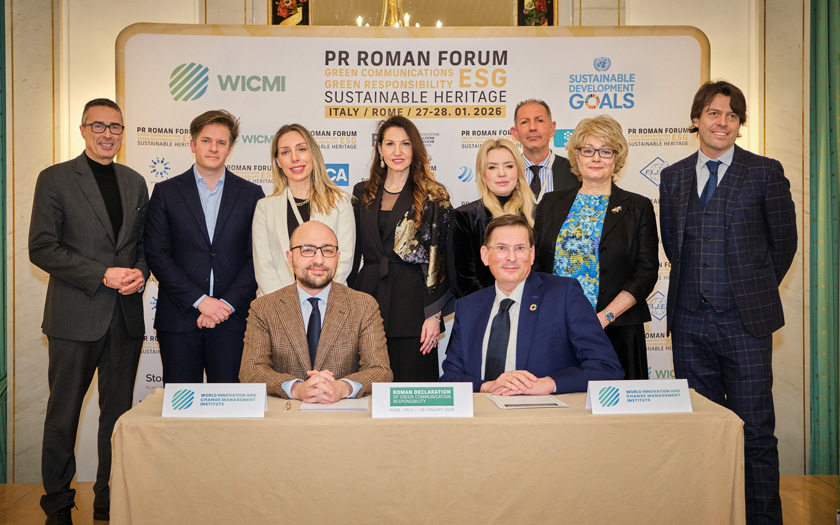
PR Roman Forum 2026 is a new major project that was recently held in Italy. What stands behind it, how did the idea emerge, and what value do you want the event to bring to participants and to the host destination?
The city of Rome recognised the value and content of the conference and offered us free use of an auditorium with more than 1,300 seats. My vision and goal, which we achieved, was for the Rome Declaration on green responsibility in communications to be signed in Rome.
We brought together the top names of the global museum scene – The British Museum, The Grand Egyptian Museum, UNESCO Heritage Center Ephesus and the Museo del Prado – who spoke about sustainable heritage and recognised our vision.
For Tina Mažuran, who coordinated the conference, and for me, it was the challenge of a lifetime, primarily because of differences in business culture, the Italian mindset and the conservative mentality of Rome. There was not a day when we did not ask ourselves whether it was possible that in 90% of situations Italians behaved outside the basic norms of business culture.
Events are now the strongest PR tool
How do you view the relationship between PR and events today – is PR a tool for promoting events, or are events PR tools? Especially now, when social media fatigue and digital fatigue are increasingly being discussed.
Today, events have become the strongest PR tool. Classic PR has lost its primary function of informing, because a large portion of content – unless politically orchestrated or related to crises, natural disasters, sport or wars – comes down to paid narrative. Of course, there are still exceptions in editorial policies.
Most PR agencies today organise events as part of their projects. At Apriori World, we work on our own projects – the PRO.PR conference, PR Roman Forum, Youth Business Camp Adria and the Agrostartup conference. Our event production is so creative that we advise clients on event management even beyond Croatia’s borders.