New investments by Plava Laguna: Minister Glavina visited the renovated Hotel Garden Istra and the Savudrija Resort construction site

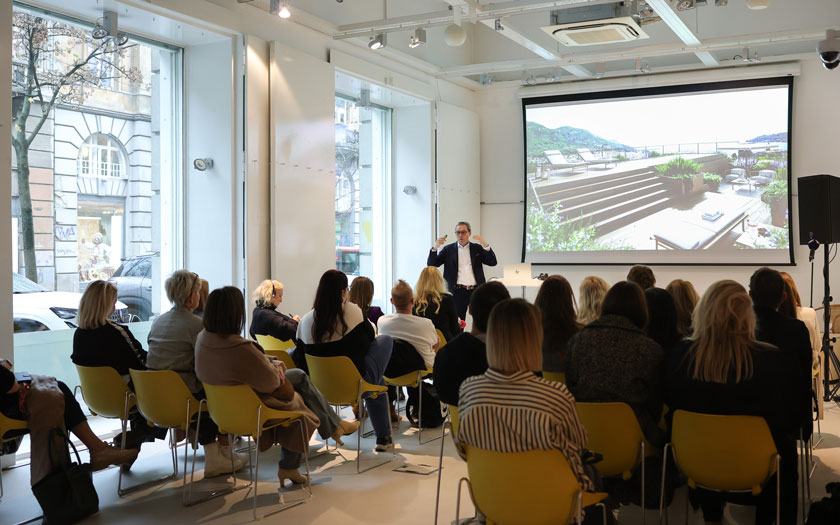
Falkensteiner Michaeler Tourism Group (FMTG) presented its new investment plans for Croatia in Zagreb, reaffirming the country's importance in the group's long-term development strategy. Among the specific projects, an investment of €30 million in the new Falkensteiner Camping Pila on Krk stands out, while around €102 million is earmarked for the further development of the Punta Skala resort near Zadar. At the same time, a comprehensive transformation of Falkensteiner Resort Borik is being prepared and the group continues to expand its tourist real estate business under the Falkensteiner Residences brand. In total, around €300 million is planned to be invested in Croatia over the next five years.
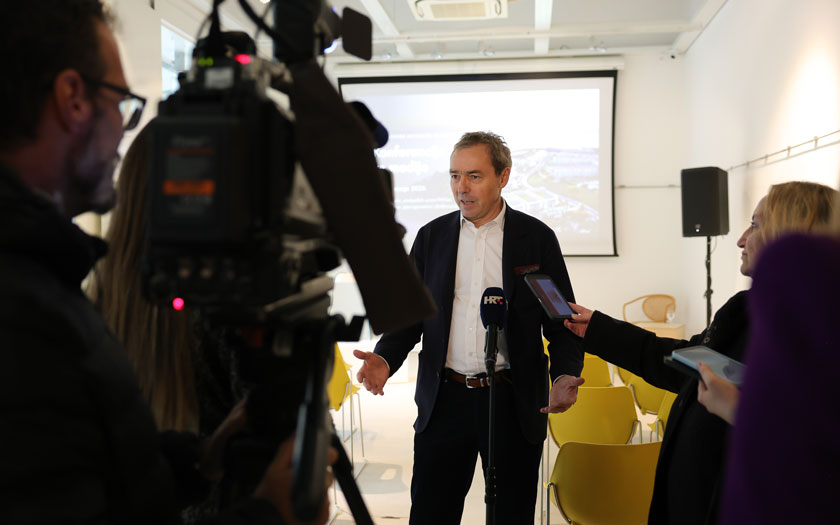
“For many years, Croatia has been one of our most important markets and will remain so in the future. We believe in the country's long-term potential as a premier and internationally competitive tourist destination. Our goal is not simply to create more capacity, but to develop the tourist offer sustainably and attract new guest segments,” emphasized Otmar Michaeler, CEO of FMTG. He also addressed the challenges facing Croatian tourism, warning that price increases have not been accompanied by a corresponding improvement in the quality of the offer. According to FMTG analyses, prices in Croatia rose by approximately 70 per cent between 2015 and 2024, while service quality and destination management did not progress at the same pace. He noted that this year the company experienced the most difficulties with demand precisely in Croatia, in contrast to Italy and Greece. This applies particularly to guests from German-speaking countries, namely the Austrian and German markets, who are more sensitive to high prices relative to the level of service they receive.
As additional structural problems, he cited the fragmentation of accommodation supply, a lack of quality higher-category capacities, administrative barriers and insufficiently developed destination management. He also believes that a large share of apartment accommodation concentrated in a short summer season makes it difficult to create year-round jobs and ensure the long-term sustainable operation of destinations.
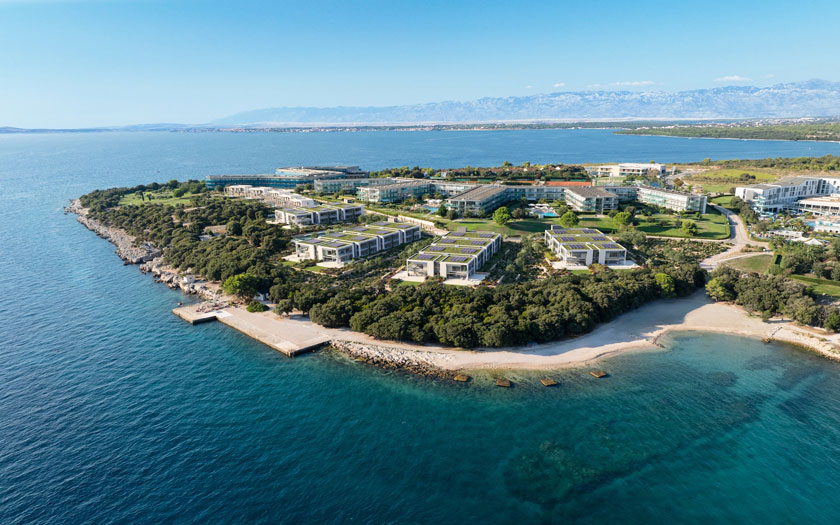
Punta Skala with a €102 million investment plan
The largest single development program relates to Falkensteiner Resort Punta Skala, a complex spanning around 30 hectares with 1.8 kilometres of coastline. Investments of approximately €102 million are planned over the coming years and an important part of the program is the thorough modernization of Falkensteiner Hotel & Spa Iadera. Around €35 million will be invested in renovating this five-star hotel. The project includes the refurbishment of 184 rooms and suites, the further development of the Acquapura SPA centre covering around 6,000 square metres and new gastronomic and common areas. London-based studio Muza Lab and Aggi Bruch Interior Design will work on the design, with works scheduled from autumn 2027 to summer 2028.
The resort's development also includes new seaside facilities, among which are a new beach club concept and an additional gastronomic offer. The construction of an aquapark in the Fortis Club zone, which would be accessible to guests of the entire resort, is also under consideration, though that project is still in the elaboration phase.
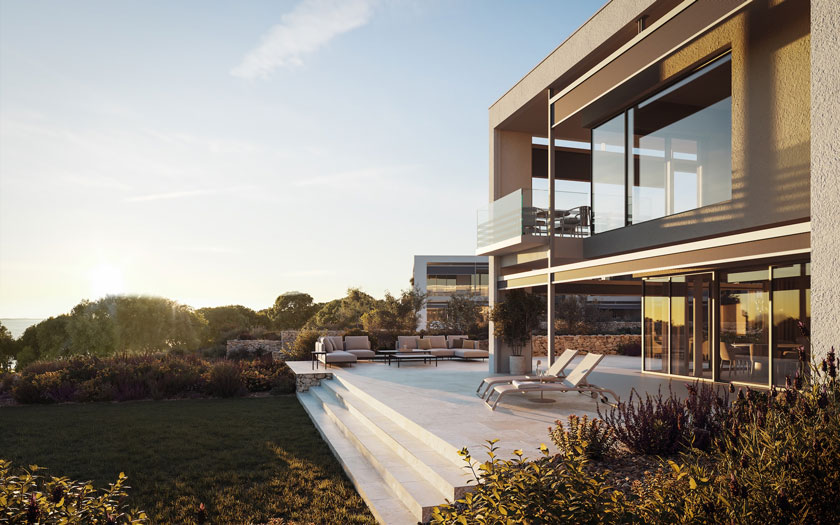
Alongside the hotel segment, Punta Skala is also developing its luxury tourist real estate offer. Following the completion of the Residences Aurora project, with a total of 88 apartments across four buildings, construction of a new complex is underway: Azura comprises 94 apartments in seven buildings and six private villas with their own swimming pools and gardens. The investment value is around €49 million, with completion planned for spring 2028.
Branded residences an increasingly important part of the business model – buyers in Punta Skala mostly Croatians
Alongside traditional hospitality and camping, FMTG is increasingly developing the branded residences segment, namely tourist real estate that combines private ownership with the services and infrastructure of an international hotel brand. Depending on the project, owners are granted access to the resort's restaurants, wellness and other facilities, as well as professional apartment rental management. “The new licensing model opens up additional revenue opportunities for us beyond traditional hotel management and is an important next step in the development of our Falkensteiner Residences business area,” said Michaeler.
Buyer interest in Falkensteiner's residences in Punta Skala near Zadar is also confirmed by sales results. Out of a total of 88 apartments in the four buildings of the Aurora project, 73 have been sold and according to Michaeler, buyers from Croatia predominate. It is also interesting that the achieved price per square metre is higher than in Italy, which further speaks to the positioning of this tourist real estate segment on the Croatian market.
In addition to Croatia, the model is being developed in Italy, Austria and the Czech Republic. In September 2026, Falkensteiner Resort Lake Garda opened in Salò, which upon completion of all phases will comprise 174 apartments and four villas. In November, the first licensing agreement for the Falkensteiner Residences brand was concluded for a project in Rokytnice, Czech Republic. There, the Trigema group will develop a five-star resort with around 150 rooms and 60 residences, while FMTG will take over hotel management and the residences will be sold under the Falkensteiner brand.
Ambitious plans for Borik await administrative solutions
The group is also preparing new development plans for Falkensteiner Resort Borik in Zadar. The goal is to upgrade the existing location and shape an offer that will meet the needs of families, as well as guests who expect a higher level of accommodation, wellness and sports facilities. Among the options currently under consideration are new residences, additional hotel and recreational facilities and the modernization of the spa and sports offer. Borik is also set to become an important location for the development of the new Club Funimation by Falkensteiner brand, intended for four-star family resorts with a comprehensive all-inclusive service.
However, the project is still in the planning phase and Michaeler singled out lengthy administrative procedures as one of the main obstacles. According to him, work on various permits and concessions for Borik has been ongoing for more than twenty years, which shows that administrative barriers in Croatia have not significantly decreased. FMTG is cooperating with the City of Zadar on its development and specific investment amounts and completion deadlines will be known once further planning and administrative procedures are completed.
Camping Pila on Krk opens in July 2027
The third major investment project concerns the camping segment, which FMTG has been developing as a separate business area in recent years. Following the operation of Falkensteiner Camping Zadar and expansion into the Austrian market, the group is investing around €30 million in transforming Falkensteiner Camping Pila in Punat on the island of Krk.
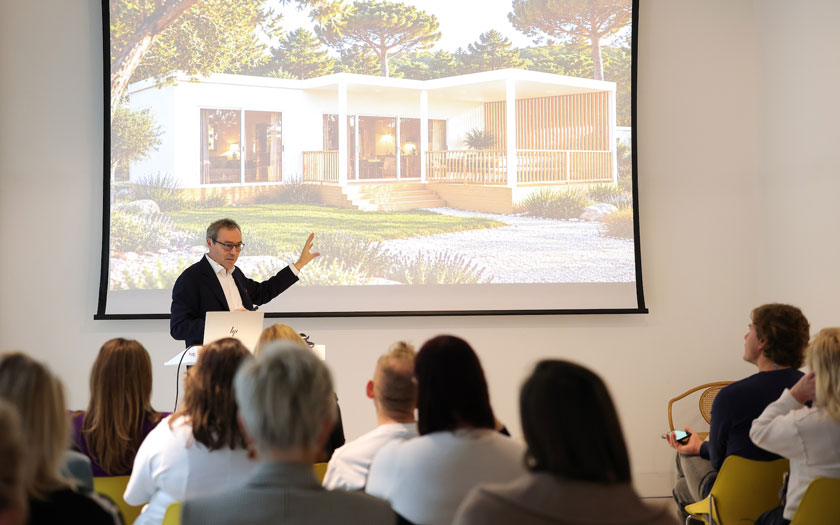
The opening of the new premium camping resort is planned for July 2027. Guests will have at their disposal 100 modern mobile homes and 359 pitches, alongside four swimming pools, a children's water area covering around 540 square metres, water slides and a spray park, as well as an infinity pool intended for a quieter holiday. The offer will be complemented by the CAMPO° restaurant, a poolside bar and a beach bar, as well as sports and wellness facilities including tennis, padel, fitness, yoga and saunas. The “Camping, just better” concept is based on combining a stay in nature with the level of comfort, gastronomy and service expected in hotel resorts.
Seventy years of Falkensteiner: tourism constantly reimagined
In 2027, Falkensteiner celebrates 70 years of existence. What began in 1957 as a family business has evolved into an international tourism group that today covers the entire tourism value chain, from project development and financing to operational management.
“We have been reimagining tourism for 70 years. For us, this means preserving what has proven good while having the courage to set out on a new path. Today, camping is far from just a simple form of holiday, as it can combine a premier resort experience with nature, design and full service. With branded residences, on the other hand, we create a link between private ownership and professional hospitality. This development shows how diverse tourism can be today. It is precisely this path that we will consistently continue in Croatia as well,” concluded Michaeler.