Vesna Pritchard: Outstanding PCO agencies always deliver extra value

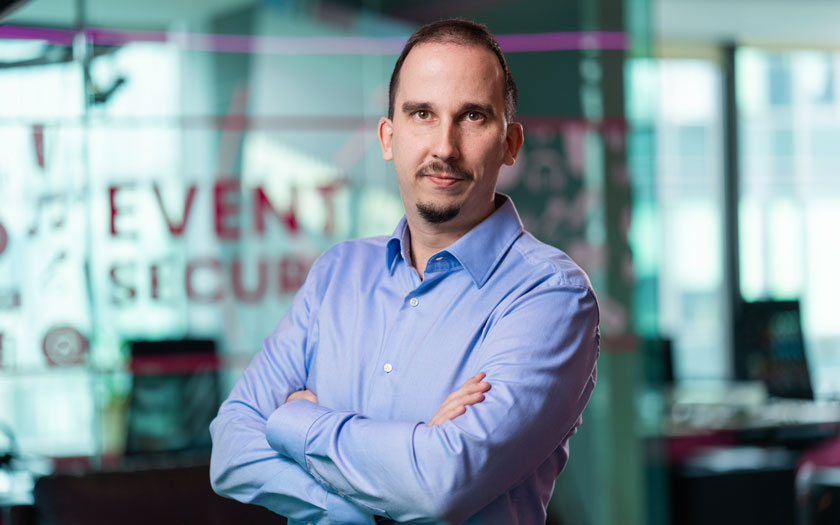
Berislav Marszalek, the founder of the Entrio.hr platform and current Chief Innovation Officer of the Entrio Group, remains as grounded and approachable as he was in the early days of this now highly respected company. Over roughly 15 years in the event ticketing market, Entrio has evolved into a leader across Southeast Europe, currently operating in five countries within the region. In an engaging conversation with PoslovniTurizam, Berislav reveals what the journey to finding investors looked like, how acquisitions contributed to their expansion, what he has learned about entrepreneurship and what trends are shaping the event industry.
Let’s start right from the beginning: in 2011, you began as a student project. How did you come up with the idea to launch an online event management and ticketing platform at a time when Eventim dominated our market?
It all started at university. I studied at the Faculty of Electrical Engineering and Computing (FER) and was never actually interested in programming; my interest was, and still is, engineering, electricity and wires. A friend came up with the idea to create something revolutionary, to bring digitalisation to the world of ticketing. Even though I said I would never be a programmer, I still ended up programming in the initial phase. I developed the idea with a few friends, but we went our separate ways along the journey, and within a year, I was left alone on the project.
You were recognised very quickly by business angels who invested the first serious money into Entrio.
Yes, we won a business plan competition organised by eSTUDENT and e-alumni, which involved several institutions as well as business angels. We won 210,000 kunas, which was a huge amount of money for a startup project back then. With those funds, we started the company, hired our first programmer and entered the market.
First encounter with reality: the market was not ready for complete digitalisation
It didn't all go smoothly at the beginning?
We started with the idea of digitalising, meaning moving the entire ticketing experience to mobile devices to raise the rate of digital sales and online payments, as smartphones were just taking off at the time. However, physical outlets were still dominant back then; tickets were sold in shops or travel agencies for cash.
We fought against that, trying to turn everything into a digital process, but we were hit by our first "slap" of reality – we realised we couldn't force a new market reality, but rather had to adapt and change trends gradually. Just because my friends and I all had smartphones didn't mean everyone else did.
Therefore, we began building a network of retail partner outlets. We enabled people to pay for a paper ticket at a physical point of sale. From that point on, we could move towards stronger digitalisation.
From the very start, our concept was a self-service system – allowing the organiser to create an event on the platform themselves, launch sales, change prices and so on, which was different from the large ticketing systems. With this approach, we managed to capture a large volume of small organisers and smaller events. We automated their ticketing and distribution processes, introduced advanced analytics, provided access to a massive customer base and paid out earned funds, enabling them to scale and speed up their business. That is exactly how we grew too.
It wasn't just organic growth. You looked for various funding sources right from the start. Was that a deliberate strategy?
From the beginning, I had a big vision and high ambitions – I wanted to dominate Europe in this business. I didn't know exactly how I would do it, but I knew I would build something big. That is my passion, and the same thought continues to drive me – to build a larger, international, pan-European story. But for that, you need capital. We started with business angels, which meant a great deal to us because that investment allowed us to make our first hires.
I think I am the only entrepreneur in Croatia who has utilised every single financing instrument available.
We took out loans, participated in a smaller EU project and ran a crowdfunding campaign on the Funderbeam platform, where we raised around 135,000 euros, which accelerated the opening of the Slovenian market.
The next very bold move happened during the coronavirus pandemic. In 2021, we made major system adjustments and shifted towards hybrid events, which allowed us not only to survive but also to grow. Thanks to that, we secured a half-million-euro investment from the Fil Rouge venture capital fund. This enabled even faster development and led us to our largest investment in 2024, when the private equity fund Invera Equity Partners invested 9 million euros in us, entering our ownership structure. This allowed us to make our first acquisitions and pushed our regional consolidation strategy forward. We took on the role of market leader in the region. Today, we operate in five markets – Croatia, Slovenia, Bosnia and Herzegovina, Serbia and Montenegro – with a team of around 70 people, close to 100 million tickets sold and around 9 million euros in revenue.
Looking back now, there were tough times, but we proved that we are highly resilient and capable of adapting in difficult situations, that we can pivot when things don't go according to plan and change direction to survive and grow even faster. During the worst period of the pandemic when everyone else scaled back, my partner (now wife) Sonja and I boldly decided to invest our private money. We kept our excellent team and saw an opportunity in turning to virtual events. That was what performers, organisers and audiences sitting at home needed at the time. It was precisely on the back of hybrid and virtual events that we secured our next major investment and entered into acquisitions – first the domestic platform Ulaznice.hr, which specialises in sports and cultural events, and just a few months ago, Gigs Tix, which marked our entry into the markets of Serbia and Montenegro. At the same time, we have opened negotiations for the acquisition of similar platforms in new markets across the region, which we plan to finalise by the end of this year.
There is much more than technology behind every ticket sold
We remember your first major success; in 2013, you were the sales channel for the Pablo Picasso exhibition at Klovićevi Dvori, where one hundred thousand tickets were sold. But the peak was last year with Thompson’s concert?
Exactly, Thompson’s was the largest ticketed concert in history. I am proud that we, as a platform, made it possible. It is our most complex project to date. We had more than 300 people on the ground for ticket scanning and customer support. That showed the full scope of our experience and knowledge. We proved that a platform from Zagreb can compete with the largest and most complex global systems that have much bigger budgets, invest far more and sell many more tickets. What we did last year is something nobody else in the world has done!
You mentioned that profit margins in the ticketing industry aren't large, but many people perceive services like Entrio merely as sellers charging high commissions on tickets.
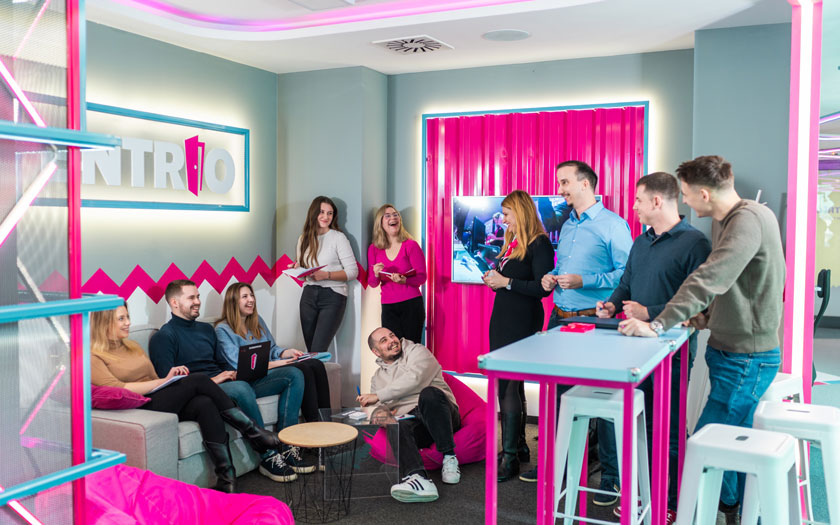
es, people often think: there's some server running tickets over there, earning big money without much effort while the owners relax. However, ticketing encompasses an entire spectrum of services. First and foremost, developing a complex technological platform that allows the sale of huge volumes of tickets, then price management, analytics and ticket distribution online, as well as at physical outlets. On the other hand, customer support is crucial; we have a team of over ten people who constantly respond to thousands of customer inquiries. There is also our team of over 20 experienced account managers, people with rich experience in the event industry who help our organisers every day with advice and support throughout the entire organisation and ticketing process, right up to the moment visitors enter the event. Our marketing team of nearly ten people helps organisers optimise campaigns and maximise their reach to buyers.
For an organiser to sell out a concert for ten thousand people requires an immense amount of work, paperwork, administration, finance and accounting. We offer the largest number of different payment methods in Croatia. However, a significant portion of tickets is still sold physically, around 15 to 20 per cent. You cannot achieve serious sales in the music or sports segments without physical points of sale.
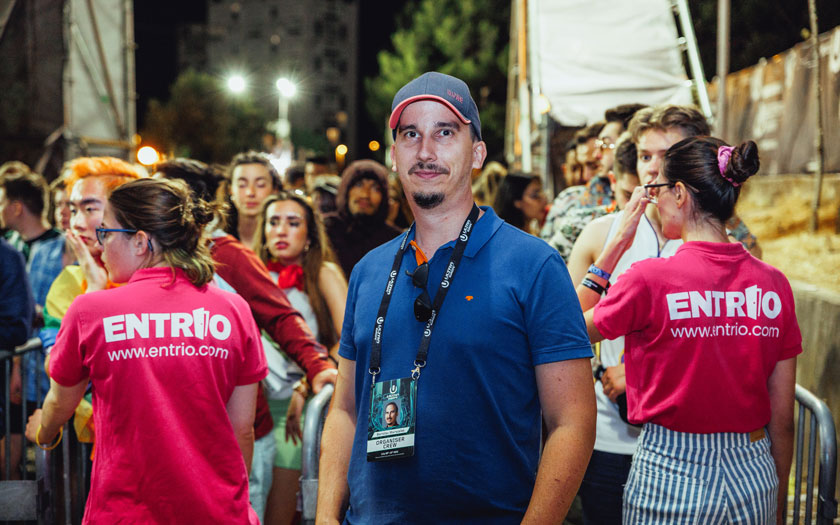
We have more than 300 people working at events throughout the year handling registration and ticket scanning. In addition, we frequently advise organisers; we have deep insight into the industry, we know the trends and we understand best practices. We are often asked for help or recommendations regarding production or ticket pricing. We act as partners to organisers, doing a massive amount of promotion for them through our own channels, as well as external media and portals.
Lately, we have been focusing more heavily on the buyers as well. Our mission is to enable them to find out in time where something is happening. In an independent survey, more than 80 per cent of people told us they often find out too late about events they definitely would have attended and paid for a ticket. That is why two months ago we launched the Event Discovery project, which brings together all types of events in one place, including those not in the Entrio sales network.
I believe we are entering a phase of rediscovering the analogue
Have you jumped on the artificial intelligence train and automated certain processes? How do you see the development of AI in the event industry?
Yes, we use AI on some projects. For instance, for Event Discovery, it helps us search, classify and link data into various categories. We also use it in development and programming. However, I would say we are moving cautiously with the application of artificial intelligence.
We are talking about a highly useful technology, the biggest technological shift of recent decades, but it is still in its early stages. There is a lot of noise and hyped-up information out there.
Security, personal data protection and maintaining business secrets are major question marks. AI will drastically reduce simple administrative professions. However, it will take a very long time for AI to replace people who are truly good at their trade and have experience, if it ever does.
Our civilisation is only just learning how to live with and use artificial intelligence. We will see which direction it takes. Ultimately, what is the point of automating our entire lives? The pandemic showed us the importance of human interaction; socialising is deeply embedded in human DNA, and virtual things and screens are just a phase. Figures and trends show that screen time is declining among younger generations. In the US, there is even a trend where young people are buying "dumbphones" and going out to playgrounds; they have started rediscovering hanging out in person, whereas until recently, TikTok ruled supreme. Personally, I believe these are cycles and that we are now entering a phase of rediscovering the analogue.
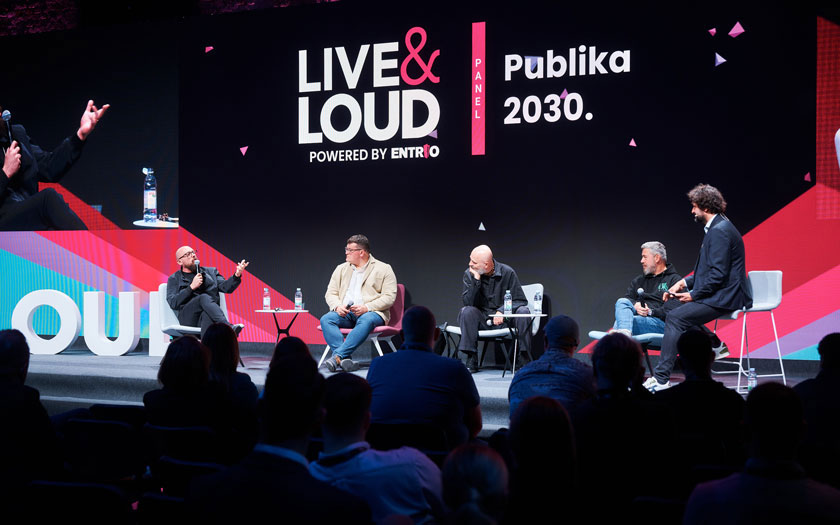
Gathering the industry - the second edition of the Live & Loud conference on 12 November at Lauba
Last year you launched the first event for the event industry, the Live & Loud conference. You have already managed to win a professional award for that event. Where did the idea to become an event organiser yourself come from?
This is one of our strategic projects, permanently etched into our plan. Its second edition will take place on 12 November at Lauba. First and foremost, we want to gather professionals from the event industry, and not just organisers, but also suppliers, production companies and agencies, as well as event venue representatives, so we can exchange knowledge, connect and meet new people… We also plan to bring in foreign experts to tell us about new developments and trends from abroad. We are bringing education, but even more importantly, socialising, networking and fun.
Do you plan to involve experts from the meetings and incentives industry a bit more? In general, what do you think about cooperation between different segments of the event industry? It seems to us that there is no real connection or cooperation between, for example, congress organisers and event agencies.
The problem is that our entire industry, all its components, are not actually connected. I believe that is bad, especially when we need to fight for ourselves; we lack representatives who can communicate with institutions. Croatia is, fortunately or unfortunately, a country where tourism is one of the strongest sectors, and events, business tourism and cultural tourism are a vital part of it. Personally, during the pandemic, I became active with institutions with the aim of connecting the industry and gaining recognition for our importance, but that kind of work is not my primary focus. We have all returned to our businesses, so today we don't have proper representatives; the industry is fragmented.
As a result, cultural events don't acknowledge sports events, and sports events don't acknowledge congresses or the event industry, even though they all share many common denominators in organisation – from security, venue selection, production setups and equipment, to ticketing, marketing, safety and crowd management…
Everyone involved in providing an experience and gathering people at a certain time in a certain place around a certain topic shares this in common, but unfortunately, we haven't yet reached the point of permanently uniting.
What are currently the most important trends in ticketing? Is it AI, dynamic pricing or some new sales models?
A lot of things are happening simultaneously; it's hard to identify just one specific trend. Right now, artificial intelligence is a common topic, and we are still learning what its optimal application would be, for instance, in customer support. Dynamic pricing is not yet as prevalent in our region; it is much more common with mega-events that sell out quickly, such as concerts by major global music stars. Also, there is a lot of thought going into security, for example, ticket wallets and protection against ticket scalping using dynamically generated codes. However, promotion and marketing remain the most interesting topics for everyone; we are looking at where to take the next step, tracking the shifting consumer habits of new generations, and the question is which marketing strategies will succeed in reaching them in the future.
A glimpse into the future, calculated risk and a misconception about a surname
Where do you see Entrio in five years? Are the biggest opportunities in the geographical expansion you’ve started, in new products or in developing new platform functionalities?
I see Entrio as the starting point for everyone planning to go to events, whether business, sports, music or cultural. We are certainly continuing our geographical expansion and regional consolidation, and in five years, we will surely be the leader across Southeast Europe by all parameters, from the number of tickets sold onwards. We want to continue innovating, introducing new projects and helping organisers optimise their businesses to sell more tickets, while on the other hand helping buyers have even more fun, educate themselves and find out about events that interest them. Music, sports, culture and business events are the four verticals we deal with the most.
If you were launching Entrio all over again today, what would you do differently? What lesson would you have liked to master in advance?
Perseverance is an entrepreneur's most important virtue; you shouldn't give up, but rather listen to your inner voice. I am quite good at that. What I would have liked is to have realised earlier that the behaviour of my immediate circle of people usually does not reflect the societal average. For example, the idea to build a smartphone app when they were just starting to hit our market took us a couple of years and slowed us down. Another thing I realised along the way is that for successful business operations and growth, taking measured, calculated risks is crucial, rather than always playing the safest cards. I lacked that earlier.
What do people in the industry think about Berislav that is actually completely wrong?
An interesting question. Many people think that because of my unusual surname, I am Polish, but aside from some distant Polish roots that are hard to trace anyway, I am a born-and-bred Zagreb native and actually have no connection to Poland.