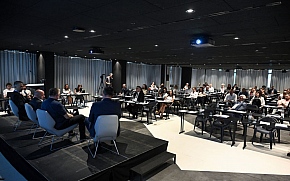
Money Motion powers Automation Summit: Leading regional AI conference in Split gathers business elite


Artificial intelligence is rapidly transforming the way Croatian travellers plan their holidays, and consumers are increasingly willing to trust it with more complex tasks. Although approaches differ depending on income level, openness to new solutions, choice of destination (domestic or international travel) and attitudes towards budgeting, the common goals remain the same: to save time, use services that help save money and simplify the decision regarding destination choice. These are precisely some of the key findings of the latest Visa Travel & Payment Intentions Study CEE 2026.
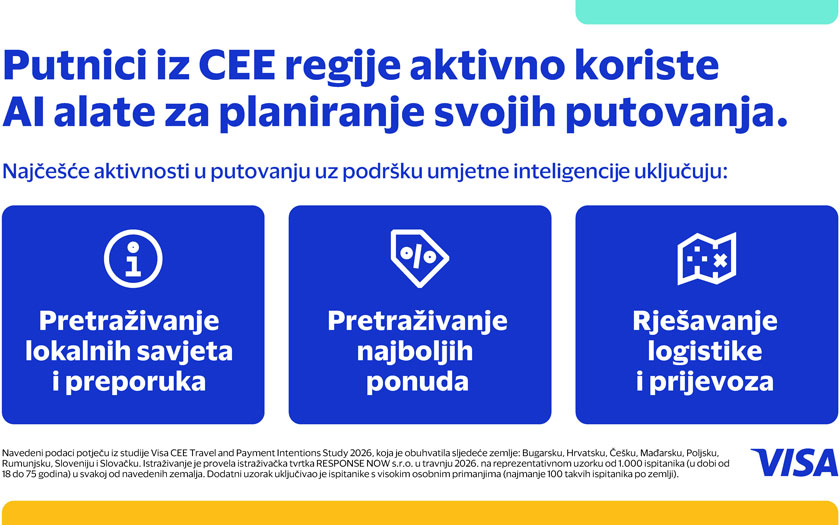
Artificial intelligence is becoming a travel companion
The use of artificial intelligence in travel planning is rapidly becoming more widespread. Already 15% of Croatian travellers state that they use AI regularly, while 25% use it occasionally – which is more than eight times more than last year when it comes to planning holidays with the help of artificial intelligence. Although the use of AI is expanding across all countries covered by the study, the frequency of its application still varies depending on income level, with higher-income travellers using it somewhat more frequently during the planning phase.
Travellers rely on AI the most to find local tips and recommendations, search for the best deals and handle logistics and transport. They highlight time savings, 24/7 availability and ease of use as the key benefits.
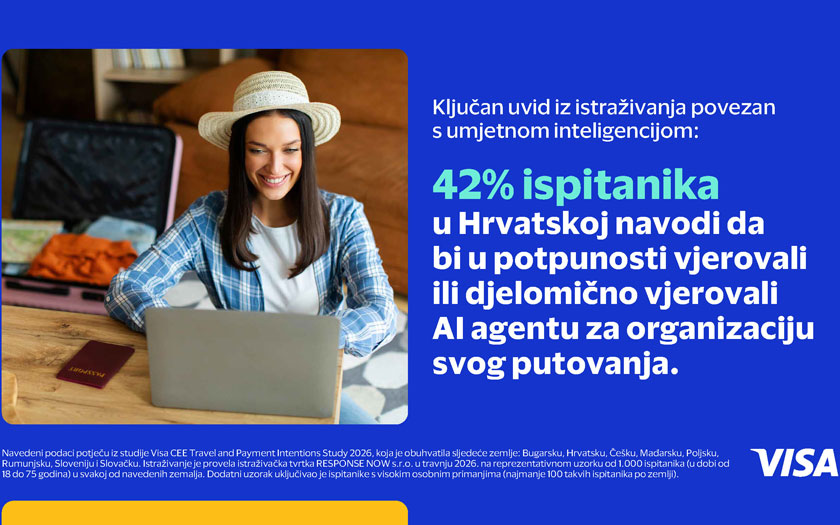
Significantly, 42% of respondents (or 45% among the higher-income group) state that they would fully trust an AI agent to organise their holiday or hand over certain tasks to it. This clearly indicates a growing openness towards automation, not only in the planning phase but throughout the entire travel process, right up to the payment itself. At the same time, it is important to emphasise that the final decision always rests with the user, while the transaction itself is adequately protected.
Travel plans: flexibility versus structure
As many as 80% of Croatians plan to travel domestically, while 54% intend to travel abroad, with half of all trips taking place during the peak summer season (50%). Among the most popular international destinations, Italy, Slovenia and Bosnia and Herzegovina stand out.
At the same time, higher-income travellers show significantly greater flexibility: although 50% of them still travel during peak periods, an equal proportion (50%) choose to travel off-season, prioritizing comfort, avoiding crowds and often seeking more exclusive experiences.
This group is also more inclined to international travel (74%) and has a more flexible approach to budgeting – while 40% plan their travel budget in advance, this share stands at 53% in the representative group.
Payments: convenience becomes key
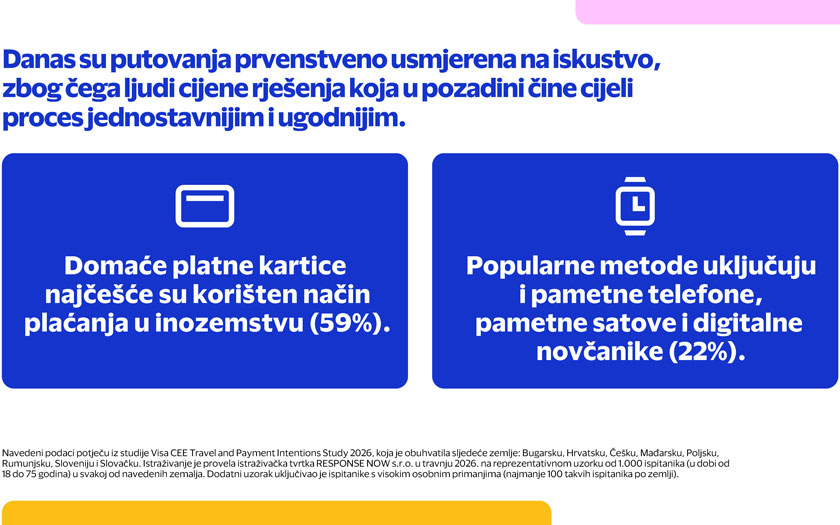
Digital payments remain the top choice whilst travelling. For instance, 59% of Croatians plan to pay abroad with the same card they use at home, while 22% will opt for payments via smartphones, smartwatches and digital wallets.
The advantages of digital methods also come to the fore when paying for travel-related expenses online, where users most value the convenience, speed and security of transactions. For card payments, these precise characteristics were highlighted by 52%, 42% and 36% of respondents.
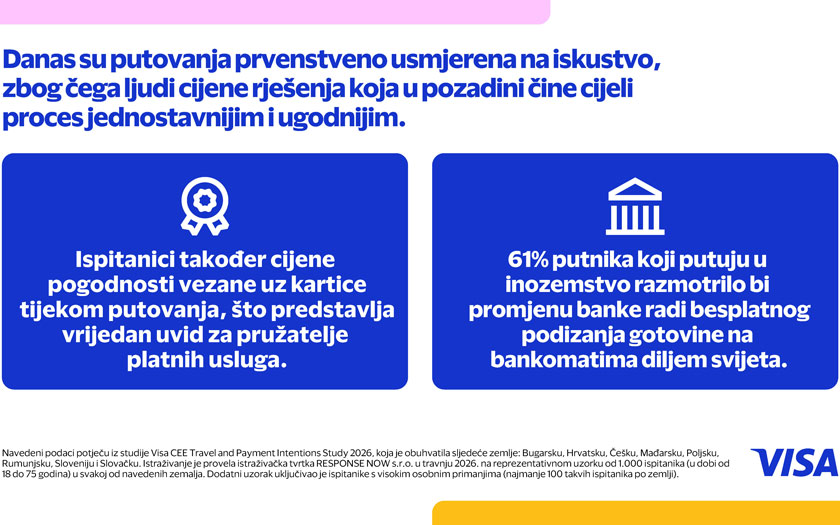
However, despite increasing expectations regarding convenience, many travellers still do not fully exploit the benefits offered by payment cards. These are the so-called Value-Added Services (VAS), which include additional functionalities linked to cards and enable banks to create a more attractive and differentiated user experience. Many of these benefits are directly related to travel, such as airport lounge access, discounts and loyalty programmes.
Among average travellers, credit cards with loyalty programmes, mobile apps with functionalities for travellers and foreign currency accounts are used most frequently, and higher-income travellers share similar preferences.
The future: agentic commerce
The next phase of artificial intelligence development brings the concept of agentic commerce – where AI not only helps with decision-making but can also act on behalf of the user. This includes searching for, selecting and booking trips tailored to individual preferences. Visa is actively developing such solutions in cooperation with partners, whilst ensuring that users retain full control over the final decision and payment at all times.
The shift in how artificial intelligence is used is already clearly visible and, as the study shows, it is increasingly reflecting on the way Croatians plan their trips. Today, AI is no longer just a tool but a reliable assistant that helps with choosing destinations, creating itineraries or even putting together packing lists.
The next step goes even further: towards agentic commerce where AI not only proposes solutions but also takes concrete action. For example, finding and booking trips tailored to the user's preferences or selecting the best available options.
'This is the direction in which Visa is developing solutions together with its partners, whilst ensuring that users always retain control over the final decision and payment,' points out Renata Vujasinović, Country Manager for Croatia at Visa.