StayPicker - Croatian OTA platform aims to reduce dependency on global booking channels

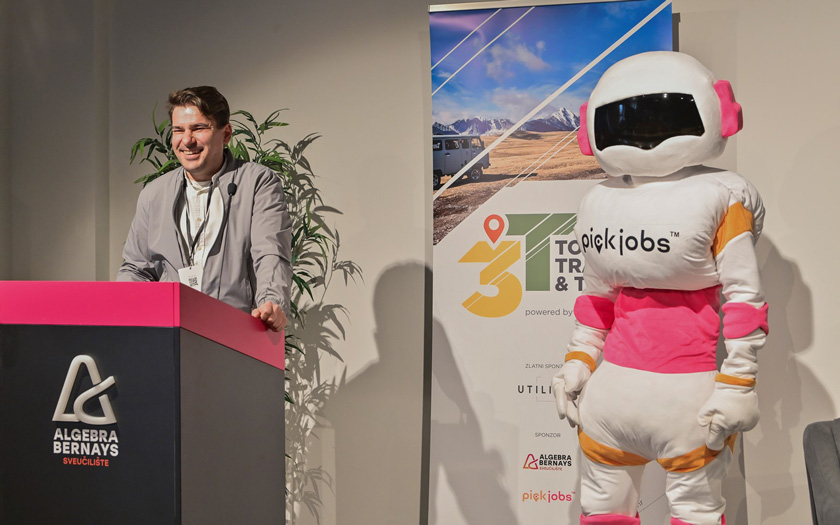
As in previous years, the programme of this year’s 3T - Tourism, Travel & Tech conference focused on current topics connecting two of Croatia’s strongest economic sectors. Through a varied lineup of keynote talks and presentations, it covered a wide range of issues, with a particular focus on the application of technological solutions in tourism and travel.
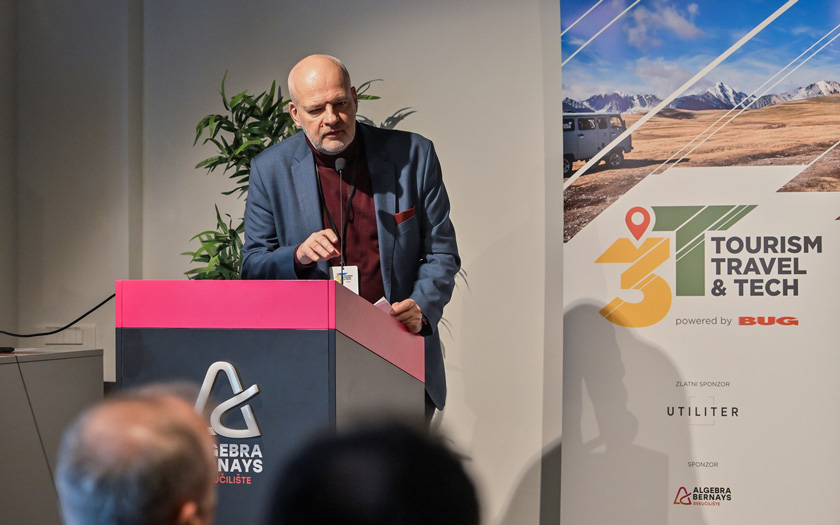
Opening the conference, its director and Editor-in-Chief of the Network for IT Professionals, Oleg Maštruko, stressed, among other things, that hospitality is entering a new era in which digital transformation is no longer a matter of choice, but a key condition for survival in a dynamic market.
AI and digital workers: new rules of the game in tourism and recruitment
The conference opened with a keynote by Emanuel Tutek, CEO of Summit Boutique Hospitality, titled „The future of hospitality is not technology, but meaning and identity“.
Tutek expressed the view that the essence of tourism service lies in authentic identity, while technology merely supports that identity and makes it more convincing.
He stressed that the entire industry must adapt to the fact that, by 2030, millennials will be the key guest segment. In his presentation, he also shared a range of interesting market research findings. According to one recent study, 86% of tourism companies invest in technology; of that figure, 63% invest in existing solutions, while only 30% invest in new ones.
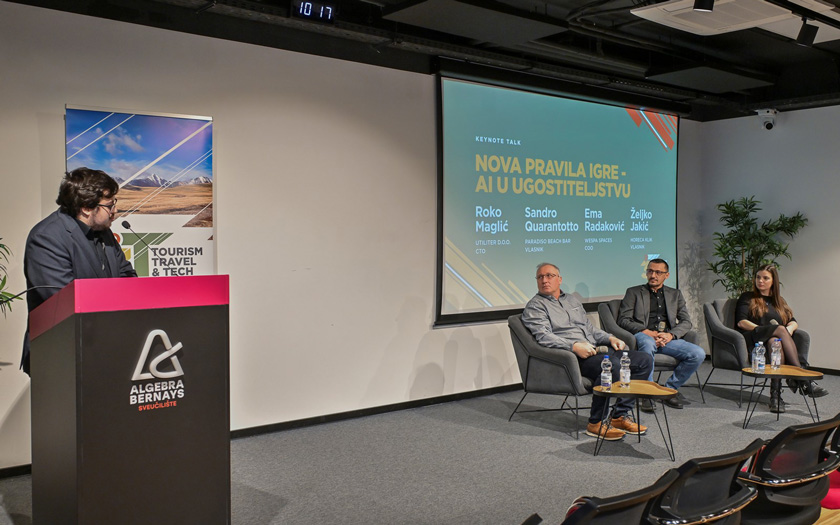
Roko Maglić, CTO of UTILITER, hosted Sandro Quarantotto, owner of Paradiso Beach Bar, Ema Radaković, COO of Wespa Spaces, and Željko Jakić, owner of Horeca klik, in the keynote talk „New rules of the game – AI in hospitality“.
Speaking about labour-related challenges in tourism, Ema Radaković pointed to the shortage of qualified workers and the necessity of using technology. Sandro Quarantotto also sees the lack of skilled labour as one of the key problems in Croatian tourism and noted that guests are becoming increasingly demanding, which makes high-quality service essential. Željko Jakić additionally identified the large number of investors who do not understand the fundamentals of the business and therefore need expert guidance as a problem.
Tash Peričić, founder of Beyond Service Consulting, with more than 20 years of operational and training experience in hospitality, analysed the gap between traditional leadership models and the contemporary needs of employees in her keynote „The Next Generation of Tourism: Rethinking Leadership, Motivation & the Guest Experience“.
She emphasised that relying solely on guest loyalty is no longer enough for success and warned that the tourism sector is facing the challenge of new generations of guests with entirely different expectations.
Regular conference speaker Aco Momčilović, psychologist, HR expert and co-founder of the Global AI Ethics Institute, stressed in his talk „The AI Guest: Today’s Expectations, Tomorrow’s Experience“ that artificial intelligence is not only changing the industry, but also the guests themselves.
He highlighted the importance of responding quickly to guest requests and warned that the industry still lacks a clear strategy for applying AI. „Artificial intelligence is not only changing the software we use, but is fundamentally redefining the psychology of the guest. In a world of instant responses and hyper-personalisation, tolerance for mediocrity is rapidly declining, while expectations of tourism services are becoming ever more complex“, said Momčilović.
Authenticity as the new luxury: what modern guests are really looking for
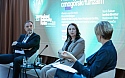
Momčilović’s talk was followed by the panel discussion „Authenticity as luxury in tourism“, moderated by Dijana Grgić, editor of Vinum.In magazine. The panel featured Ivana Alilović, Director of the Zagreb County Tourist Board, Marija Piper, Marketing Director of Enosophia winery, and Julijana Pletenac, COO of Dine Croatia.
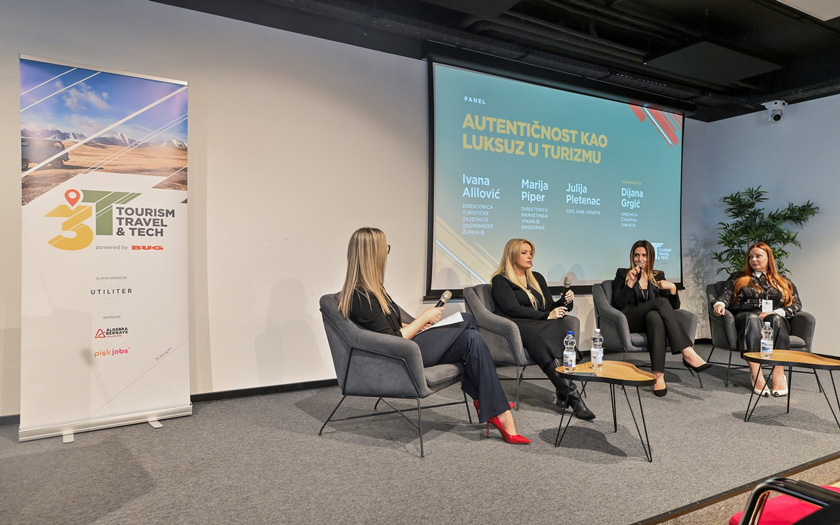
Rather than traditional luxury, today’s guests are increasingly looking for authentic local experiences, with a strong emphasis on gastronomy, accommodation and tradition.
Ivana Alilović believes there is no single formula for authenticity and that each destination needs to identify its own distinctive features and present them in an engaging way. Julijana Pletenac stressed that authenticity should stem from the destination’s original values that guests can genuinely recognise. Marija Piper sees authenticity in the geographical characteristics of a destination, particularly in the example of wineries, and said it is achieved primarily through a personalised approach to guests.
Ante Fumić, founder and CEO of the VR Hotelo platform, said in his presentation „Can a VR platform replace the paper brochure in hospitality?“ that in a world where visual impression drives purchasing decisions, traditional brochures are gradually giving way to immersive technologies.
He explained how the presentation of hotel services is being transformed through virtual content and outlined the advantages of that approach over classic brochures.
Robert Ostrež, Sales Manager at PickJobs, pointed in his presentation „The Recruitment Revolution“ to the possibilities of applying artificial intelligence in tourism recruitment, particularly in speeding up the process, but stressed that final decisions are still made by managers, not by AI.
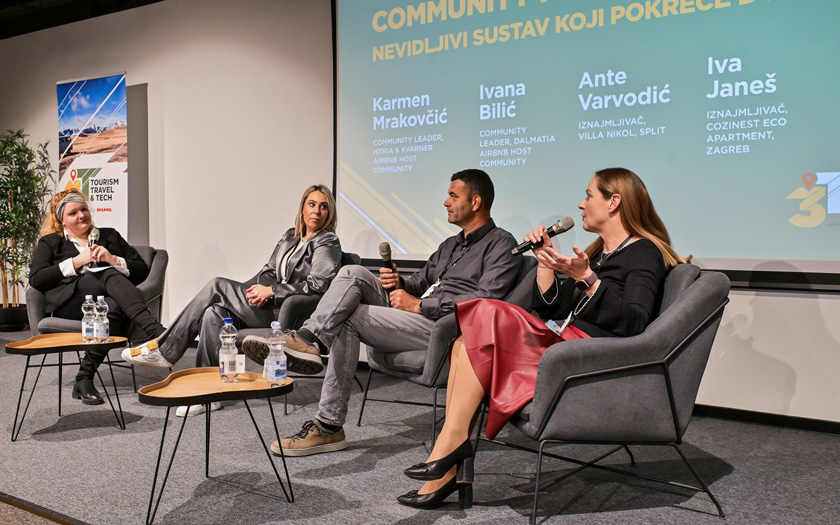
In the fireside chat „Community as software: the invisible system that powers the host“, moderated by Karmen Mrakovčić, Community Leader of the Istria & Kvarner Airbnb Host Community, the participants were Ivana Bilić, Community Leader of the Dalmatia Airbnb Host Community, Ante Varvodić, host of Villa Nikol Split, and Iva Janeš, host of Cozines T Eco Apartments Zagreb.
The participants agreed that community groups, whether informal groups of small-scale hosts or official communities of large platforms, are not a replacement for customer support services because they do not have formal authority. On the other hand, they are useful because they allow for a more honest exchange of experiences. Differences in the reliability of information were also highlighted – official communities have moderators who verify accuracy, while such checks are often absent in informal groups.
Matko Antun Bekavac, security consultant, warned in one of the conference’s most important sessions, „The Invisible Guest: How €50 of hardware can create a million-euro problem“, about the pronounced vulnerability of digital infrastructure in tourism and the speed with which hackers can cause major damage through open Wi-Fi networks, IoT devices and other channels.
He stressed the importance of cybersecurity and gave concrete examples of how protection can be improved.
The closing keynote of the conference, „The Digital Workforce Tsunami Is Coming“, was delivered by Boris Agatić, AI engineer at Algorise AI.
While the industry is still adapting to basic forms of automation, a new wave is already on the horizon, bringing autonomous digital workers – AI agents. These systems will have a significant impact on the industry, business operations and everyday life, including tourism. Rather than simple chatbots, they are capable of taking over complex operational tasks, redefining the very notion of efficiency. Agatić stressed that AI agents are bringing revolutionary change to tourism, while Luka Mišetić of Algorise Ltd presented concrete AI agent models already available on the market.